Greek Recipes
Revani Cake (Greek Semolina Cake with Syrup)
Prep
20 minutes
Cook
30 minutes
Yield
20 pieces
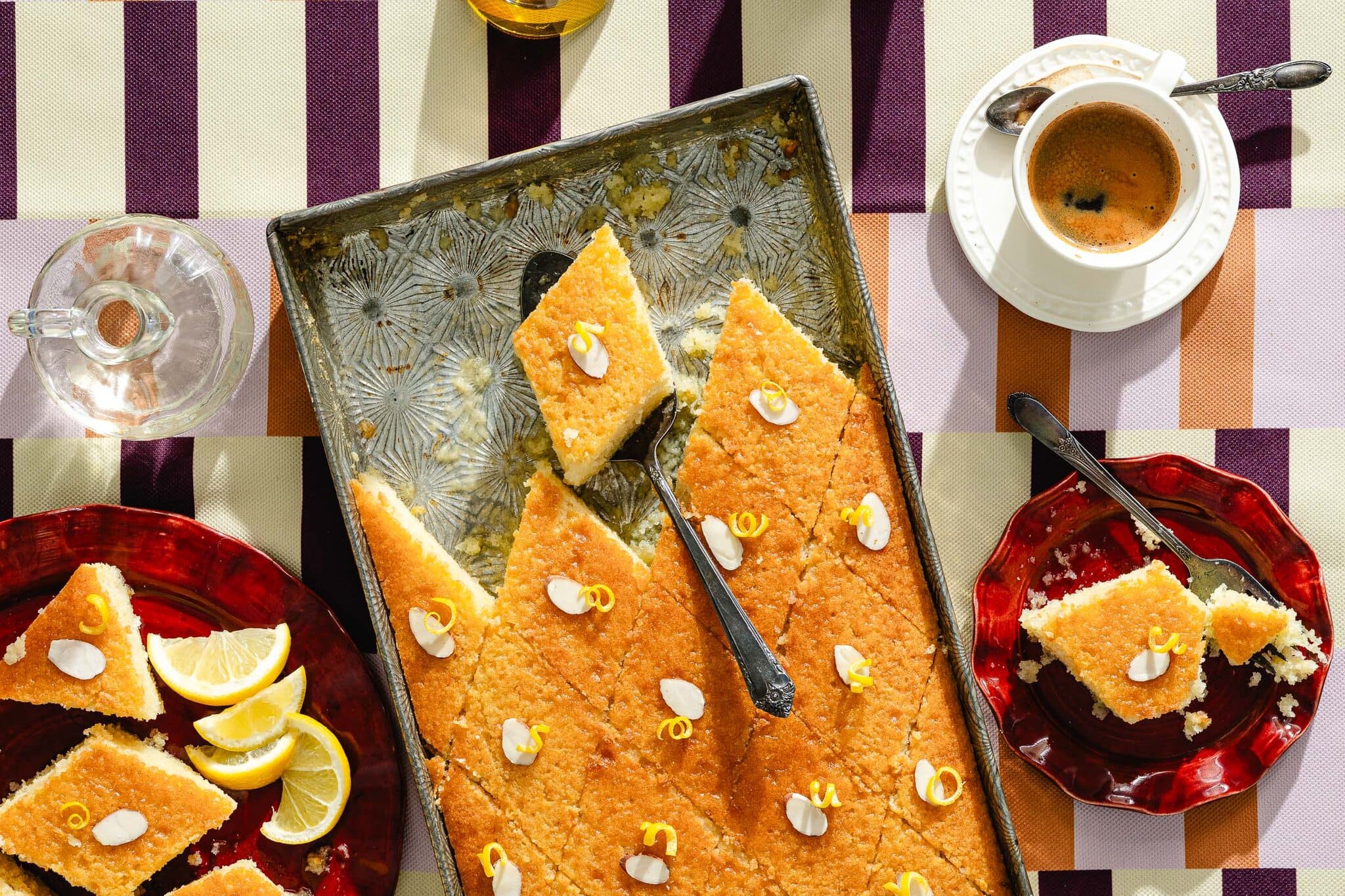
A light and citrusy revani cake made with semolina, Greek yogurt, and olive oil, then soaked in a fragrant lemon-cinnamon syrup for the ultimate moist Greek dessert.
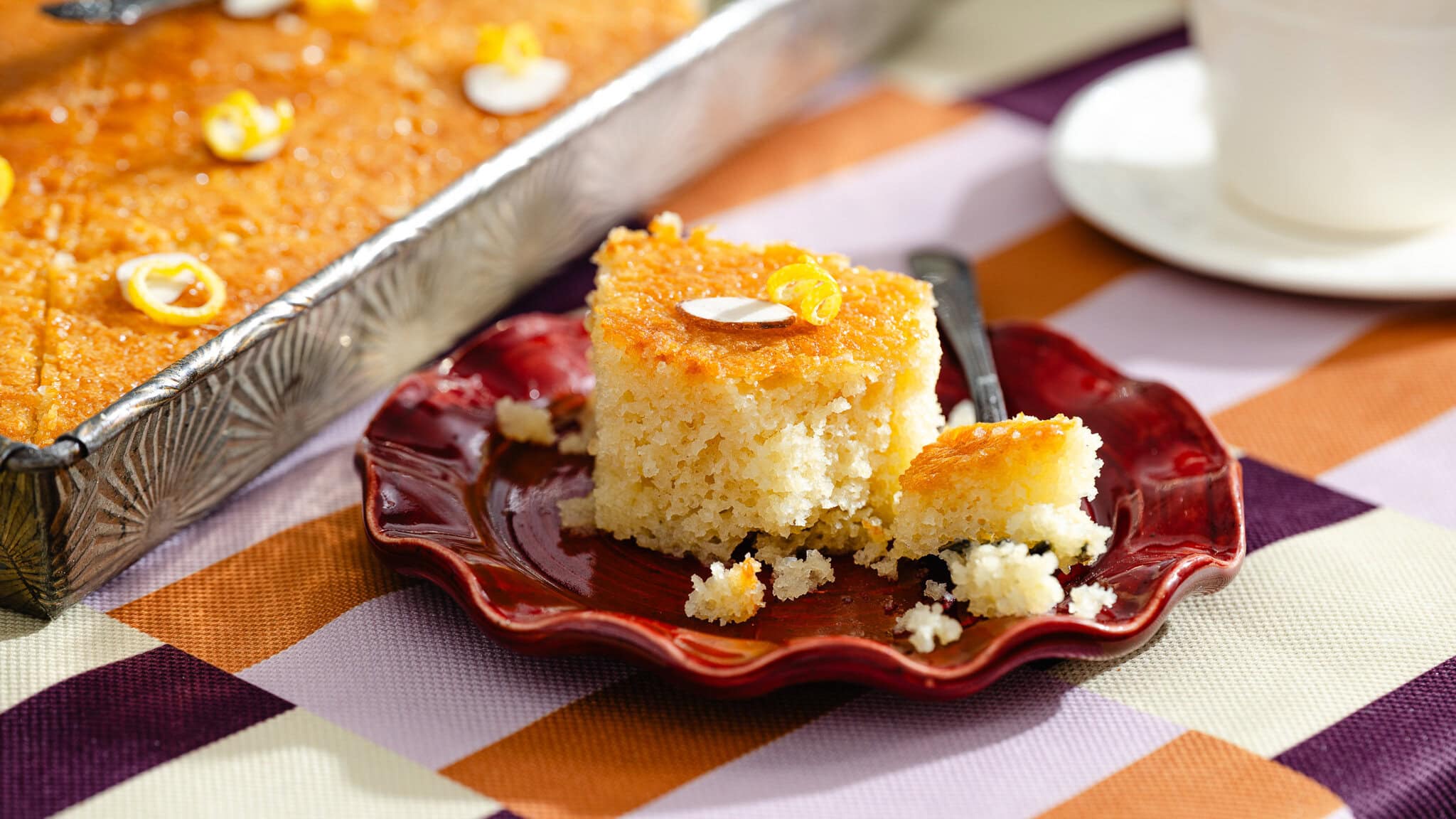
There’s something unforgettable about Revani Cake. The way the syrup hits the warm cake and disappears into a magical, golden, citrusy deliciousness. Revani Cake is a classic Greek semolina sponge cake that’s soaked in a citrus-infused syrup, and it’s a staple at family tables for dessert. Cut into perfect diamonds, always sticky, and ALWAYS gone fast because it’s that good. This Greek semolina cake is a true classic. It uses easy, simple ingredients, it has a great texture, and the recipe has been passed down through my family.
❤️ Why You’ll Love This Revani Cake
- Simple pantry ingredients: Semolina, yogurt, eggs, sugar, citrus. Nothing fancy, just real ingredients that work beautifully together.
- Syrup-soaked perfection: That cold-syrup-on-warm-cake moment creates a soft, fragrant texture that somehow gets even better the next day.
- Authentic Greek heritage: This is the kind of recipe you grow up with, and it shows up at every celebration.
- Beautiful but easy: Those classic diamond cuts topped with almonds or pistachios look impressive, but require zero decorating skills. Making it seem fancy, taste fancy, but the secret is, it’s so easy to make.
What Is Revani
Revani, sometimes spelled ravani, is a syrup-soaked semolina sponge cake that’s beloved across Greece. If you’ve ever searched for a revani recipe, you’ve probably noticed similar desserts across the Mediterranean, like Turkish revani or Egyptian basbous, but the Greek version stands apart.
Unlike basbousa, revani cake includes eggs and all-purpose flour, which gives it a lighter, sponge-like texture. It’s usually flavored with citrus (lemon in this version) and soaked in a fragrant syrup.
The magic ingredient here is semolina. Made from durum wheat, it creates that golden crumb that absorbs syrup without falling apart. Regular flour alone would turn this into a soggy sponge, but semolina holds its structure.
If you love syrup-soaked Greek desserts like our portokalopita, this one belongs in your rotation.

Ingredients You’ll Need
This Revani Cake keeps things simple, but each ingredient plays an important role:
- Fine semolina: This is key. It should look like soft golden sand, not coarse grains. Coarse semolina is used for a different cake (samali), and will change the texture completely.
- Greek yogurt: Adds moisture and a subtle tang. Full-fat gives the richest result.
- Eggs: In this version, they’re whipped until light and airy, helping create that fluffy texture.
- Olive oil: Adds richness with a subtle fruity note that pairs beautifully with citrus.
- Lemon zest + peel: Brightens both the cake and syrup with fresh flavor.
- Baking powder: Gives lift. Make sure it’s fresh, as this is non-negotiable for a soft crumb.

How to Make the Perfect Syrup
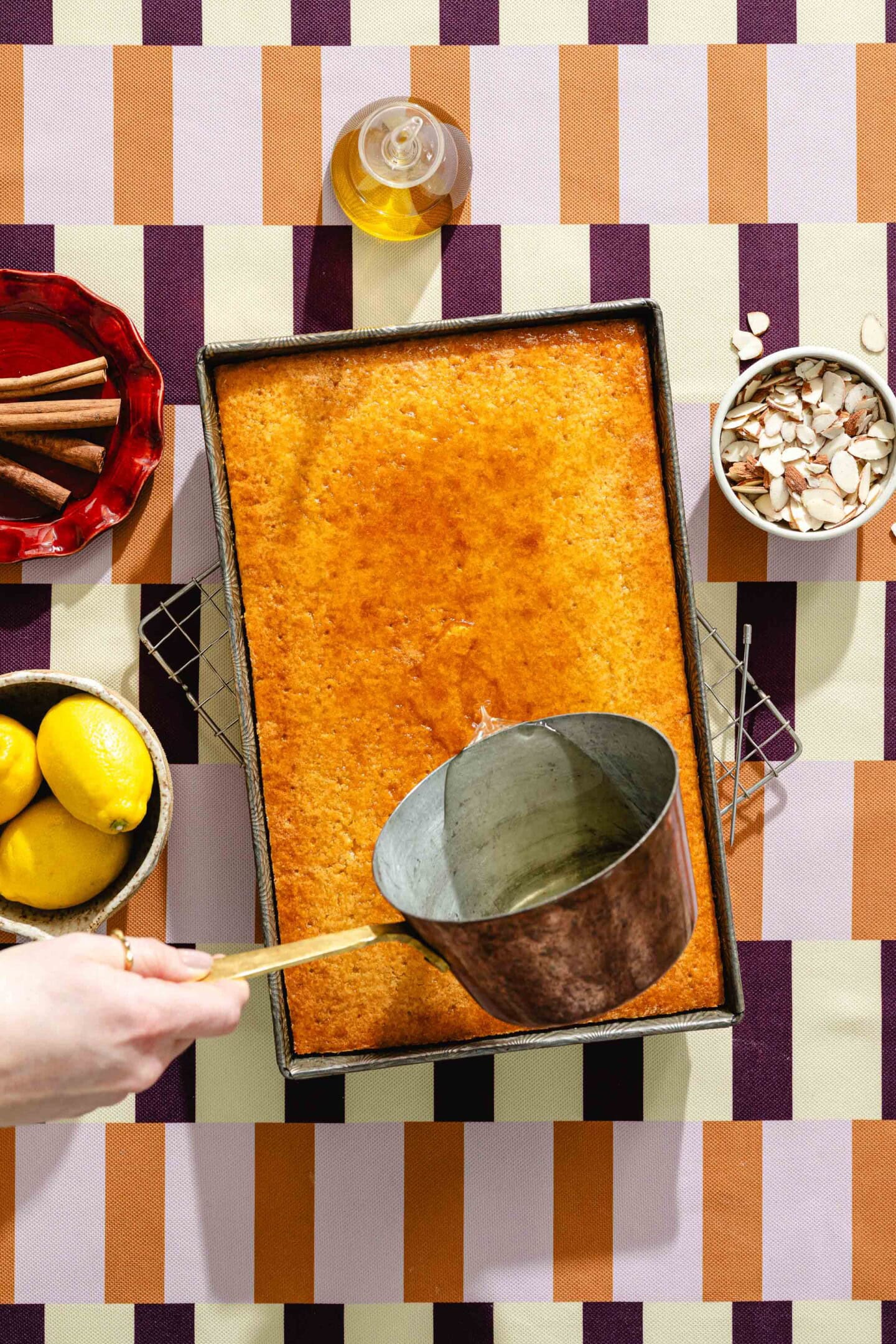
If revani has a secret, it’s the syrup. The most important rule: cold syrup goes on a warm cake.
Here’s why it works:
- When the cake is fresh out of the oven, its structure is still open and airy.
- Cool syrup gets drawn in gradually through capillary action.
- This creates even absorption, aka no soggy top, no dry centre.
If you do the opposite and put hot syrup on hot cake, you’ll end up with a heavy, uneven texture.
A few more key tips:
- Make the syrup first and let it cool completely
- Let it simmer gently (don’t overwork it)
- Pour slowly, one ladle at a time, letting it absorb before adding more
It’s the same technique we use in baklava, and once you get it, you’ll never forget it.

Tips for the Best Revani
- Whip the eggs properly: You’re looking for a pale, foamy mixture with lots of air. This gives the cake its lift.
- Don’t overbake: Golden and just set is perfect. Too dry, and it won’t absorb the syrup properly.
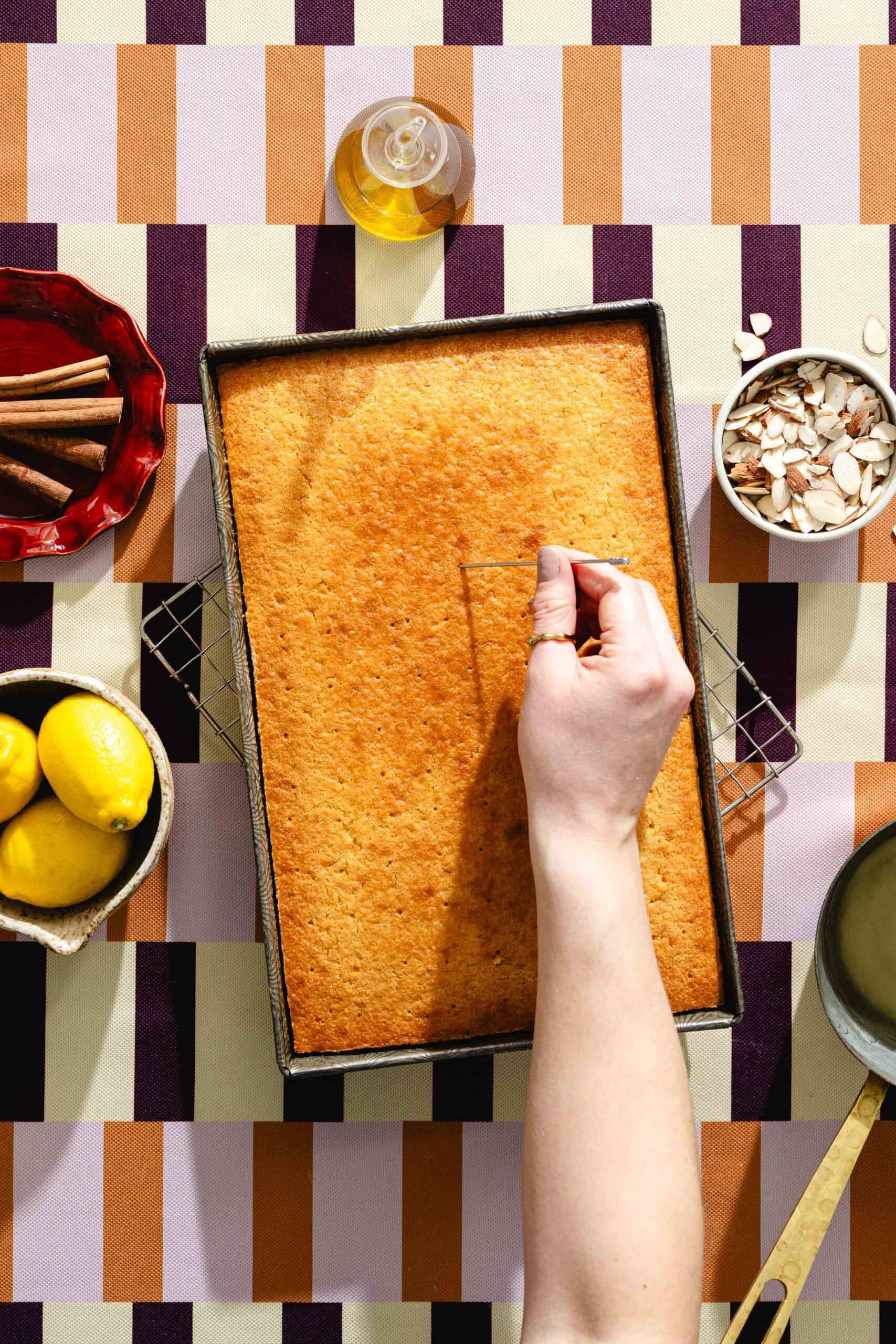
- Poke holes after baking: This helps the syrup soak in evenly throughout the cake.
- Let it rest: The flavor deepens as it sits. This Revani recipe is even better the next day.
- Use the right pan size: A 9×13 pan keeps the thickness just right for proper soaking.
Variations and Substitutions
Revani is classic, but there’s room to play:
- Coconut revani: Add shredded coconut to the batter or sprinkle on top. Not traditional, but it’s delicious.
- Lemon vs. orange: This version leans lemony, but orange is equally traditional.
- Olive oil vs. butter: Olive oil gives a lighter, slightly fruity flavour.
- Floral notes: A splash of rose water or orange blossom water adds a Middle Eastern twist.
- Toppings: Almonds (like this recipe), pistachios, coconut, or even a scoop of ice cream.
For a full dessert spread, serve it alongside something like bougatsa or flogeres.
Revani vs. Basbousa
These two get mixed up a lot, but they’re not the same:
- Revani: Contains eggs and flour → light, fluffy, sponge-like
- Basbousa: No eggs or flour → dense, crumbly texture
- Revani flavor: Typically citrus (lemon/orange)
- Basbousa flavor: Often rose water or orange blossom
Both are syrupy and delicious, but very different vibes.
How to Store Revani Cake
- Room temperature — Covered, up to 2–3 days
- Fridge — Airtight container, up to 1 week
- Freezer — Wrap slices well and freeze up to 2 months (texture may soften slightly)
This is one of those desserts that actually improves with time, making it perfect for prepping ahead—just like milopita.
FAQs
Revani Cake is made with fine semolina, flour, eggs, sugar, Greek yogurt, olive oil, baking powder, and citrus zest. It’s soaked in a syrup made from sugar, water, lemon peel, cinnamon, and lemon juice.
No. Revani is lighter and sponge-like thanks to eggs and flour, while basbousa is denser and more crumbly.
Always cold syrup on a warm cake. That contrast is what creates the perfect texture.
Yes, and you should. It tastes even better the next day after soaking.
They’re the same cake. Just different regional spellings.
No. Fine semolina is essential for the proper texture.
Your Greek mommy that is. 😍 Step into my kitchen to learn how to make yummy Greek food. 🍽️💃

Revani Cake Recipe
Ingredients
For the syrup
- 1 ½ cups granulated sugar
- 1 ½ cups water
- 1 – 3-inch long strip lemon peel removed with a vegetable peeler
- 1 cinnamon stick
- 1 tbsp lemon juice
For the cake
- Butter for greasing the pan
- 1 cup fine semolina flour plus more for dusting the pan
- 1 cup all purpose flour
- 5 tsp baking powder
- 1 cup granulated sugar
- 4 large eggs, room temperature
- 1 tbsp vanilla extract
- Pinch of salt
- ½ cup extra-virgin olive oil
- 1 cup plain Greek yogurt
- 1 tbsp lemon zest from about 2 lemons
For garnish
- 20 almond slices
- lemon twists (thin curled strips of lemon peel)
Instructions
Make the syrup –
- In a medium saucepan, combine the water, sugar, cinnamon stick and lemon peel. Bring to a boil over medium-high, once boiling lower the heat and keep at a simmer for 5 minutes, stir to make sure the sugar dissolves. After 5 minutes, remove the saucepan from heat, stir in the lemon juice and let cool completely. Once fully cooled, remove the cinnamon stick.
Make the cake –
- Grease a 9×13 inch baking pan with butter and dust with 1-2 tablespoons of fine semolina flour. Set aside.
- To a medium bowl, add the fine semolina flour, all purpose flour and baking powder and whisk to combine. Set aside.
- To a medium mixing bowl add the sugar, eggs, vanilla extract and salt. Use a hand mixer to whip on medium-high speed until a bit lighter in colour and foamy (lots of bubbles on the surface), about 4-5 minutes.
- With the mixer on medium-low speed, gradually add the olive oil and then Greek yogurt to the egg mixture, mixing until fully incorporated.
- Then, add the dry ingredients and mix on medium-low speed until combined, scraping down the sides of the bowl as needed.
- Add the lemon zest and mix until just combined.
- Pour the batter into the prepared baking pan, leveling out the top of the cake batter and let sit while you preheat the oven to 350F.
- When the oven is preheated, bake the cake for 25-35 minutes or until the cake is nicely golden brown on top and a toothpick inserted in the center comes out clean.
- Once the cake is baked, immediately use a skewer to poke holes into the cake. Then, ladle the cooled syrup all over the hot cake, one ladle at a time, letting the cake absorb the syrup before adding another ladleful of syrup. Repeat until all of the syrup has been used.
- Let the cake fully cool (2-3 hours) before garnishing with almond slices and lemon twists (thin curled strips of lemon peel). Then, cut and serve.
To store the cake
- Store the cake covered with foil or plastic wrap or in an airtight container for 3 days at room temperature. Alternatively, you can store the cake in the fridge for up to one week.
Notes
- Store the cake covered with foil or plastic wrap or in an airtight container for 3 days at room temperature. Alternatively, you can store the cake in the fridge for up to one week.
- Other garnish options include finely shredded coconut, ground pistachios, or walnuts.
- If you love this cake, try our Portokalopita (Greek Orange Phyllo Cake)