Main Dishes
The Perfect Chicken Brine
Prep
15 minutes
Cook
1 hour 45 minutes
Yield
4 -6
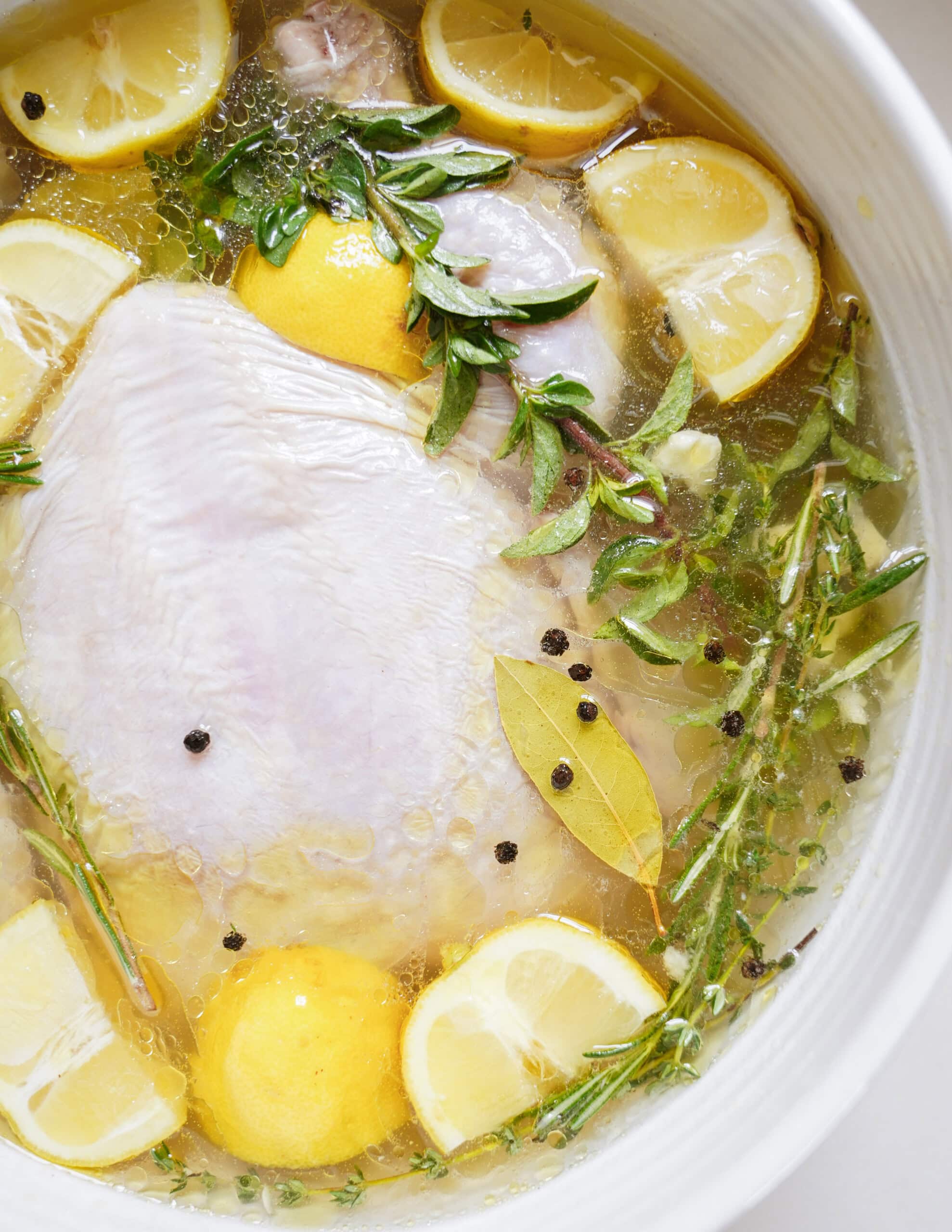
This Chicken Brine infuses a whole bird with lemon, garlic, fresh herbs, and honey, delivering juicy, deeply seasoned meat and beautifully golden skin every time.
There’s nothing worse than dry chicken. And once you understand how a proper Chicken Brine works, you’ll never go back. This isn’t just salty water, but it’s a technique used that helps keep moisture in and boosts flavor. This recipe will transform a simple roast into something so juicy and delicious.
Growing up in a Greek kitchen, flavor always started at the foundation. Lemon, garlic, bay leaves, fresh oregano, and honey are all building blocks in Mediterranean cooking, and this Chicken Brine carries that same tradition. It’s simple and can make even the most novice cook feel so confident in the kitchen.
What Is a Chicken Brine?
Chicken Brine is a saltwater solution used to fully submerge chicken before cooking. The goal of it is to season the meat throughout, increase moisture, and tenderise it. What makes it different from marinating is that you fully submerge your meat in a brine, whereas with a marinade, you coat the meat in the mixture.
Brining is very popular in many professional kitchens for lean proteins like chicken to help with the moisture and flavor. The method I used in this recipe adapts that same technique but for your home kitchen and uses Mediterranean aromatics that reflect your Greek Mama’s fav flavors. Think lemon, garlic, thyme, oregano, etc. SO much goodness locked into this brine.
Why Brining Works (The Science)
Let’s talk about the science behind it all. When you place chicken in a salt solution:
- Osmosis: The salt initially draws moisture out of the meat.
- Diffusion: That salted liquid then flows back into the muscle fibres.
- The salt denatures (loosens) muscle proteins, allowing them to trap more water during cooking.
The result is that the chicken holds onto moisture even under heat. Making it the juiciest, flavor-packed chicken you’ll ever have! But you’re probably wondering why this all matters and if brining is necessary. Well, here are a few good reasons:
- Chicken breasts (the leanest part) benefit most
- The meat stays juicy even if slightly overcooked
- Brined chicken cooks about 20% faster because it contains more internal moisture
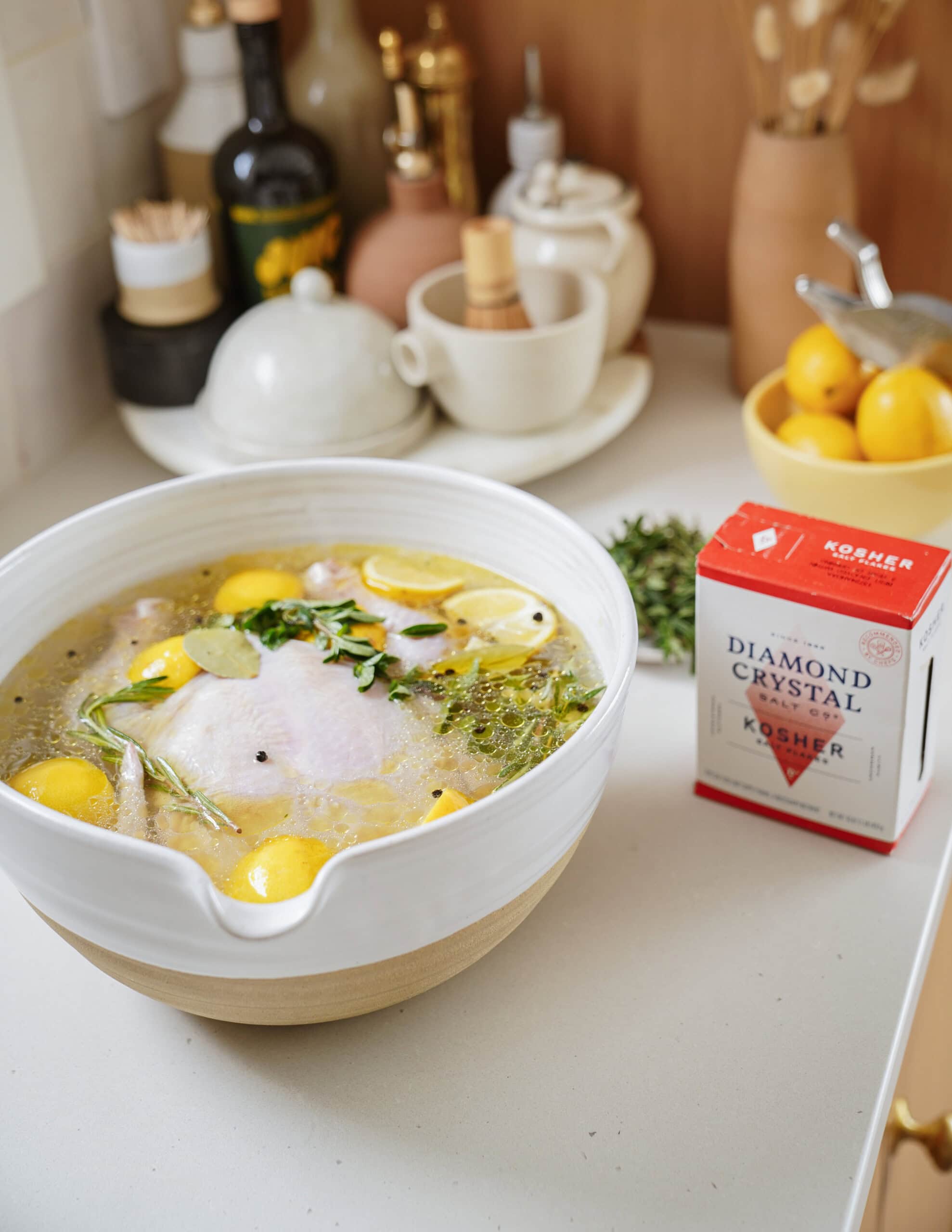
Chicken Brine Ingredients
This Chicken Brine recipe keeps things simple but intentional. Every ingredient has a purpose, which is something that you learn when you grow up in a Greek household. Simple ingredients can make delicious dishes, and this recipe is no different.
Water
The carrier for the salt solution. It distributes seasoning evenly.
Diamond Crystal Kosher Salt
The foundation. Its larger, hollow flakes make it easier to measure accurately by volume.
Garlic (Smashed)
Adds savory depth, and when smashed, it releases essential oils.
Lemons (Quartered)
Bright acidity that complements the salt.
Honey
Balances the salt, adds subtle sweetness, and helps promote browning during roasting.
Peppercorns
Gentle background heat.
Bay Leaves
An earthy, herbal backbone.
Fresh Herbs (Thyme, Oregano, Rosemary)
Aromatic perfume that doesn’t dominant flavor. These are classic Mediterranean herbs.
Olive Oil
Used on the chicken before roasting, not in the brine.
Salt Conversion Chart
This matters more than you think, as not every salt is created equally, and some are stronger than others. The most important thing to keep in mind is that if you are ever in doubt, the brine should taste like a well-seasoned ocean water and not be painfully salty.
- Diamond Crystal Kosher Salt: ⅓ cup (as written)
- Morton Kosher Salt: ~3 tbsp (Morton is denser)
- Table Salt: Not recommended. If you must, use roughly half the Diamond Crystal volume.
Substitutions
- Honey: Maple syrup or brown sugar instead of honey
- Lemon: Lime instead of lemon, or you can use red wine vinegar, or apple cider vinegar in its place
- Fresh Herbs: Use dried herbs, but about ⅓ the amount of fresh, as they are more concentrated
- Salt: Any kosher salt brand works, and adjust measurements accordingly based on my chart above
How to Make a Chicken Brine
Note that this section covers only the brine and brining process, not roasting.
Step 1 — Make the Brine
Combine water, salt, garlic, lemon, honey, peppercorns, bay leaves, and herbs in a large pot. Bring to a simmer over medium heat and stir until the salt fully dissolves. Simmer 5 minutes, then remove from heat.
Step 2 — Cool Completely
Non-negotiable. The bacterial danger zone is 40–140°F.
Speed it up by:
- Transferring to a new container
- Adding ice
- Refrigerating until fully cold
Step 3 — Submerge the Chicken
Place the chicken breast-side down in the cooled brine. Make sure it’s fully submerged (use a plate if needed). Cover and refrigerate.
Step 4 — Brine for 8–24 Hours
- Minimum: 8 hours
- Ideal: 12–18 hours
- Maximum: 24 hours
Do not exceed 24 hours.
Step 5 — Remove & Pat Dry
Remove the chicken from the brine. Pat very dry. Discard the brine.
You’ve now successfully learned how to brine chicken! Congrats!
How Long to Brine Chicken (By Cut)
If you are looking to brine different cuts of chicken, it’s important you pay attention to the brining time, as no two cuts are the same. When you over-brine something, it’ll be too salty and mushy, which no one wants.
- Whole chicken: 8–24 hours (ideal 12–18)
- Bone-in breasts or thighs: 4–8 hours
- Boneless breasts or thighs: 2–4 hours
- Drumsticks/pieces: 4–6 hours
How to Roast a Brined Chicken
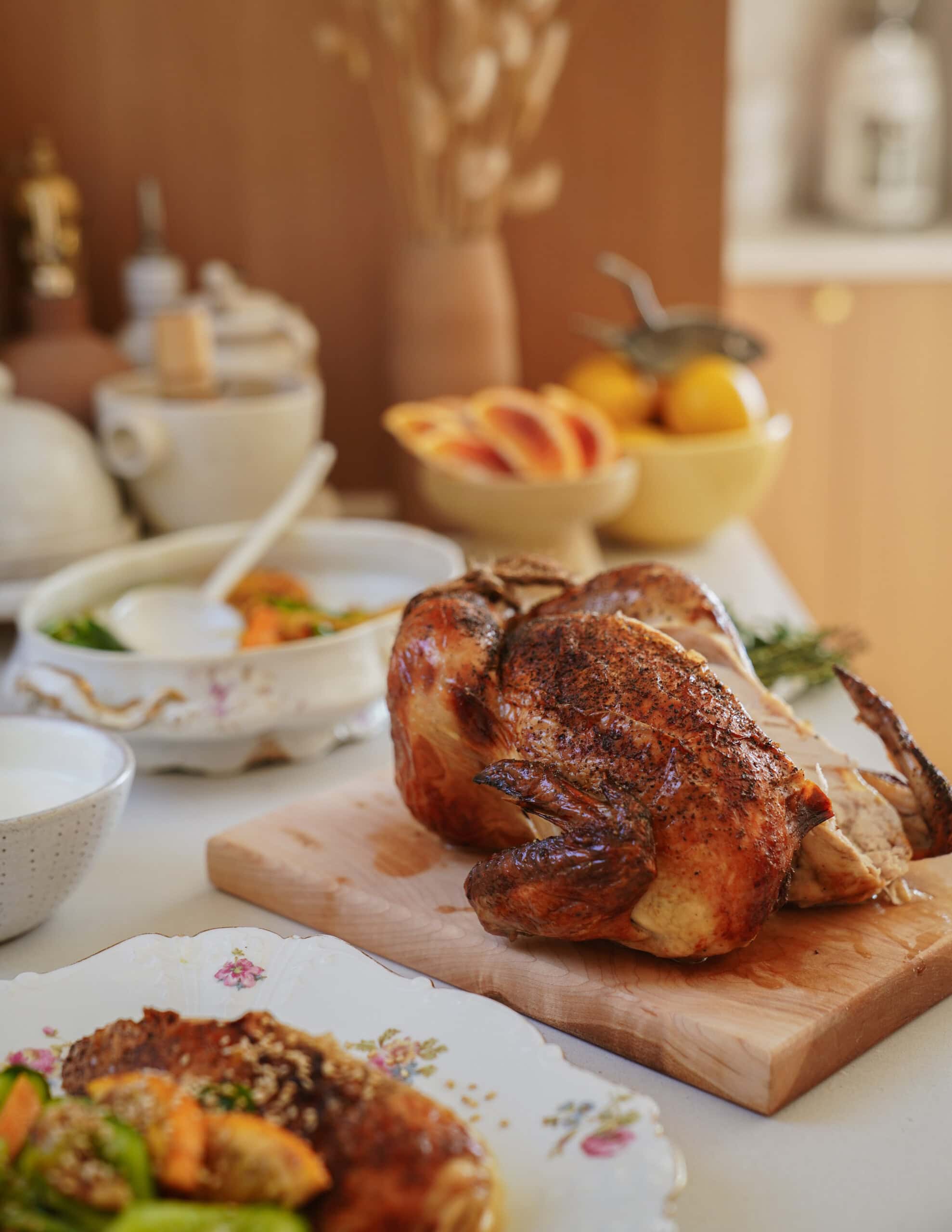
A properly brined chicken roasts to golden, juicy perfection. This recipe uses:
- 375°F oven
- 1 hour covered
- 45 minutes uncovered
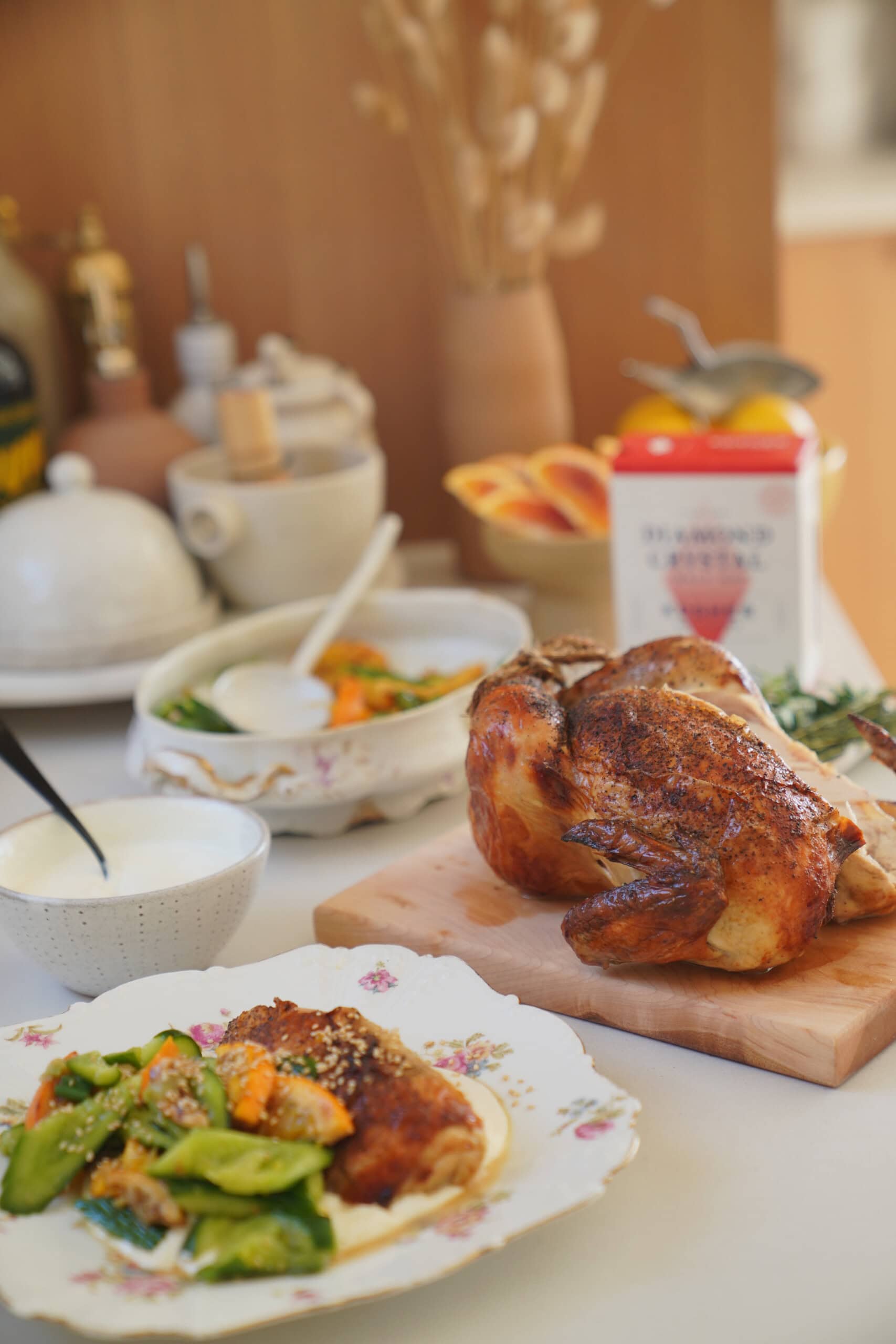
You want your target internal temperature to be 165°F in the thickest part of the thigh. Once done, let rest 15-20 minutes before carving to allow for juices to redistribute. Remember that brined chicken roasts faster than unbrined. Start checking the temperature earlier than usual to make sure you don’t overcook it.
Other Ways to Cook Brined Chicken
There are many ways to cook brined chicken. When making a whole chicken, I like to roast it in the oven, but you can also use one of these methods if you prefer:
- Grilling: For a whole chicken, you’ll want to spatchcock it for even cooking, using medium, indirect heat.
- Smoking: 225–275°F for ~3 hours. Fruit woods like apple or cherry are the best!
- Air-Frying: Great for smaller birds or other cuts of chicken, but make sure to ensure the chicken is extremely dry first.
- Pan-Roasting: This is an option if you’re cooking pieces vs. a whole chicken. Sear skin-side down and finish in the oven.
Tips for the Best Chicken Brine
Wet Brine vs. Dry Brine
Wet brine
- Adds moisture + seasoning throughout
- Best for lean cuts and whole chickens
- Requires fridge space
Dry brine
- Salt rubbed directly on the surface
- Rests uncovered in the fridge
- Produces crispier skin
- More convenient for large birds like turkeys
This recipe uses a wet brine because it’s the most effective for deeply seasoning a whole chicken.
Getting Crispy Skin on Brined Chicken
- Pat VERY dry after brining
- Optional: let rest uncovered in fridge 2–4 hours
- Rub with olive oil before roasting
- Start covered, finish uncovered
Troubleshooting Your Chicken Brine
Chicken too salty
Likely brined too long or used table salt. Soak in fresh cold water 30–60 minutes.
Skin isn’t crispy
Not dried enough before roasting.
Chicken floating?
Use a plate to weigh it down.
Cloudy brine?
Totally normal. Aromatics are releasing compounds.
Mushy texture?
Over-brined (reference my chart further up on how long to brine different cuts of meat).
How to Store Brined Chicken
Make-Ahead
- Brine can be made 2 days ahead
- Chicken can be brined, removed, patted dry, and held in the fridge up to 12 hours before cooking
Leftovers
- Store cooked chicken in an airtight container 3–4 days
- Freeze up to 3 months
- Reheat gently at 300°F with a splash of broth
Tip: Avoid the microwave if possible — it dries it out.
What to Serve with Brined Roast Chicken
Keep it Greek-inspired and simple. Here are some of my fav pairings:
- Crispy Roasted Potatoes
- Maroulosalata (Greek Lettuce Salad)
- Greek Salad
- Greek Tzatziki Sauce
- Garlic Confit
FAQs
Brine a whole chicken for a minimum of 8 hours and up to 24 hours in the refrigerator. The sweet spot is 12–18 hours. Do not exceed 24 hours. Smaller cuts need less time.
Yes. Hot brine creates unsafe bacterial conditions. Cool completely before use.
Absolutely. Grill, smoke, air fry, or spatchcock. This brine works across methods.
Wet brines submerge in saltwater and add moisture via osmosis. Dry brines salt the surface and allow reabsorption.
Its larger flakes are less dense and easier to measure accurately. Morton and table salt require adjustments (see above).
Yes. Over 24 hours can cause salty, spongy texture. Soak in fresh cold water 30–60 minutes to draw out excess salt.

Chicken Brine
Ingredients
- 8 cups of water, divided
- ⅓ cup Diamond Crystal Kosher Salt
- 8 smashed garlic cloves
- 2 lemons, quartered
- 2 tbsp liquid honey
- 2 tsp peppercorns
- 2 dry bayleaves
- 8 sprigs fresh herbs (mix of fresh thyme, oregano and rosemary)
- 3-4 lb whole chicken, giblets removed
- 3 tbsp extra-virgin olive oil
- Ground pepper
Instructions
Brine the chicken –
- To a large bowl add 7 cups of water, smashed garlic cloves, quartered lemons, liquid honey, peppercorns, bayleaves and 8 sprigs of fresh herbs. Set aside.
- To a small pot add 1 cup of water with the salt and bring to a boil, simmer for a few minutes and stir to make sure the salt is completely dissolved. Remove from heat and add this salt water to the large bowl with all of the aromatics. Stir to completely combine.
- Submerge the chicken fully in the brine in the large bowl.
- Cover the bowl and place in the fridge for at least 8 hours and up to 24 hours.
Roast the chicken –
- After a minimum of 8 hours, remove the chicken from the fridge. Then, remove the chicken from the brine and place on a plate. Pat the chicken dry with paper towels.
- Preheat the oven to 375F.
- To a large baking dish add the whole chicken on a baking rack (or use a roasting pan or baking rack on a medium sheet pan). Massage the chicken all over with 3 tbsp olive oil. Season with a bit of ground pepper.
- Cover with foil and roast at 375F for one hour, remove the foil and roast for another 45 minutes uncovered. Allow chicken to rest for 15-20 minutes before carving.
Notes
- Enjoy this brined and roasted chicken with Greek favourites like Easy & Authentic Greek Salad Recipe, Maroulosalata aka my Mamas Salad and/or Greek Potatoes
- If you love this recipe, try our Roasted Chicken and Potatoes with Champagne Gravy