I may earn commissions on purchases through links in this post. As an Amazon Associate I earn from qualifying purchases. Please read our disclosure policy.
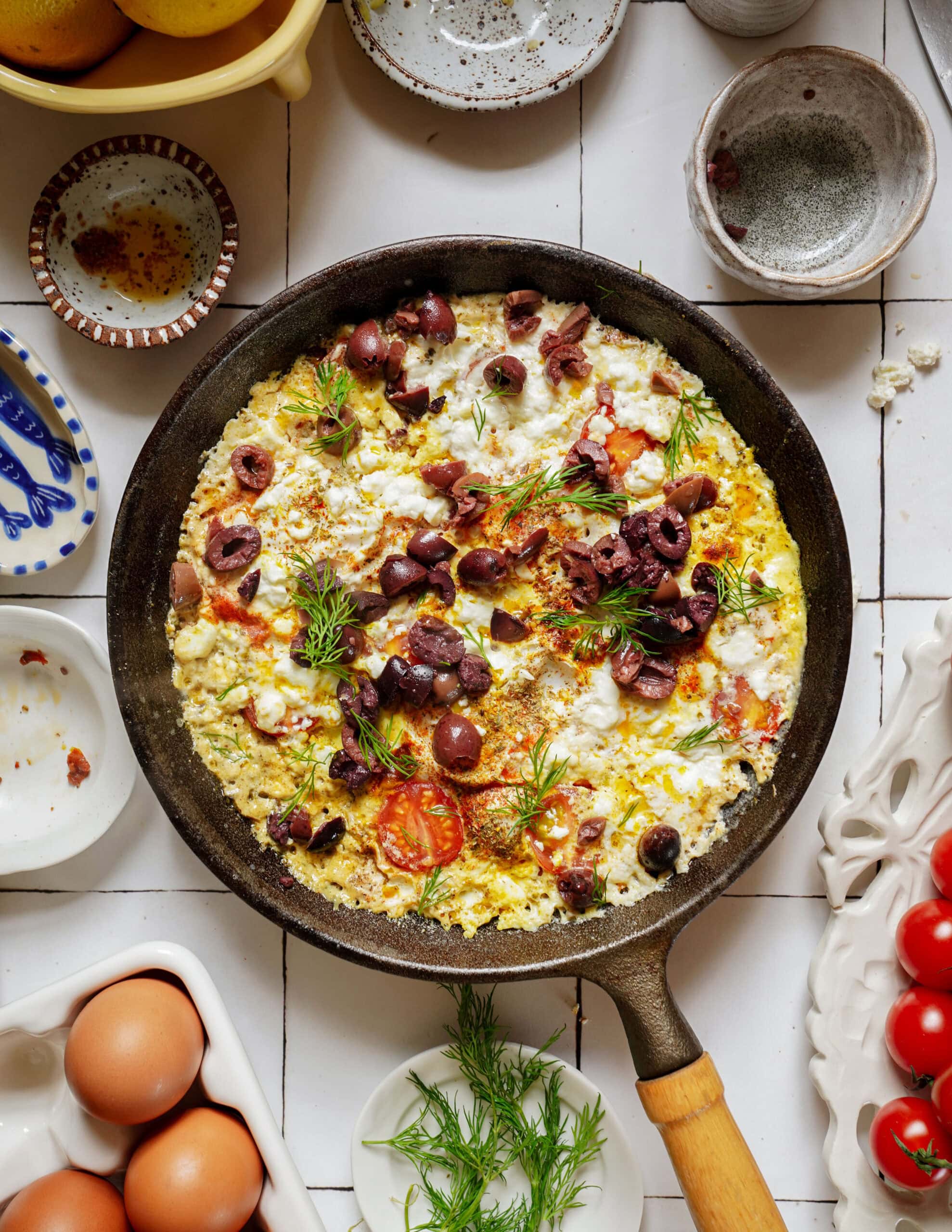
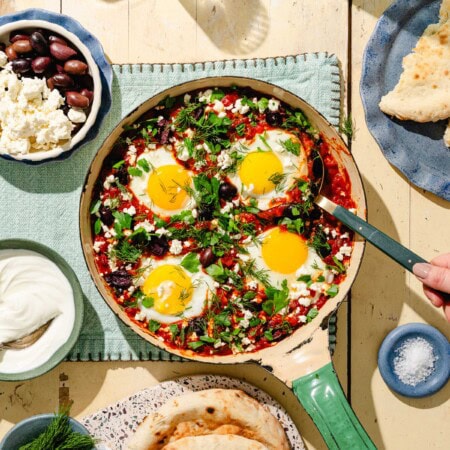
If you haven’t tried heavy cream fried eggs yet, here’s your sign! Instead of oil or butter, the eggs cook in a thin layer of cream. As it simmers, the cream becomes the fat the eggs cook in and the sauce you scoop up afterward. It’s all made in one pan with a briny mix of sundried tomatoes, pepperoncini, and olives, then finished with feta, more olives, and fresh dill.
My version of these heavy cream eggs is, of course, Greek-inspired. You’ll get those Mediterranean staples like feta, olives, and dill, and it’s, of course, so dang delicious you’ll want to have it every day for breakfast.

Maria Koutsogiannia
Maria is the creator of FoodByMaria and your go-to Greek food expert for cozy, flavor-packed recipes. Inspired by her Mediterranean roots, she brings traditional Greek flavors, feel-good ingredients, and a whole lot of joy to everyday cooking.
Why You’ll Love Cream Fried Eggs
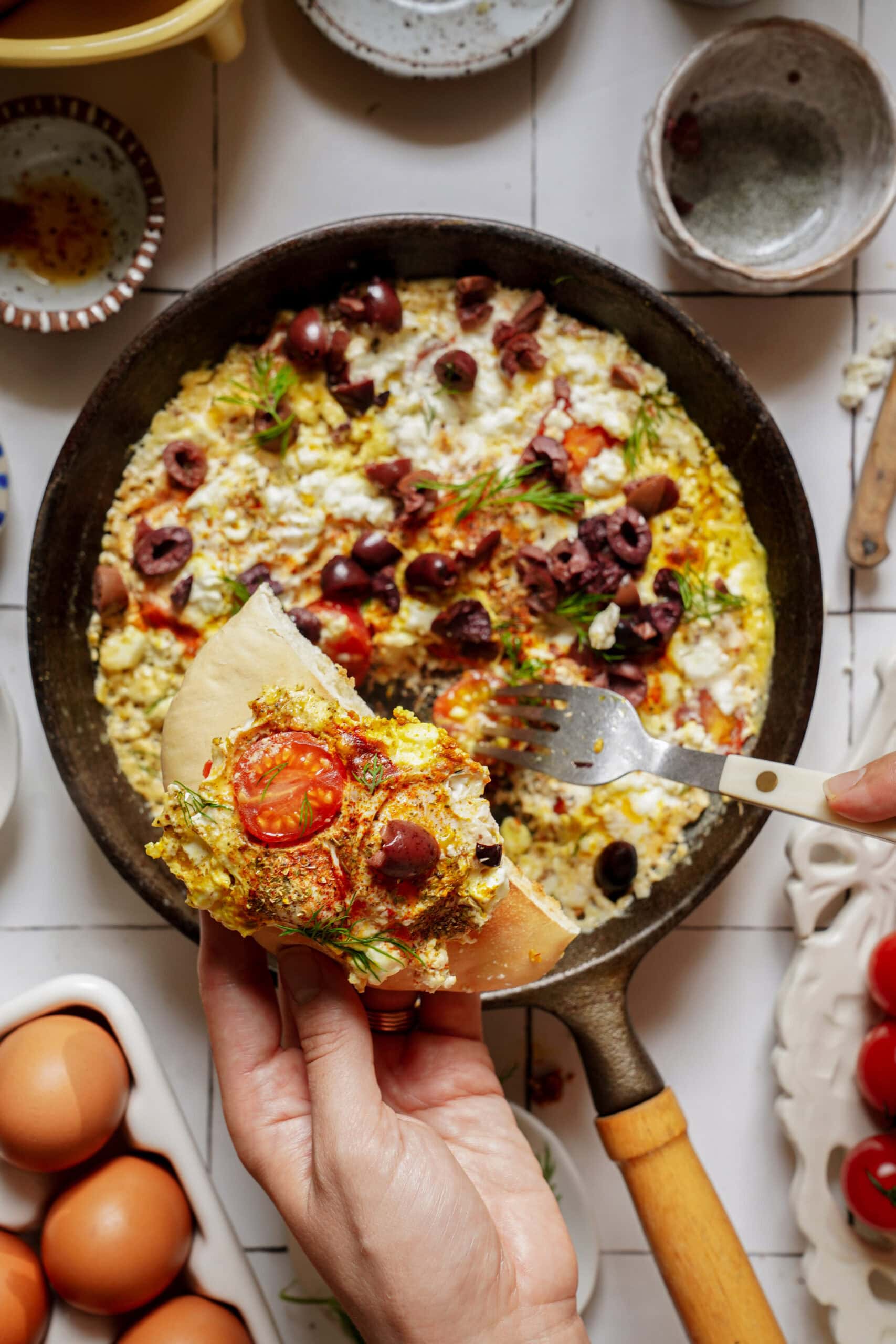
- One skillet, 20 minutes: 10 minutes of prep, 10 minutes of cooking, and one pan to wash. That’s my favorite kind of recipe!
- The cream does double duty: It’s the fat the eggs cook in and the sauce you drag your bread through.
- Briny, salty, fresh: Pepperoncini, sundried tomatoes, feta, and kalamata olives cut through the rich cream, and dill finishes it with a pop of freshness and flavor.
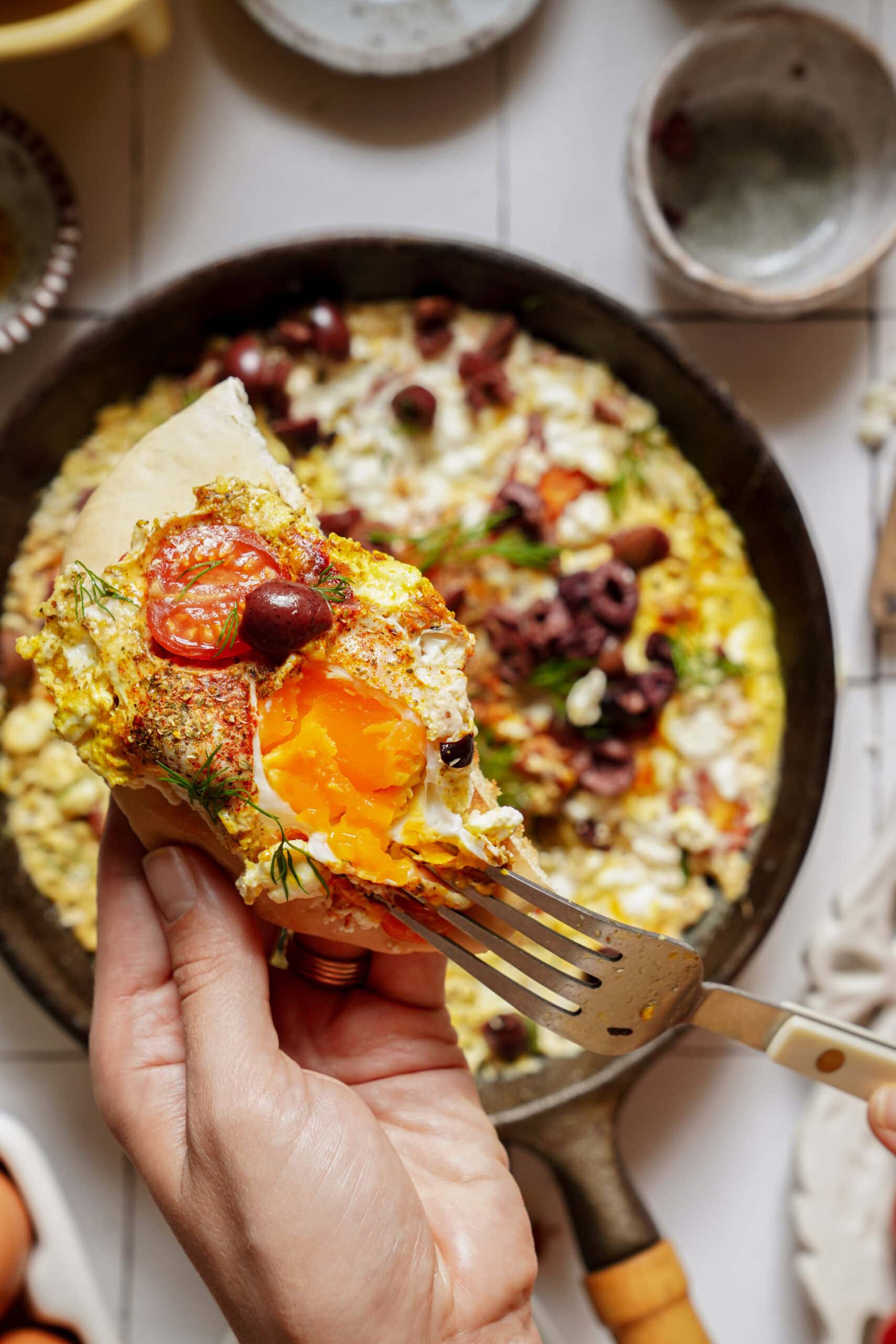
- No flipping: The lid sets the tops of the eggs, so the yolks stay runny! Perfect for dipping and scooping up with bread.
What Makes Cream Fried Eggs Work
Heavy cream is mostly water, butterfat, and milk solids. As it simmers, the water cooks off, and what’s left starts behaving like melted butter with the milk solids still in it. That’s why cream fried eggs taste so rich. If the cream reduces far enough, the edges can pick up a brown-butter flavor too.
The lid is doing more work than it looks like. It traps steam over the pan, and that steam cooks the tops of the whites while the yolks stay soft. So these are eggs cooked in cream from below and gently steamed from above, which is why you don’t need to baste or flip them.
Fat content matters here. In the US, heavy cream has at least 36% milkfat, and that fat helps it hold up to simmering and to the add-ins like pepperoncini and sun-dried tomatoes. Lower-fat dairy has more water and is more likely to curdle when acid hits it.
And the feta? You know you don’t get many recipes from me without it. For this dish, it softens in the hot cream but holds its shape, so you get warm, salty pockets instead of melted strings.
Ingredients You’ll Need
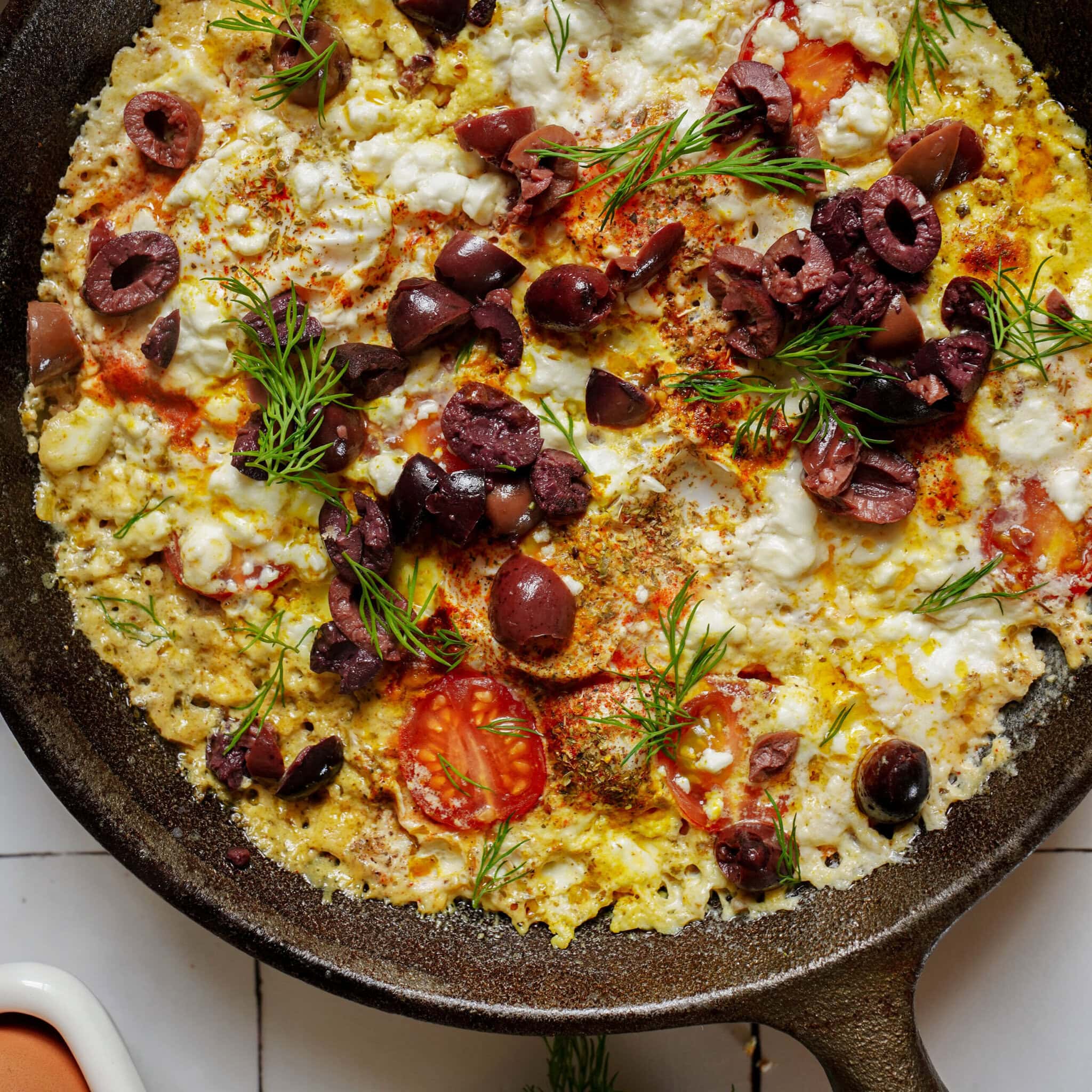
- Heavy cream: Heavy cream or heavy whipping cream both work. It’s the cooking fat and the sauce, so don’t swap in something lighter.
- Sundried tomato mixture: Diced pepperoncini, oil-packed sundried tomatoes, a spoonful of olive salad, and a little of the sundried tomato oil. That oil carries a lot of flavor into the cream, so don’t drain it all away. No olive salad? Use 1 tablespoon of finely chopped olives.
- Spice mix: Dried oregano, kosher salt, black pepper, turmeric, and smoked paprika. Stir them together first so they dust the eggs evenly.
- Feta and cherry tomatoes: Tucked in and around the eggs, not on top of the yolks.
- To finish: Fresh dill and chopped kalamata olives.
- Bread: Toasted sourdough, or any sturdy bread that can handle a proper scoop.
Greek-Inspired, Not Traditional
Let’s be clear: cooking eggs in cream isn’t a traditional Greek method. The Greek part of this recipe is the flavor. Feta, kalamata olives, oregano, dill, and pepperoncini are the ingredients that make it taste like home to me. The everyday Greek way to fry an egg is in olive oil, the way it shows up on a Greek breakfast plate (proïnó) with tomatoes, cheese, olives, and bread.
Pan, Heat, and Doneness Cues
- Pan: Use a medium skillet or cast-iron pan with a lid, big enough for 4 eggs in one layer with the cream spread thin underneath. If the pan is too big, the cream reduces too fast and can scorch. Too small, and the eggs crowd and the whites take longer to set.
- The cream is ready when: Small bubbles form around the edges and start showing up across the surface. That’s your cue to turn the heat down to medium-low before the eggs go in.
- The eggs are done when: The whites are opaque all the way to the yolk, and the yolks look glossy and jiggle when you nudge the pan. I like my whites set and my yolks runny. If you want them very runny, start checking at 4 minutes.
- No lid? Set a baking sheet or a larger skillet or plate on top.
Troubleshooting
- The cream split or curdled: The heat was probably too high, the dairy was too low in fat, or extra brine went into the pan. Keep it at medium-low once it simmers, use heavy cream, and drain the pepperoncini well.
- The cream browned too fast or smells scorched: Lower the heat, and make sure the pan isn’t too big for the amount of cream.
- The whites are still clear on top: The lid wasn’t tight or got lifted too often. Cover it and give it another minute.
- The yolks are overcooked: Start checking at 4 minutes and take the pan off the heat right away, since it keeps cooking for a moment.
- The sauce is too thin: Let the cream simmer a little longer before the eggs go in.
Variations and Swaps
- Make it spicier: Add an extra pepperoncini, or a pinch of red pepper flakes to the spice mix.
- No olive salad: 1 tablespoon of finely chopped olives works.
- Want eggs in tomato sauce instead? Make my shakshuka.
What to Serve with Cream Fried Eggs
- Bread for scooping: Toasted sourdough is on the card, or bake a loaf of no-knead bread.
- A brunch spread: Put out a bowl of bread dipping oil with herbs, feta, and olives next to the skillet.
- Something fresh: Sliced tomatoes, cucumbers, and a few olives on the side.
FAQs
As the cream simmers, its water cooks off and what’s left acts like melted butter with milk solids in it. The eggs cook in that rich fat instead of oil, so the whites stay tender, and the yolks stay soft. If the cream reduces far enough, the edges can pick up a toasty, brown-butter flavor.
Stick with heavy cream or heavy whipping cream for this recipe. Half-and-half and milk have more water and less fat, so they take longer to reduce and are more likely to curdle when the briny pepperoncini and sundried tomatoes go in.
Use a medium skillet or cast-iron pan with a lid, about 10 inches for 4 eggs. The eggs should sit in one layer with the cream in a thin layer underneath. In a pan that’s too big, the cream reduces too fast and can scorch.
After about 5 minutes covered over medium-low heat, the whites should be opaque all the way to the yolk, and the yolks should look glossy and jiggle when you nudge the pan. For very runny yolks, start checking at 4 minutes.
Usually the heat was too high after the cream came to a simmer, or a lower-fat dairy was used. Turn the heat down to medium-low before the eggs go in, use heavy cream, and drain the pepperoncini well so extra brine doesn’t hit the cream.
They’re best eaten right away, while the yolks are runny and the cream is warm. You can mix the sundried tomato mixture and the spice mix ahead of time, so cooking takes about 10 minutes.
Save this recipe for later
I may earn commissions on purchases through links in this post. As an Amazon Associate I earn from qualifying purchases. Please read our disclosure policy.
Ingredients
For the sundried tomato mixture
- 2 pepperoncini peppers, remove stems and dice
- 2 large sundried tomatoes in oil, drained of oil and diced
- 1 tbsp olive salad (or 1 tbsp minced olives)
- 1-2 tbsp sundried tomato oil
For the spice mix
- ½ tsp dried oregano
- ½ tsp kosher salt
- ¼ tsp ground pepper
- ⅛ tsp ground turmeric
- ⅛ tsp smoked paprika
For the eggs
- ½ cup heavy cream, (or substitute with half and half cream)
- 4 eggs
- 4 cherry tomatoes, halved
- ¼ cup crumbled feta cheese
For the garnishes
- Fresh dill
- ¼ cup chopped kalamata olives
Serve with
- Toasted pita or sourdough bread
Instructions
Start Cooking- In a small bowl mix together the ingredients for the sundried tomato mixture and set aside.
- In another small bowl mix together the spice mixture and set aside.
- To a medium-sized skillet or cast-iron pan add the heavy cream over medium heat.
- Use a spoon to drizzle the sundried tomato mixture over the cream.
- Once the mixture starts to simmer, turn to medium-low heat. Crack the eggs into the pan and then dust with the spice mixture. Add in the halved cherry tomatoes and crumbled feta cheese in and around the eggs. Cover with a lid and cook until the eggs are cooked to your liking (we like egg whites set and yolks still runny) – about 5 minutes
- Remove from the heat and garnish with fresh dill and kalamata olives. Serve with toasted sourdough.
Notes
- For the sundried tomato mixture, if you don’t have olive salad, just mix in 1 tbsp finely chopped olives instead.
- If you love this recipe, try our Simple Greek Breakfast Plate (Proïnó)
Related Recipes



Be the first to discuss this recipe.