This post may contain affiliate links. Please read our disclosure policy.
Lamb has always been at the center of my family table, which is why these Greek lamb recipes feel less like a collection and more like a family archive. I grew up watching my mama and yia-yia prepare arní (lamb) for Easter and long Sunday lunches where everyone stayed at the table for hours. In our house, lamb was never reserved for restaurants or special occasions alone. It was woven into everyday life, from quick grilled chops to slow-braised shanks that made the whole kitchen smell heavenly!
If there is one meat that defines Greek cooking, it is lamb. From whole spit-roasted Easter lamb during Pascha to sizzling paidákia (lamb chops) served at tavernas, Greek lamb recipes tell the story of a cuisine built on simplicity, fire, patience, and incredible ingredients. Every authentic Greek lamb recipe in my family started with the same foundation: dried oregano, fresh lemon, and good olive oil. That trio is the heart and soul of Greek cooking, and you will see it repeated throughout every dish on this page.

Maria Koutsogiannia
Maria is the creator of FoodByMaria and your go-to Greek food expert for cozy, flavor-packed recipes. Inspired by her Mediterranean roots, she brings traditional Greek flavors, feel-good ingredients, and a whole lot of joy to everyday cooking.
I learned to cook lamb standing beside my mom while she scored garlic into a leg roast and squeezed lemons over trays of potatoes. These Greek lamb dishes reflect the full range of how Greeks actually cook lamb at home: roasted, braised, grilled, and ground into comforting everyday meals. Lamb is truly so versatile, and these recipes will help you see all the different ways you can use it in everyday cooking.
Every recipe below links to a fully tested FoodByMaria recipe, making this the ultimate collection of Greek lamb recipes for anyone who wants to cook lamb the way Greek families have for generations. If you are building a full Greek feast, you can also explore my traditional Greek food guide for even more classics.
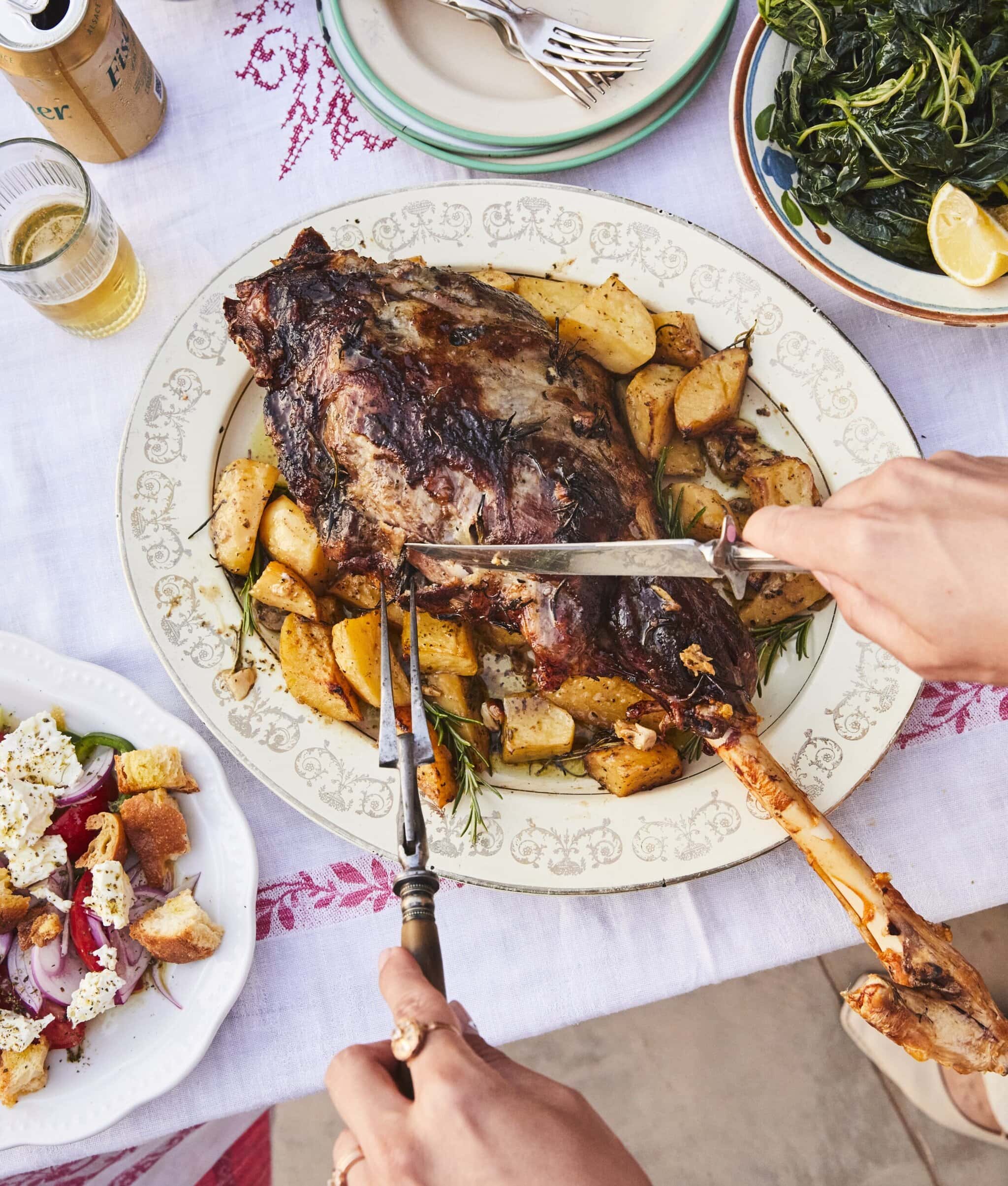
Why Lamb Is the Heart of Greek Cooking
Lamb has shaped Greek cuisine for thousands of years. Greece’s rugged mountains and rocky terrain made sheep and goat herding far more practical than raising cattle, so lamb naturally became one of the country’s go-to proteins. Even now, the most important Greek food celebration of the year revolves around lamb. During Pascha (Greek Easter), families gather outdoors around a spit-roasted whole lamb, a tradition rooted in both Orthodox Christianity and ancient spring rituals that existed long before it.
Growing up, Easter preparations started before sunrise. My uncles handled the fire and spit while the rest of us seasoned trays of potatoes and prepared side dishes for the endless flow of visitors arriving throughout the day. The smell of oregano smoke and roasting lamb drifting through the yard and house is one of those memories that never leaves you. Ugh, I can smell it now just writing about it!
In tavernas across Greece, locals order paidákia long before they think about tourist-famous dishes like moussaka. Authentic Greek lamb recipes are deeply tied to regional cooking traditions, seasonal gatherings, and the kind of meals designed to linger over slowly with wine, bread, and conversation.
There is also real food science behind why Greek flavors pair so perfectly with lamb. Oregano contains carvacrol, a natural compound that cuts through lamb’s rich, gamey notes and balances the fat beautifully. Lemon juice gently tenderizes tougher cuts by breaking down proteins and connective tissue while adding brightness that keeps the meat from feeling heavy. Olive oil acts as a flavor carrier, distributing herbs and aromatics evenly during roasting or grilling. This oregano-lemon-olive oil combination appears throughout Greek lamb dishes because generations of Greek cooks instinctively discovered what science now explains so clearly.
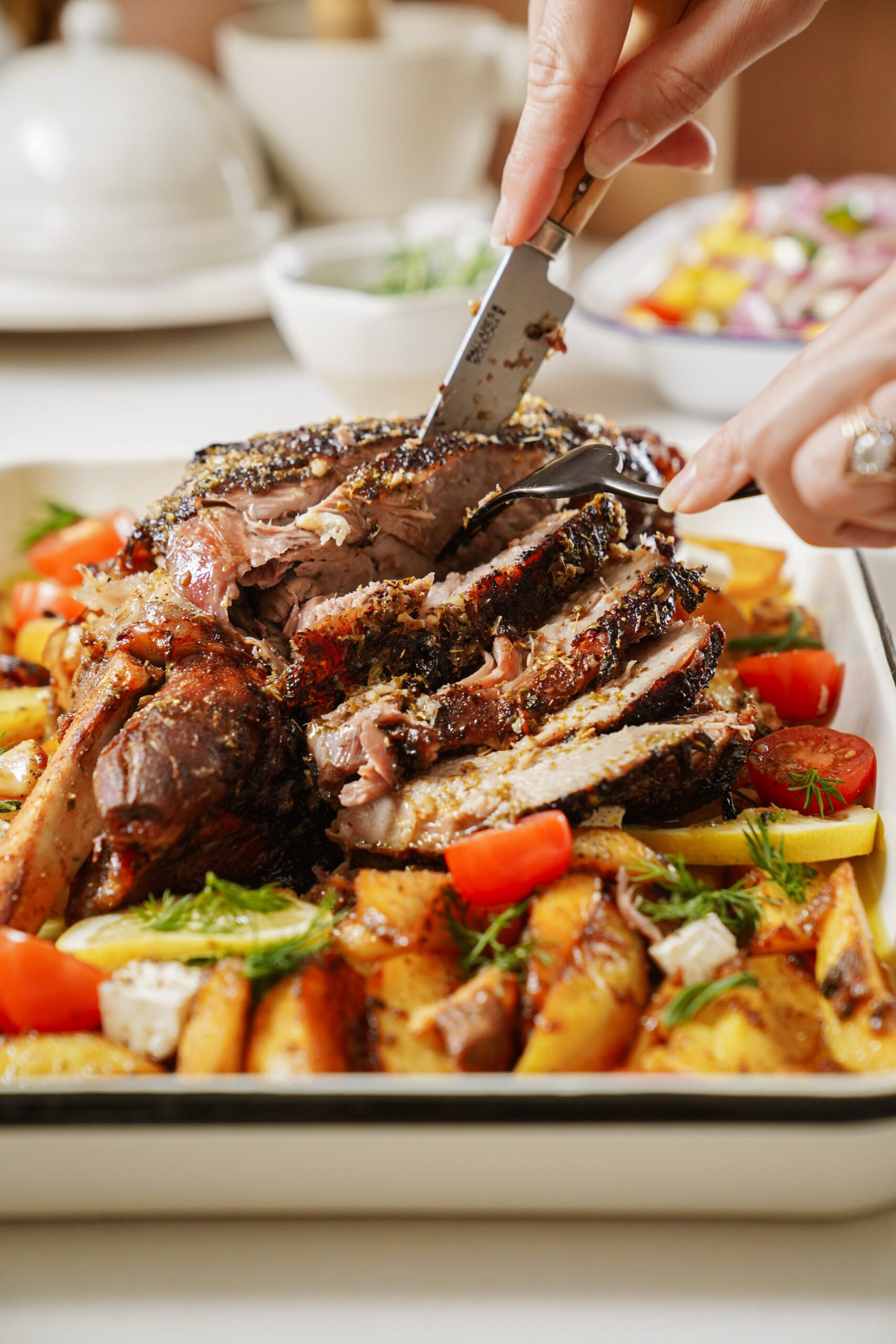
The Roasts — Arní sto Foúrno
Arní sto foúrno (oven-roasted lamb) is the backbone of Greek home cooking. Every Greek household has its own version of roasted lamb for Sunday lunch, Easter, or a family celebration. These Greek lamb recipes range from grand holiday centerpieces to weeknight-friendly roasts that still deliver all the flavors of home.
Greek Roasted Leg of Lamb with Lemon Potatoes
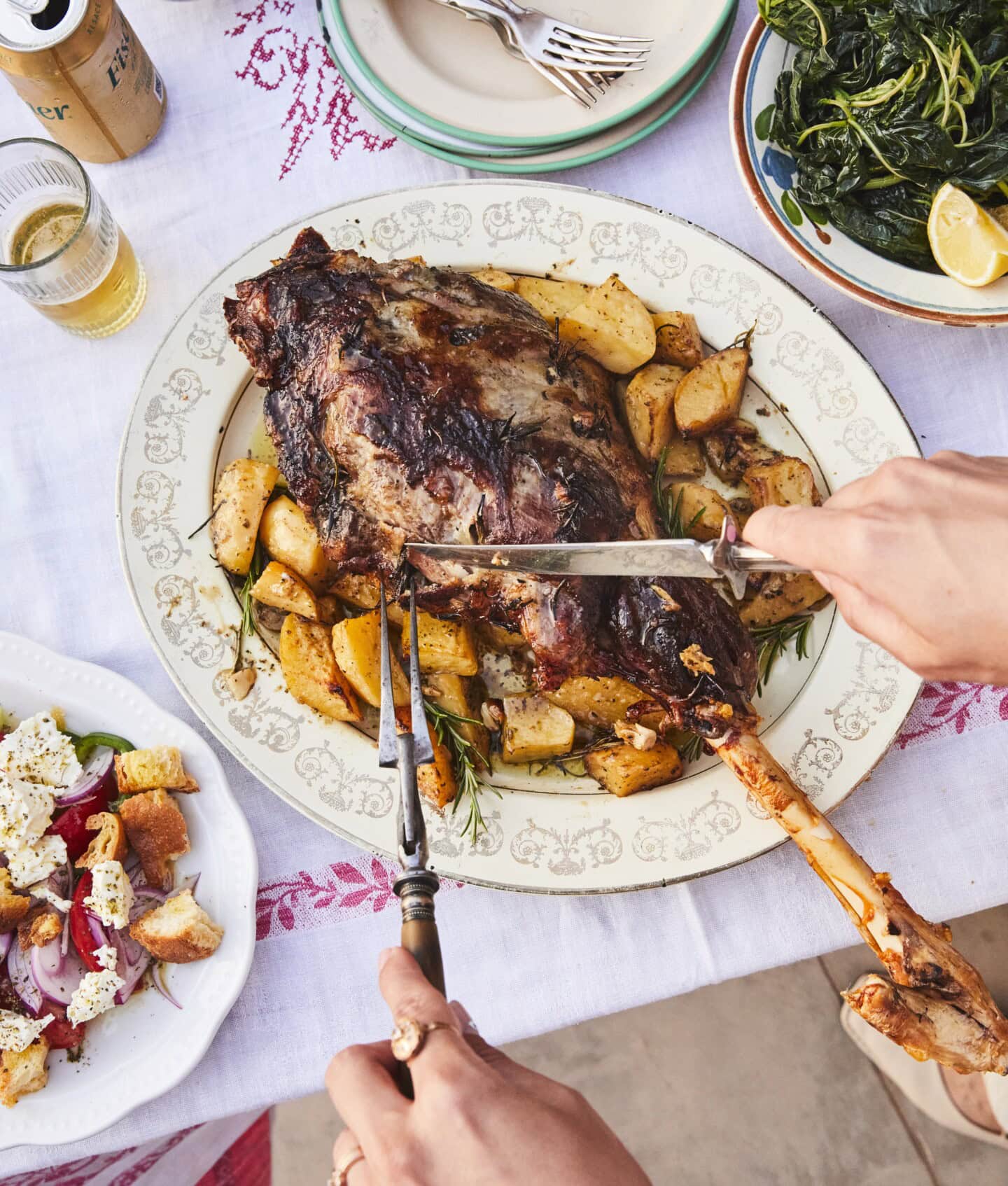
This is the Easter centerpiece: arní sto foúrno me patátes, or oven-roasted lamb with potatoes. A bone-in leg slowly roasts over lemon potatoes that absorb every drop of oregano, garlic, and pan juices. The potatoes underneath become almost more coveted than the lamb itself, and it’s so dang delicious!!
If you only make one of these authentic Greek lamb recipes this year, make it this one.
Easy Boneless Leg of Lamb
When you want the comfort of a Greek roast without the hours-long commitment, this boneless leg is the answer. Garlic, rosemary, olive oil, and lemon create a deeply flavorful roast that cooks in nearly half the time of a traditional bone-in cut.
It is the Greek lamb dish I turn to when Sunday dinner suddenly sneaks up on me, but I still want something that feels warm, generous, and celebratory.
Simple Greek Rack of Lamb
Rack of lamb is the dinner-party showstopper of the Greek lamb world. It cooks quickly, looks incredibly fancy, and needs very little beyond oregano, garlic, olive oil, and lemon zest to shine. Perfect for when you want to impress guests with minimal effort.
With a high-heat roast and a short cooking time, this recipe delivers perfectly juicy chops in under 30 minutes.
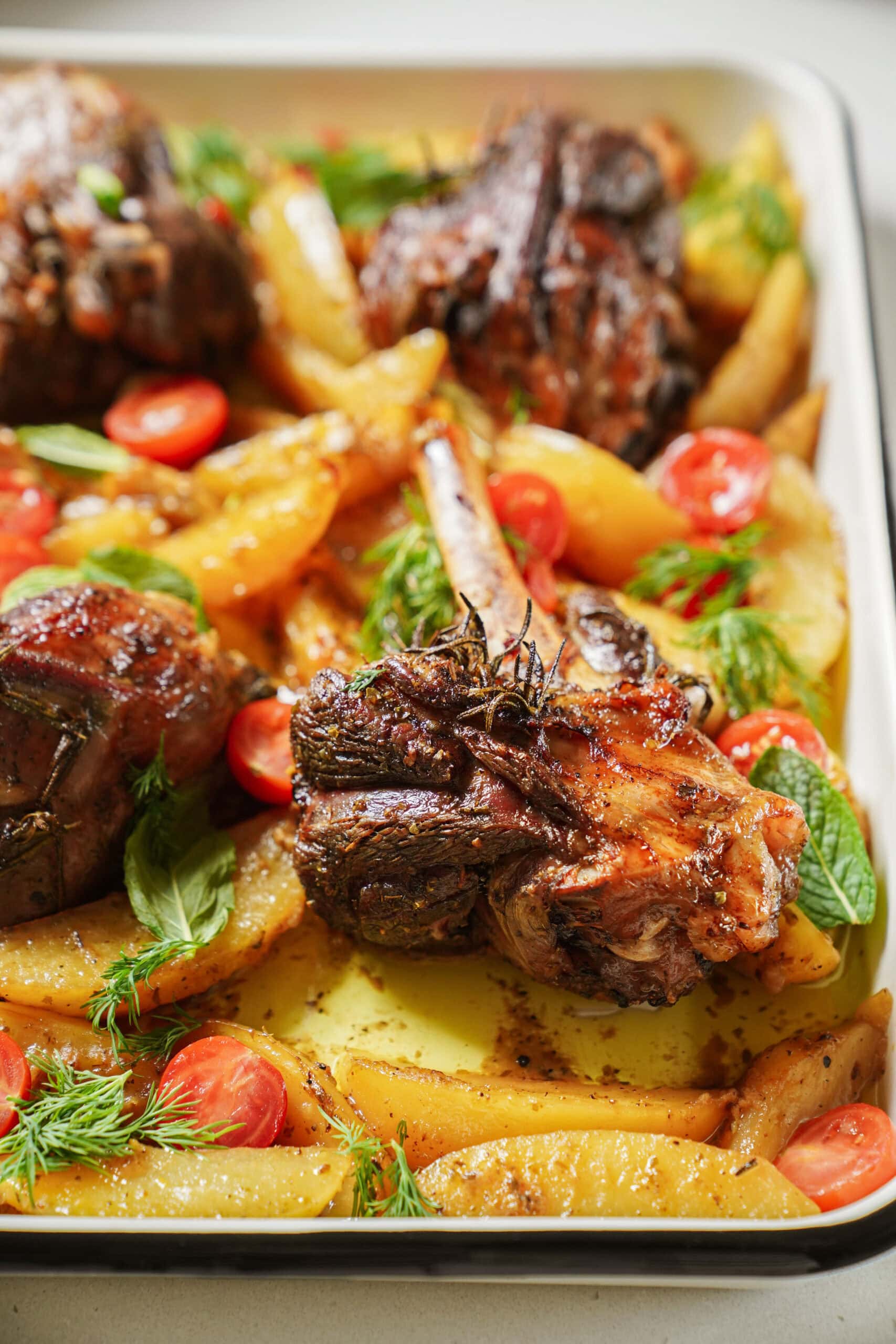
Low and Slow — Braised Greek Lamb
Braising belongs to the Greek grandmother’s kitchen! Low heat, patience, and time transform tougher cuts into tender, fall-apart meals that feel deeply comforting. Some of the most beloved Greek lamb dishes come from this slow-cooking tradition.
Greek Lamb Shanks and Lemon Potatoes
This is classic taverna comfort food. Lamb shanks slowly braise until the meat collapses effortlessly from the bone, while lemon potatoes soak up the rich braising liquid underneath.
The collagen in the shanks slowly melts into gelatin during cooking, creating that silky texture Greeks chase in long-braised meats. This dish tastes like an entire Sunday afternoon in one bite.
Greek-Style Braised Lamb Shanks
This version leans deeper into rich winter flavors, using a wine-braised cooking liquid that reduces to an intensely savory sauce. It is the type of meal meant for cold evenings, crusty bread, and a crowded table.
Serve this when you want an authentic Greek lamb recipe that quietly cooks away while you enjoy your guests instead of hovering over the stove.
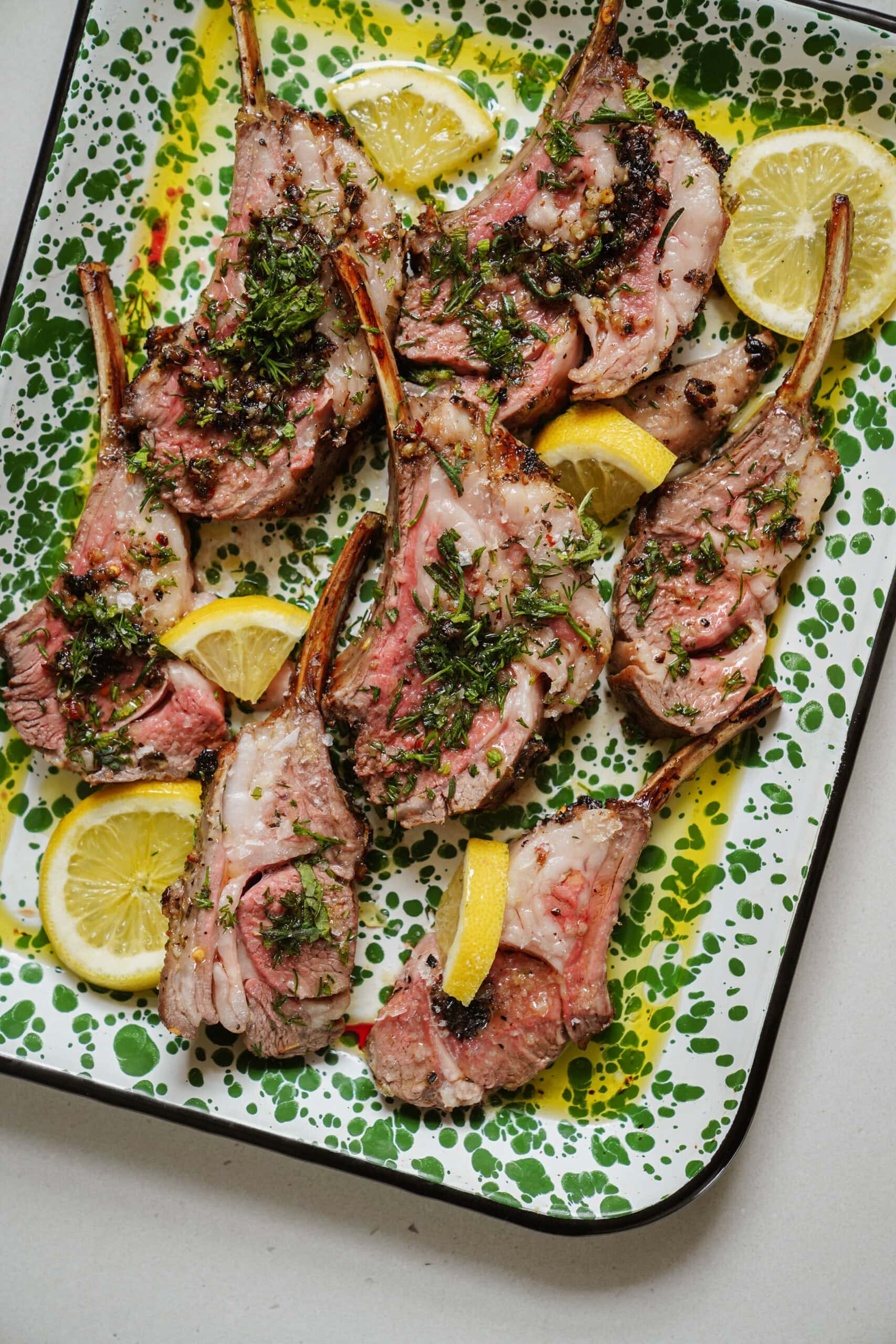
From the Grill — Paidákia and Beyond
Greeks take grilling seriously. Paidákia are one of the most iconic Greek lamb recipes you will find at any taverna because they leave nowhere for shortcuts or mistakes to hide. When the seasoning is simple, technique matters.
Authentic Greek Lamb Chops (Paidákia)
Paidákia is a pure Greek grilling tradition. Lamb chops are marinated with oregano, lemon juice, olive oil, and garlic before being grilled over high heat until charred outside and juicy inside.
This is the dish every Greek family fights over at the table. Among all the Greek lamb recipes here, paidákia may be the clearest expression of the oregano-lemon-olive oil trinity that defines Greek cooking.
Ground Lamb — Keftedes, Gyro, and More
Ground lamb is the everyday backbone of Greek cooking. It is affordable, versatile, deeply flavorful, and forms the base of many authentic Greek lamb recipes served as street food, meze, or weeknight dinners. Keftedes, gyro meat, and stuffed flatbreads all begin here.
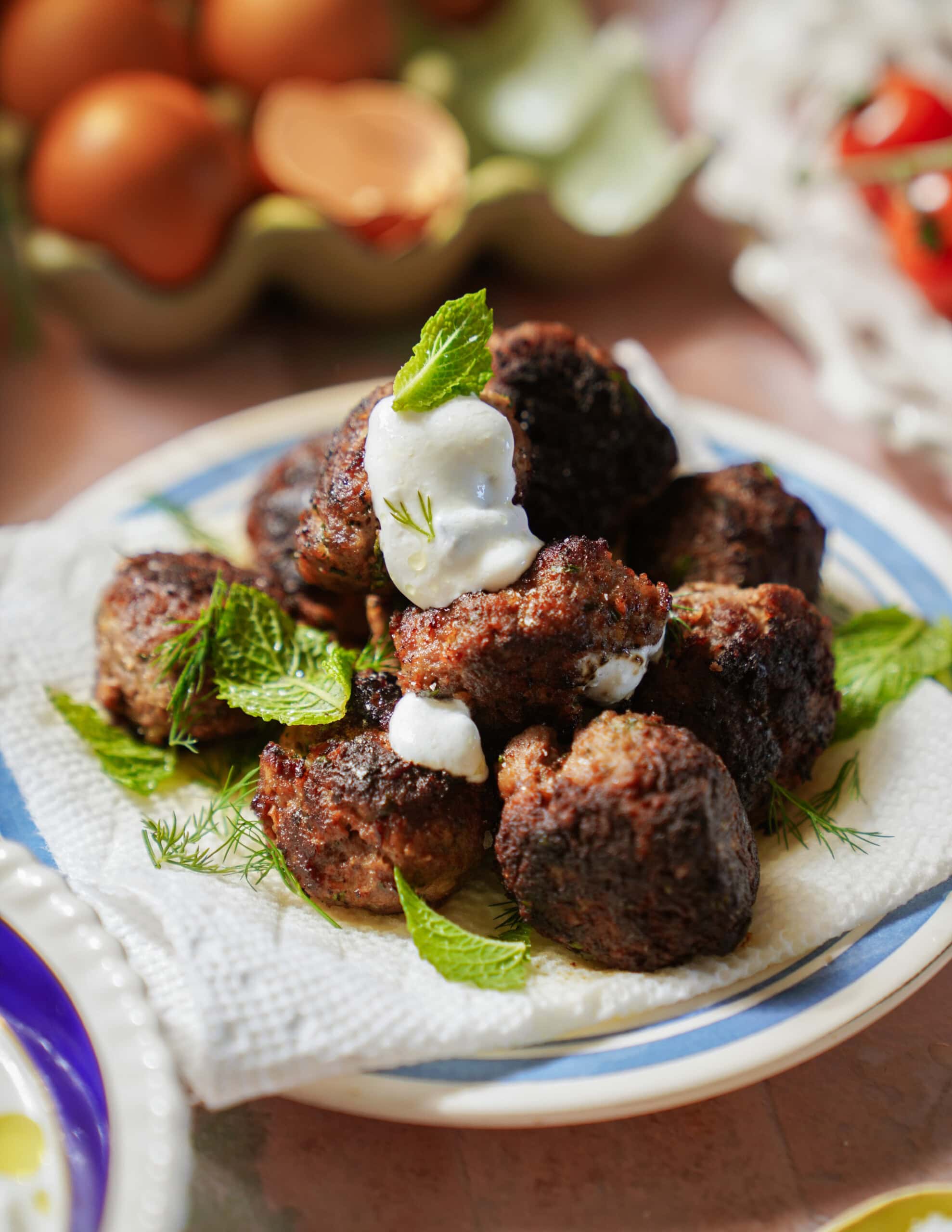
Greek Lamb Meatballs (Keftedes Arniou)
Keftedes arniou (κεφτέδες αρνιού) are a staple of the Greek meze table. These lamb meatballs are packed with herbs, onion, garlic, and warming spices before being baked until golden.
Serve them alongside tzatziki and warm pita bread as part of a full spread, or turn them into a simple weeknight dinner bowl.
Greek Gyro Meat
Forget takeaway gyro cones. Homemade gyro meat delivers the deeply savory, spice-forward flavor that defines Greek street food when it is done properly.
Thin slices of lamb layered into pita with tomato, onion, and tzatziki create the kind of dinner everyone asks for again immediately after finishing.
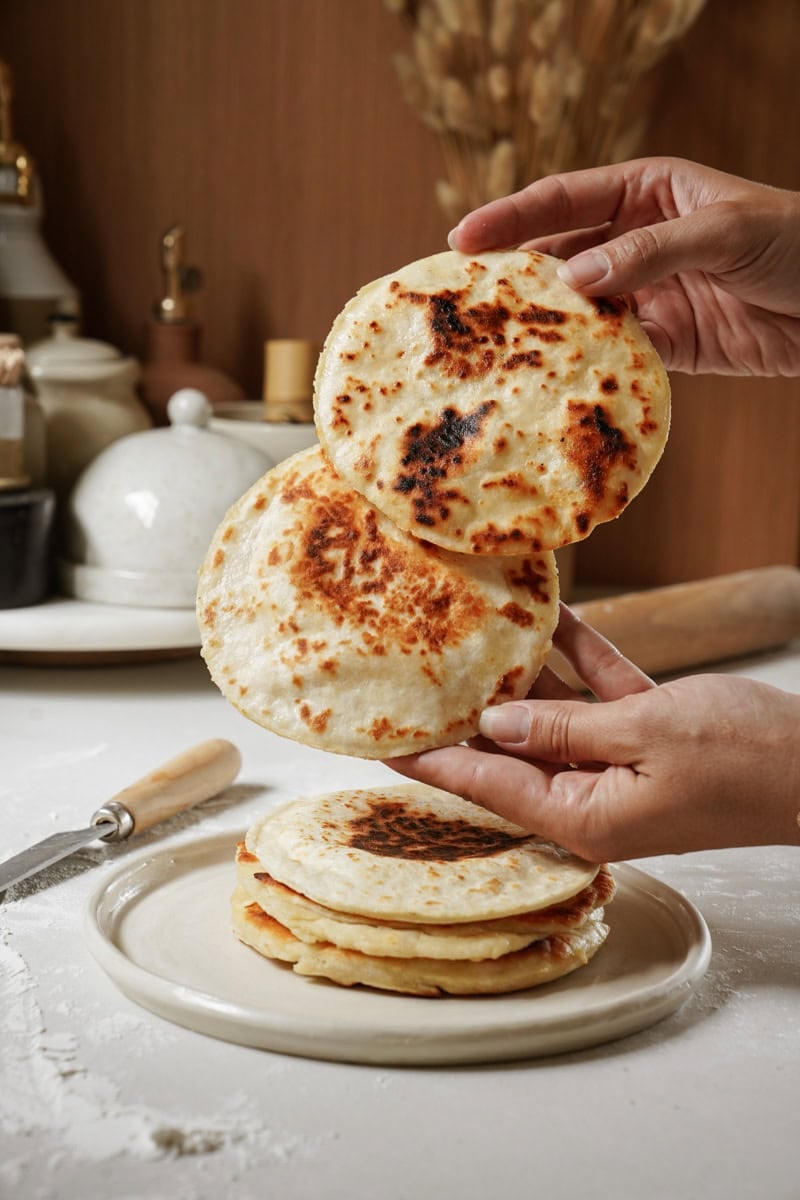
Lamb Flatbread
Spiced lamb, feta, herbs, and crisp golden flatbread come together in one of the most satisfying Greek lamb dishes you can put on the table.
The salty feta and rich lamb filling balance perfectly against blistered bread, making these flatbreads disappear almost instantly whenever I serve them.
How to Choose the Right Cut for Greek Cooking
Choosing the right cut matters just as much as choosing the right recipe. Greek cooking is built around understanding how each cut behaves with heat, time, and seasoning.
For roasting, leg of lamb is king. Bone-in legs are ideal for holidays and gatherings because the bone helps retain moisture and adds flavor during long roasting. Boneless leg is more practical for smaller dinners and cooks much faster while still delivering those unmistakable Greek flavors. Look for a leg weighing roughly 4–7 pounds for the best balance of cooking time and tenderness.
Shanks are the ultimate braising cut because they are loaded with connective tissue. At first, they are tough and chewy. After several hours of slow cooking, that collagen transforms into gelatin, creating the silky, fork-tender texture Greek braises are known for.
Rack and chops are your quick-cooking cuts. They thrive with high heat and minimal cooking time, whether on a charcoal grill or a screaming-hot cast-iron skillet. Ground lamb is the workhorse cut for everyday cooking. If possible, ask your butcher for shoulder or leg trim, ground fresh for the best flavor and texture.
| Cut | Best Method | Cook Time | Best For | Recipe |
|---|---|---|---|---|
| Bone-in leg | Roast | 3–4 hours | Easter, Sunday lunch | Roasted Leg of Lamb |
| Boneless leg | Roast | 1.5–2 hours | Weeknight dinner | Boneless Leg of Lamb |
| Rack | Roast/Grill | 20–30 min | Dinner parties | Rack of Lamb |
| Shanks | Braise | 2.5–3.5 hours | Winter comfort | Lamb Shanks |
| Chops | Grill | 8–12 min | Taverna nights | Lamb Chops |
| Ground | Bake/Pan-fry | 15–25 min | Meze, street food | Meatballs |
Storage Tips
- Fresh lamb cuts keep 3–5 days in the refrigerator when tightly wrapped.
- Ground lamb should be used within 1–2 days for the best quality.
- Cooked lamb lasts 3–4 days refrigerated in an airtight container.
- Braised lamb shanks reheat especially well because the gelatin-rich sauce keeps the meat moist.
- Raw cuts freeze well for 6–9 months.
- Ground lamb freezes best within 3–4 months.
- Wrap tightly in plastic wrap and foil, then label with the date before freezing.
Frequently Asked Questions
Greek cooking includes countless traditional lamb dishes. Some of the most iconic are arní sto foúrno (oven-roasted lamb with potatoes), kleftiko, paidákia (grilled lamb chops), and keftedes arniou (lamb meatballs). These Greek lamb recipes span roasting, grilling, braising, and ground preparations because lamb has long been central to the Greek table.
Classic Greek lamb marinades are built around dried oregano, fresh lemon juice, and extra-virgin olive oil. Garlic is almost always included, and many cooks add a splash of vinegar or wine. This combination defines authentic Greek lamb recipes because the oregano balances richness, the acid tenderizes the meat, and the olive oil distributes flavor evenly.
Tender lamb depends on the cut and cooking method. Roasts and braises need low-and-slow cooking so collagen can break down into gelatin over time. Acidic marinades also help tenderize tougher cuts. For chops and rack, the key is not overcooking. Medium-rare to medium keeps grilled lamb juicy and tender.
Different cuts suit different methods. Bone-in leg works best for traditional arní sto foúrno. Shanks are ideal for braising because they become incredibly tender over long cooking times. Chops and rack are best for grilling, while ground lamb is perfect for keftedes, gyro meat, and flatbreads. For value and flavor, shoulder is one of the best cuts to buy.
Absolutely. Historically, lamb was more common than beef in Greece because sheep and goats thrived in mountainous terrain where cattle farming was difficult. You can substitute lamb into dishes like moussaka, pastitsio, stews, and even Greek meatball recipes for a richer, more traditional flavor.
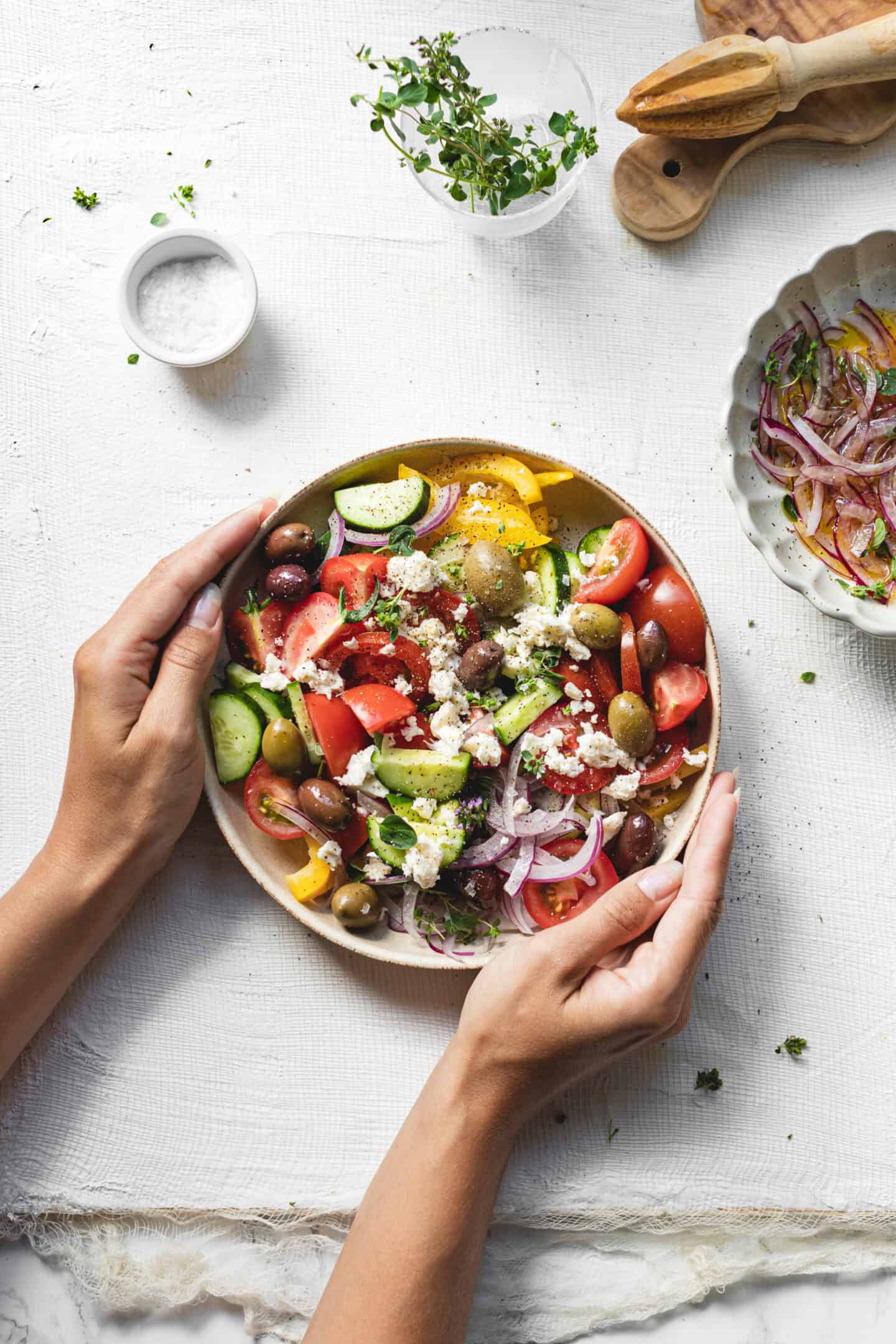
Lemon potatoes are the classic side for Greek lamb. A fresh horiatiki salad (aka Greek Salad) balances the richness perfectly, while tzatziki is essential with grilled chops and gyro meat. Warm pita bread is perfect for soaking up braising juices, and dishes like gigantes or roasted beets with skordalia round out a full Greek spread.
Be the first to discuss this recipe.