This post may contain affiliate links. Please read our disclosure policy.
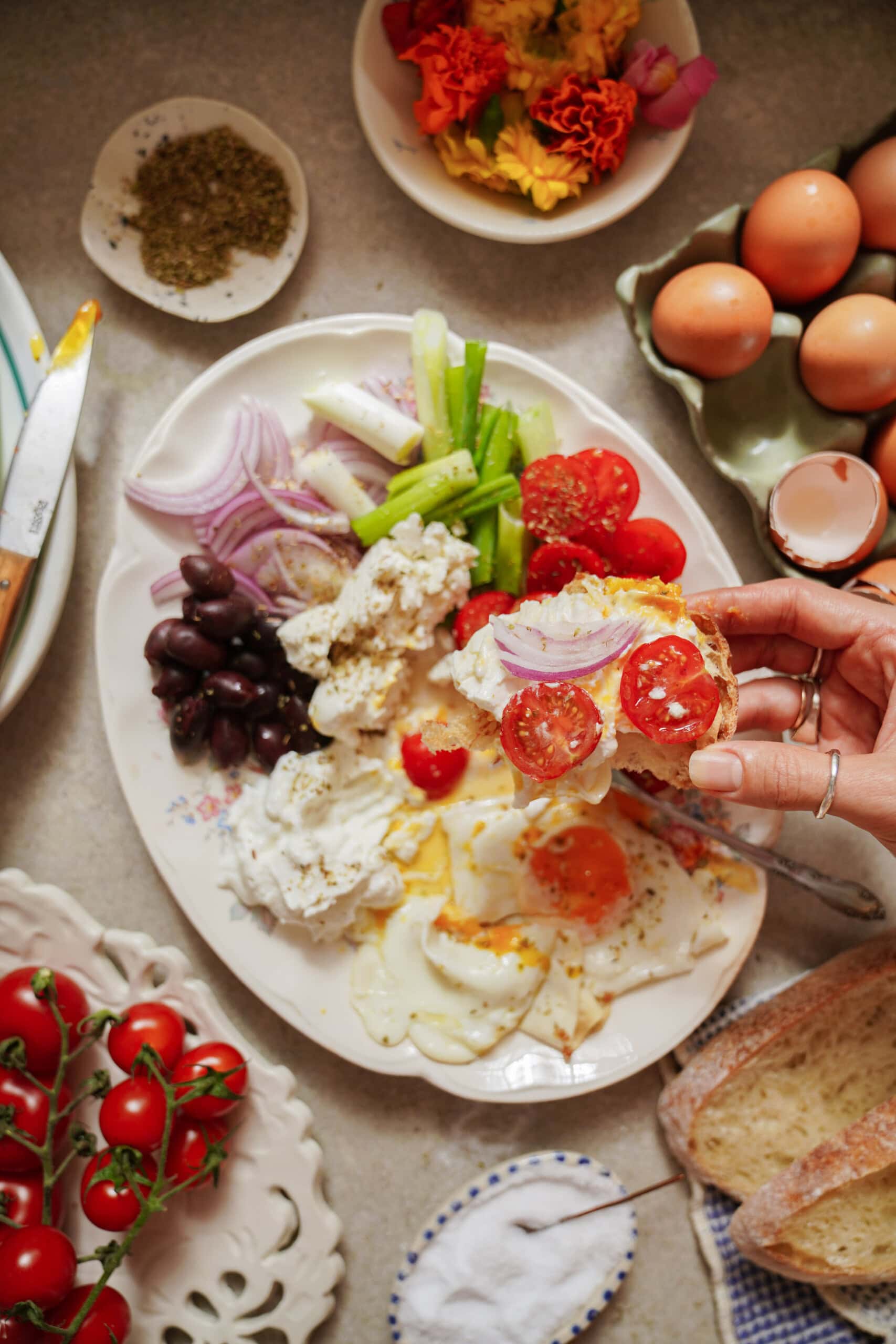
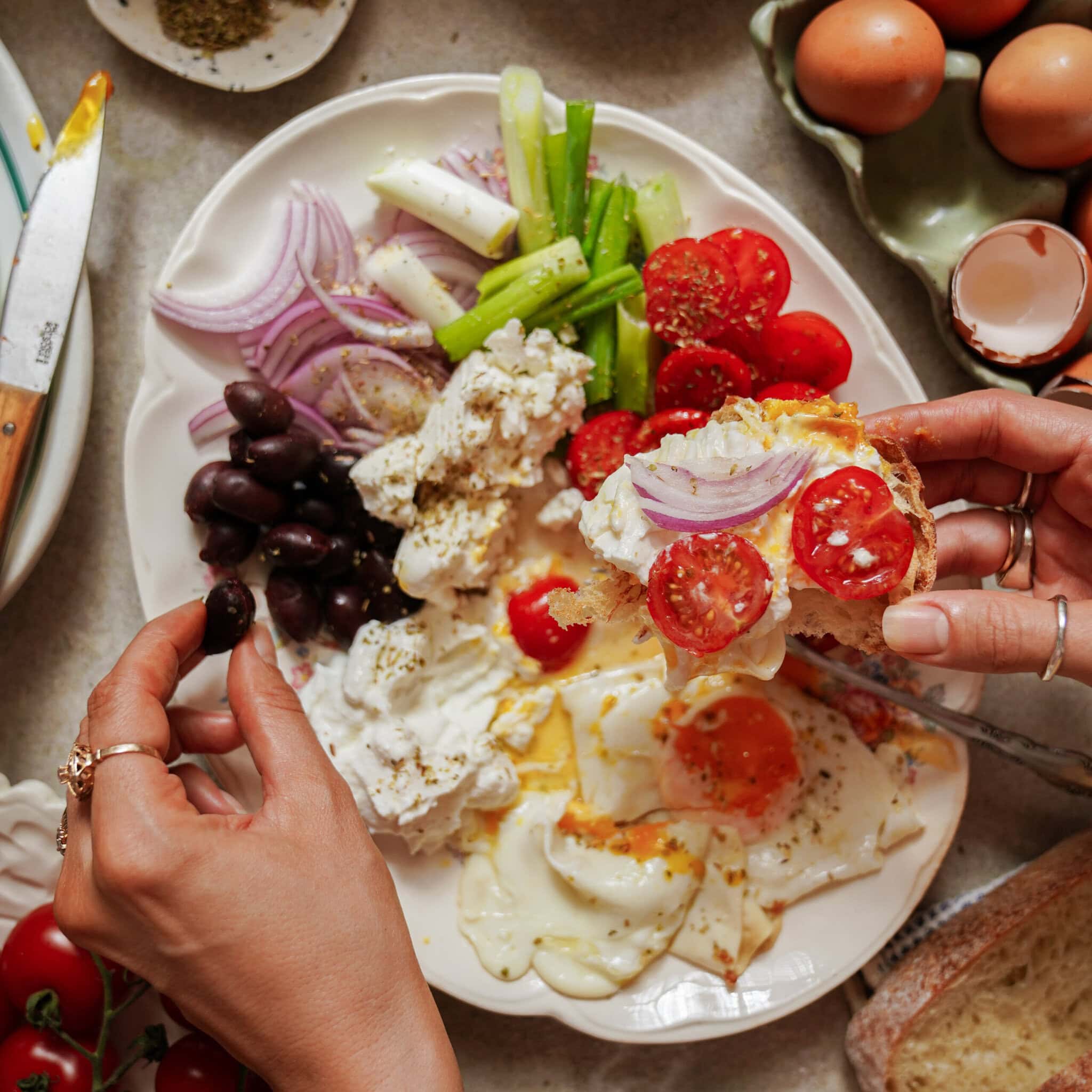
This Greek breakfast is the kind of morning meal I grew up eating at my yia-yia’s kitchen table. It’s simple, colorful, and built around the best, freshest, and in-season ingredients in the house. Think olive-oil-fried eggs, ripe tomatoes, feta, thick Greek yogurt, briny olives, and warm bread all gathered onto one plate with a drizzle of good olive oil and a squeeze of lemon. It’s a traditional Greek breakfast in the truest sense because it’s unfussy, satisfying, and ready in just 15 minutes.
Unlike the giant brunch spreads you see online, this is the real everyday version of proïnó, one pan for the eggs, everything else assembled straight onto the plate. Simple food, done well!

Maria Koutsogiannia
Maria is the creator of FoodByMaria and your go-to Greek food expert for cozy, flavor-packed recipes. Inspired by her Mediterranean roots, she brings traditional Greek flavors, feel-good ingredients, and a whole lot of joy to everyday cooking.
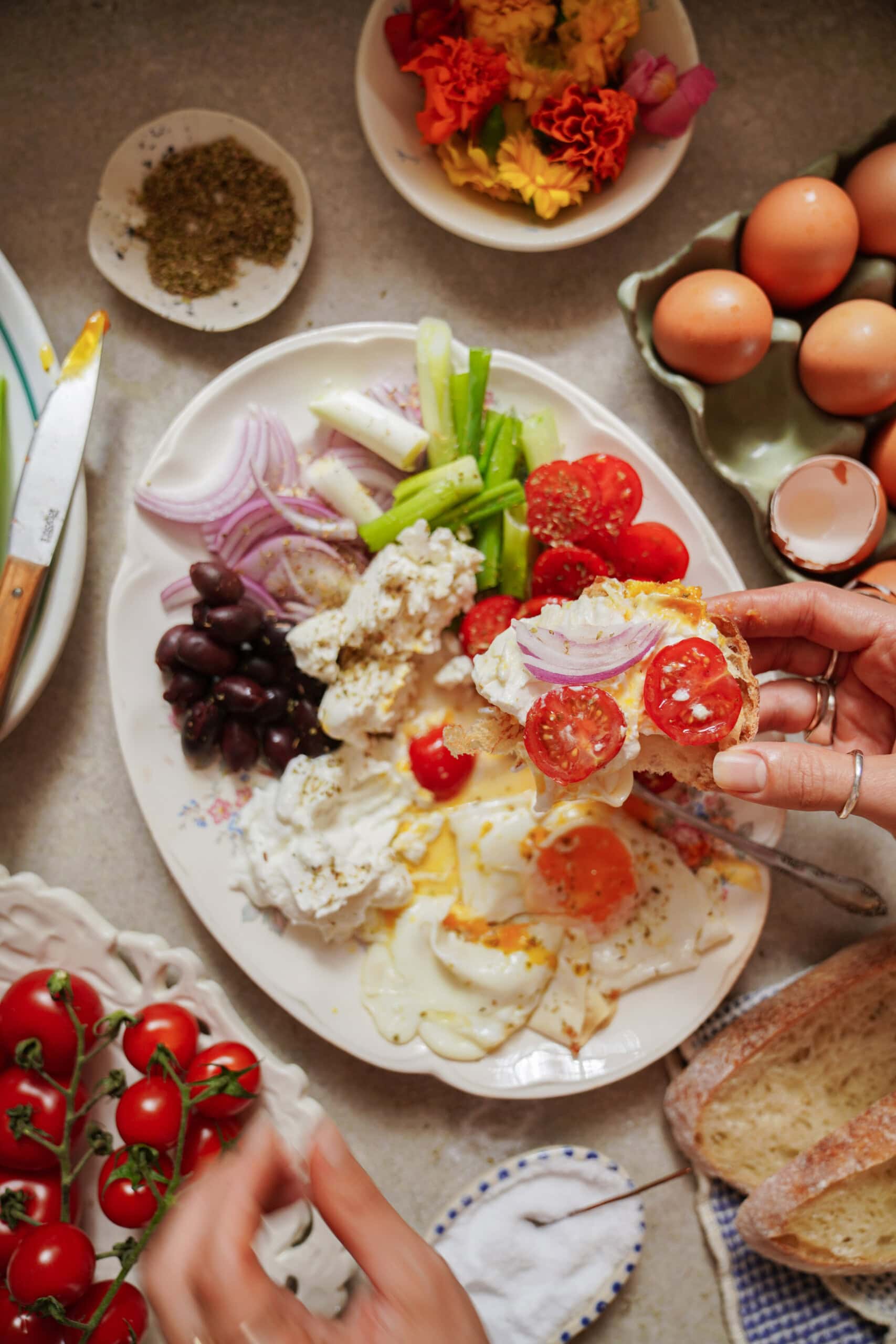
Why You’ll Love This Greek Breakfast
- Ready in 15 Minutes: The eggs cook in minutes while the rest of the plate comes together with simple slicing and arranging. Fast enough for weekdays, beautiful enough for slow weekend mornings.
- No-Recipe Recipe Energy: This is assembly cooking at its best. No complicated prep, no stress, no precision required. Just incredible ingredients layered onto one plate. You don’t need to be a pro cook to pull this off!
- Protein-Packed and Naturally Balanced: Eggs, feta, and Greek yogurt bring serious staying power to this breakfast, while olive oil and olives add richness and flavour that keep everything satisfying.
- Endlessly Adaptable: Use cherry tomatoes or sliced tomatoes, swap the bread, add a cucumber in summer, or build a bigger platter for the whole family.
- Feels Like a Greek Vacation Morning: Every bite tastes like a slow morning in Greece! Transporting you on vacation right in your own kitchen.
What Is a Traditional Greek Breakfast?
A traditional Greek breakfast isn’t usually an elaborate restaurant-style spread. Historically, most Greeks started the day simply: a strong Greek coffee and maybe a koulouri (the sesame-crusted bread ring sold from bakery windows and street carts across Greece).
The larger breakfast plate version is something you see more on weekends, holidays, summer mornings, or when the family gathers around the table. It’s less about cooking and more about pulling together what’s already in the kitchen: eggs, olives, feta, bread, yogurt, tomatoes, olive oil, and herbs.
Growing up, this kind of Greek breakfast wasn’t considered a “recipe.” My mama and yia-yia would simply place beautiful ingredients on the table and fry eggs in olive oil, while the bread toasted nearby. Breakfast always felt relaxed and generous, never rushed, never overcomplicated.
And honestly, this plate is such a perfect window into traditional Greek food as a whole: simple ingredients elevated by quality olive oil, fresh produce, and the idea that sharing food matters more than perfection.
Key Ingredients
Here’s what goes on a Greek breakfast recipe plate, and why each ingredient matters.
Eggs
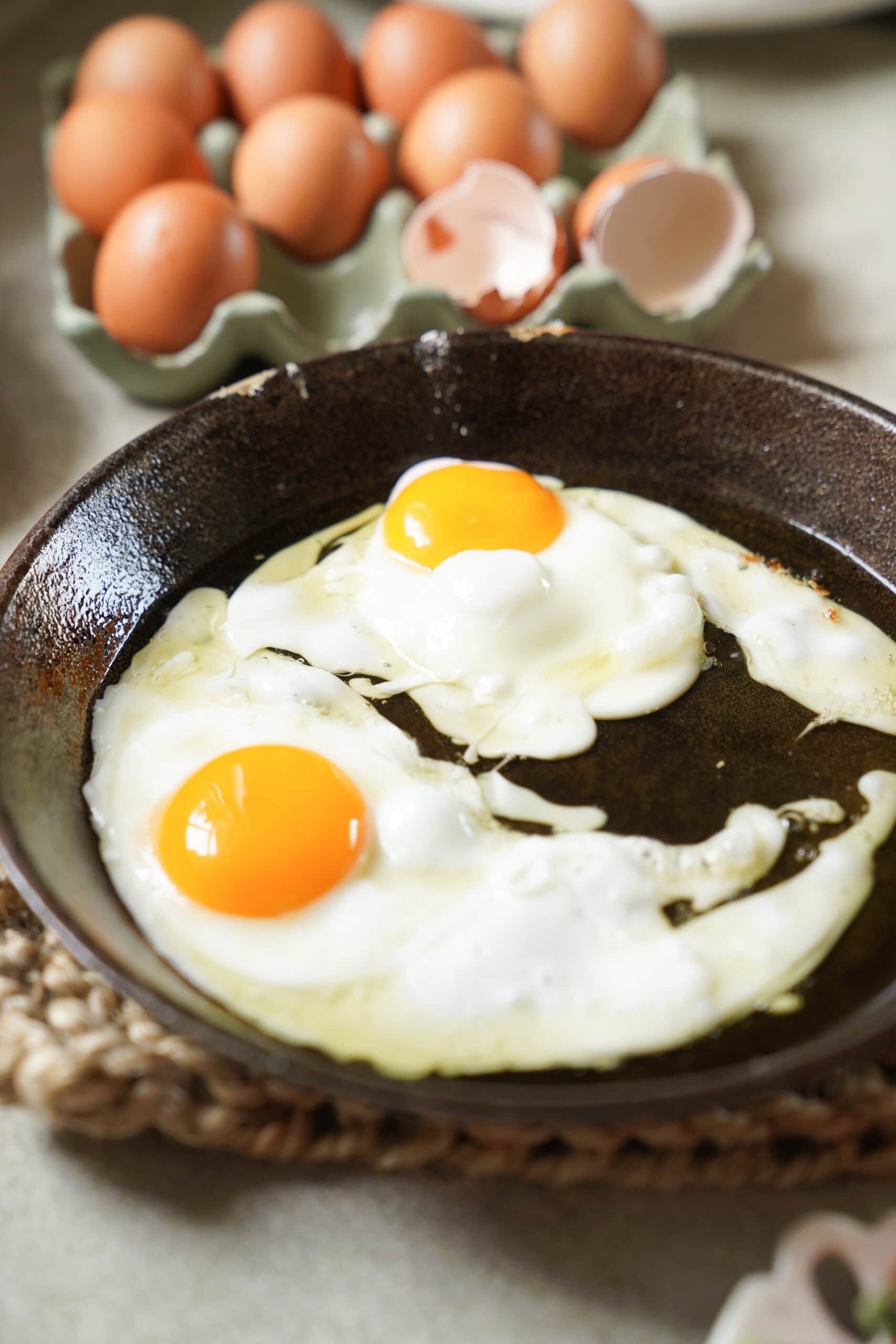
Olive oil-fried eggs are the heart of this plate. Spooning the hot oil over the whites as they cook creates crispy edges and rich flavour while keeping the yolks soft and jammy.
Tomato
Use the ripest tomato you can find. In Greece, summer tomatoes are sweet enough to eat like fruit, and this plate really shines when the tomatoes are peak-season juicy.
Feta Cheese
Always chunks, never crumbles. You want creamy, salty bites throughout the plate. If you love feta-heavy dishes, you’ll also love our bouyiourdi.
Kalamata Olives
Deep purple, briny, slightly fruity, these olives bring the unmistakable Greek flavor to the plate.
Green Onion
Cutting the green onions on the bias (at a 45-degree angle) gives them a softer texture and prettier presentation while adding a mild sharpness.
Red Onion
Thin slices add bite and balance against the creamy yogurt and salty feta.
Plain Greek Yogurt
Full-fat Greek yogurt acts almost like another sauce on the plate. It adds a bit of cool, tangy, and creamy flavor to the warm eggs.
Bread
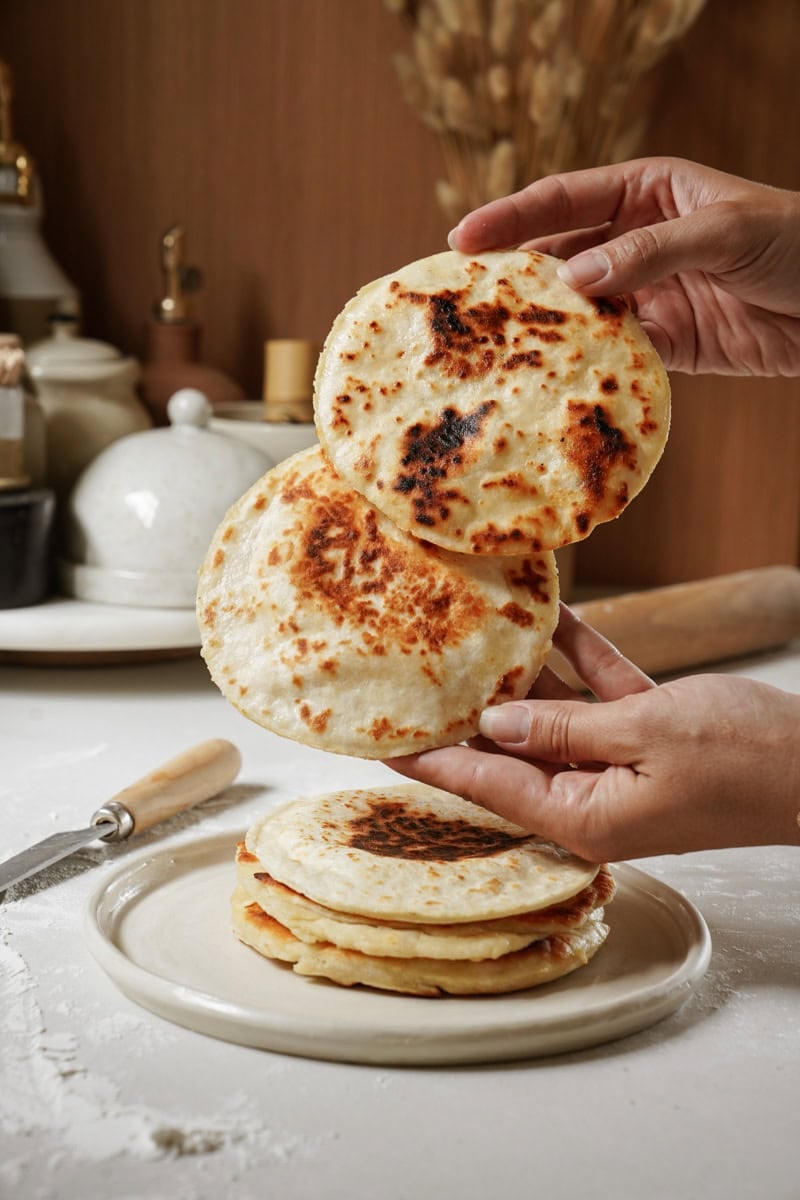
Use whatever bread you love most: sourdough, rustic village bread, or pita. The bread is essential for scooping up egg yolk and olive oil.
Extra-Virgin Olive Oil, Oregano, and Lemon
This trio defines Greek cooking. The finishing drizzle of olive oil from the egg pan, plus oregano and lemon, ties every component together beautifully.
If you’re a feta lover, our Greek feta dip is another must-make.
How to Assemble the Plate
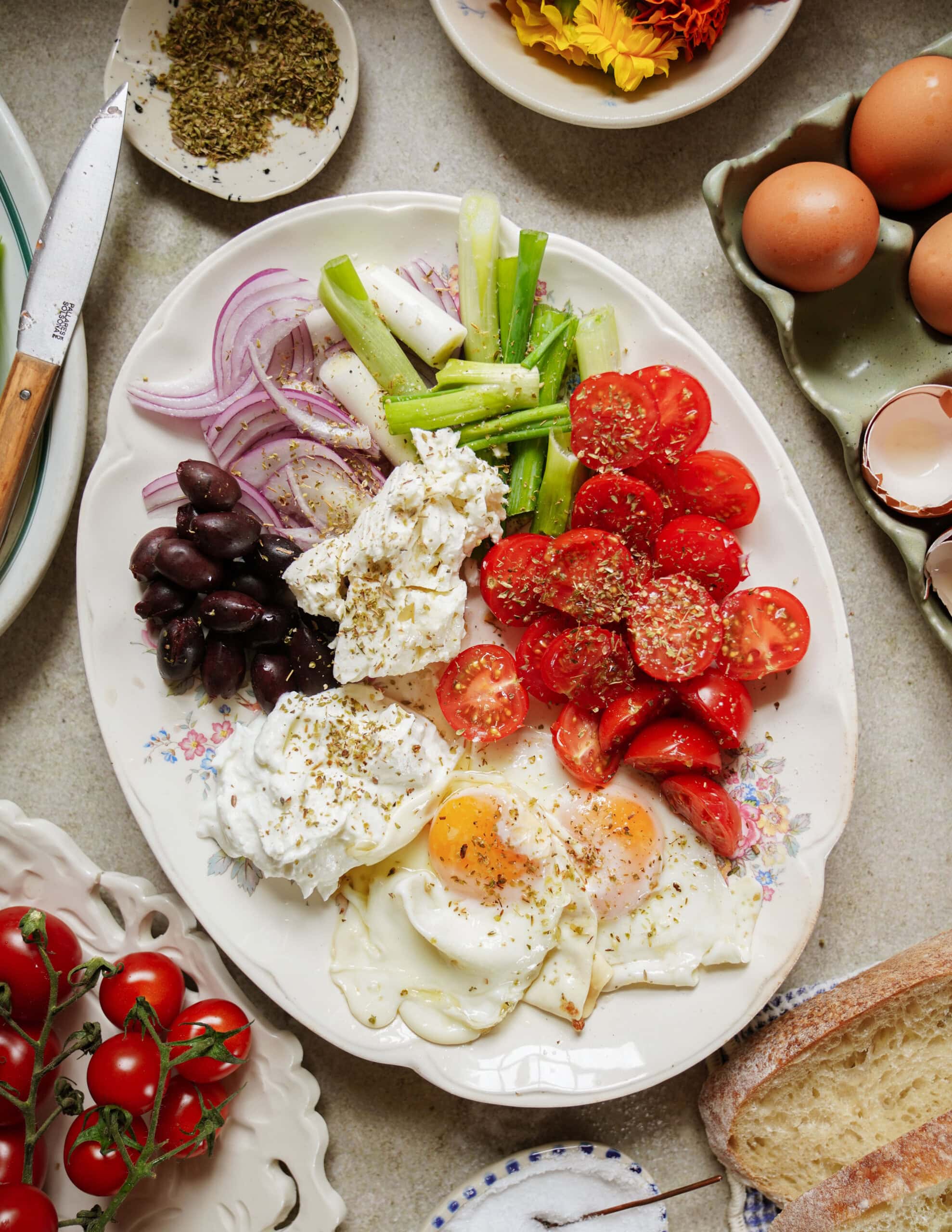
In Greek kitchens, the cold ingredients always hit the plate first while the eggs cook. Tomatoes, olives, feta, yogurt, onions, and bread all get arranged before the pan even heats up. That way, the eggs can go straight from the skillet onto the plate while they’re still hot and crisp-edged.
The olive oil-basting technique is what makes the eggs feel distinctly Greek. Instead of butter, the eggs cook in a generous layer of olive oil, and the hot oil gets spooned over the tops as they fry. The edges crisp slightly while the yolks stay soft.
The final touch matters just as much as the eggs themselves: a drizzle of the warm olive oil from the pan over the tomatoes, feta, and yogurt, followed by oregano, flaky salt, and a squeeze of fresh lemon.
This plate is intentionally built for one person, proïnó is personal. But it’s just as easy to scale into a family-style breakfast spread for the table.
If you want something more cooked and hands-on, try our shakshuka next.
Tips for the Best Greek Breakfast Plate
Use the Best Olive Oil You Have
You truly taste the olive oil in this dish. Use good extra-virgin olive oil with flavor and richness.
Room-Temperature Tomatoes
Cold tomatoes lose flavor. Let them sit out before assembling the plate for the best sweetness.
Feta in Chunks, Not Crumbles
Larger pieces give you creamy bites instead of tiny salty sprinkles.
Keep the Yolks Runny
The egg yolk becomes part of the sauce for the bread and vegetables. Slightly runny or jammy is ideal.
Season at the End
Salt, oregano, olive oil, and lemon should finish the plate after everything is assembled, so the flavors stay bright and fresh.
Greek yogurt also shines in our egg salad, with Greek yogurt if you want another easy, high-protein breakfast idea.
Variations and Substitutions
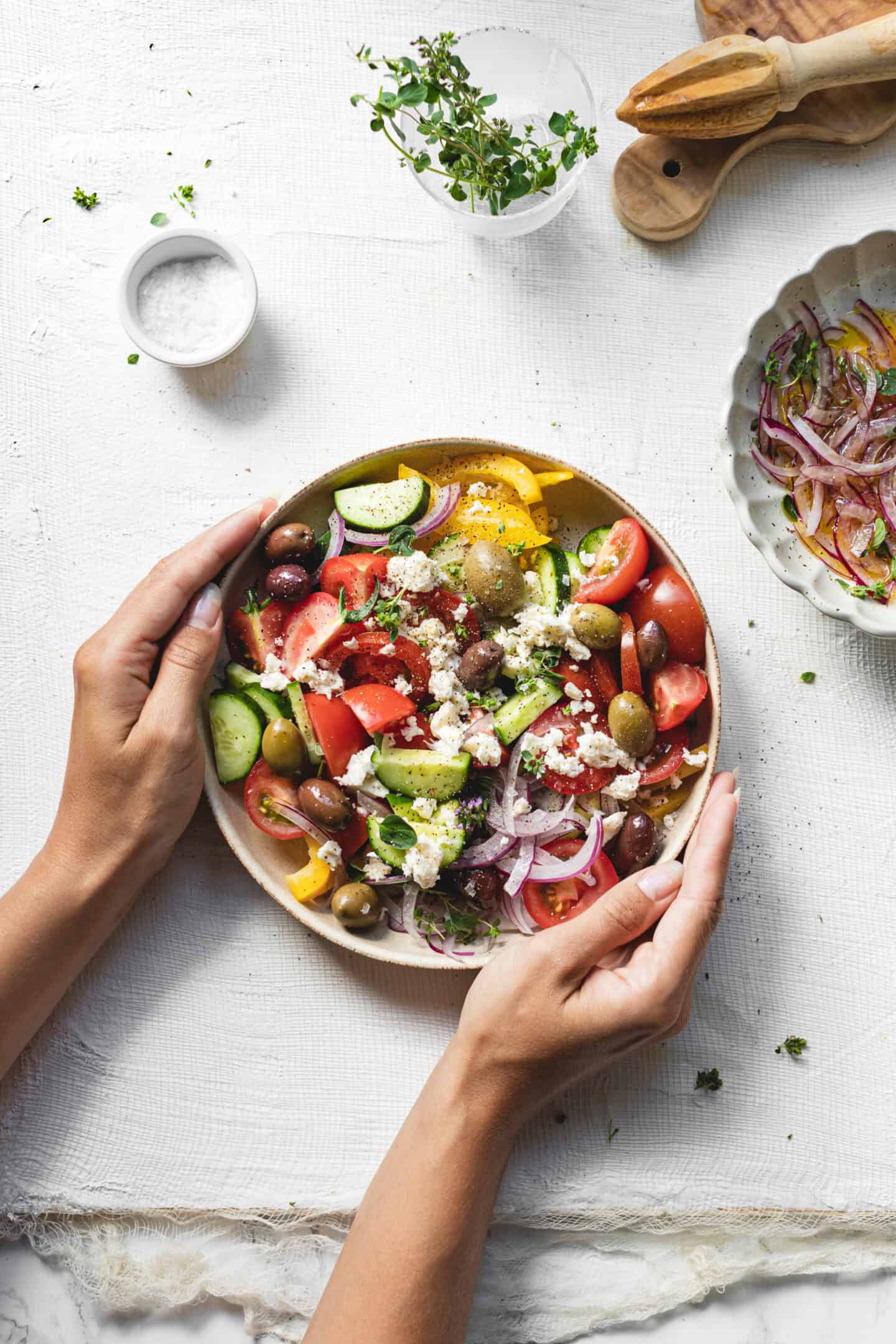
Cherry tomatoes and sliced tomatoes both work beautifully here. Cherry tomatoes tend to be sweeter year-round, while large sliced tomatoes feel especially summery.
Cucumber isn’t included in the recipe card, but adding a few slices in summer makes the plate even more refreshing and very true to Greek table culture.
For bread, anything crusty works well, like sourdough, toasted pita, rustic village bread, or even a sesame-coated koulouri if you can find one.
Olive-oil-fried eggs are traditional, but soft-boiled or poached eggs also work beautifully. The important thing is keeping that soft yolk element.
You can also easily scale this up into a large platter for brunch gatherings or family breakfasts.
If you have extra ripe tomatoes lying around, turn them into tomato fritters (tomatokeftedes) next.
Storage and Leftovers
This breakfast plate is best eaten fresh while the eggs are warm and the bread is toasted.
If you have leftover ingredients, the tomatoes, olives, feta, and yogurt will keep separately in the fridge for 2–3 days and can easily be reassembled into another plate later.
This isn’t really a meal-prep breakfast, but keeping these staple ingredients stocked makes it incredibly easy to throw together any morning.
FAQs
A traditional Greek breakfast (proïnó) is simple and ingredient-driven. It typically includes eggs, ripe tomatoes, olives, feta cheese, bread, and Greek yogurt, all drizzled with extra-virgin olive oil and seasoned with dried oregano. On weekdays, many Greeks keep it even simpler with just a coffee and a koulouri (sesame bread ring). The full plate version appears on weekends, holidays, and summer mornings.
While “Mediterranean breakfast” is a broad category that includes foods from many countries, a Greek breakfast specifically features Greek staples like feta, kalamata olives, Greek yogurt, oregano, lemon, and olive oil-fried eggs.
Absolutely. Simply double or triple the ingredients and arrange everything on a large platter family-style.
Any crusty bread works; sourdough, village bread, pita, or koulouri are all excellent choices.
Full-fat Greek yogurt gives the best creamy texture and flavor, but lower-fat versions work if needed.
Yes. This plate is balanced with protein, healthy fats, and fresh vegetables while staying naturally simple and minimally processed.
Save this recipe for later
Watch the Video
Ingredients
- 2 eggs
- 1 large tomato, sliced (or 1 cup cherry tomatoes, halved)
- 3-4 sprigs green onion, cut on the bias in 1-2 inch pieces
- ¼ red onion, thinly sliced
- 1/4-1/2 cup chunks of feta cheese
- ¼ cup kalamata olives
- 1 slice Bread of choice
- ⅓ cup plain Greek yogurt
- Extra-virgin olive oil, salt and/or dried oregano for seasoning
- Lemon wedge for serving
Instructions
Start Cooking- First assemble the plate with tomato slices or wedges; green onions cut on the bias; thinly sliced red onion; chunks of feta cheese; kalamata olives; toasted bread of choice; and, plain Greek yogurt. Set aside while you prepare the eggs.
- Coat the bottom of a frying pan with olive oil and heat over medium heat. When the oil is warm, crack two eggs into the pan and cook until your desired doneness, using a spoon to spoon a little bit of olive oil over the eggs as they cook.
- As the eggs cook, toast the bread.
- When the eggs are done cooking, use a slotted spoon to add them to your plate. Season everything else on the plate with a drizzle of olive oil from the pan, squeeze of a lemon wedge, salt and/or dried oregano.
Notes
- This is meant to be a breakfast plate for one but feel free to adjust ingredient quantities as needed.
- Easily double or triple this to make for more people!

2 people are discussing this recipe. Join in
Wow, Maria! Your Greek breakfast options are extremely delicious! I adore how you’ve combined traditional features with modern twists—those fluffy feta omelets look delicious. Thank you for sharing such vibrant recipes that would brighten anyone’s morning! block blast
YUM!