30 Minute Meals
Mediterranean Olive Salad Recipe (Greek-Style with Herbs and Lemon)
Prep
10 minutes
Yield
6 -8 people
A bright, herby Mediterranean olive salad tossed with lemon, olive oil, and fresh herbs. Ready in just 10 minutes!
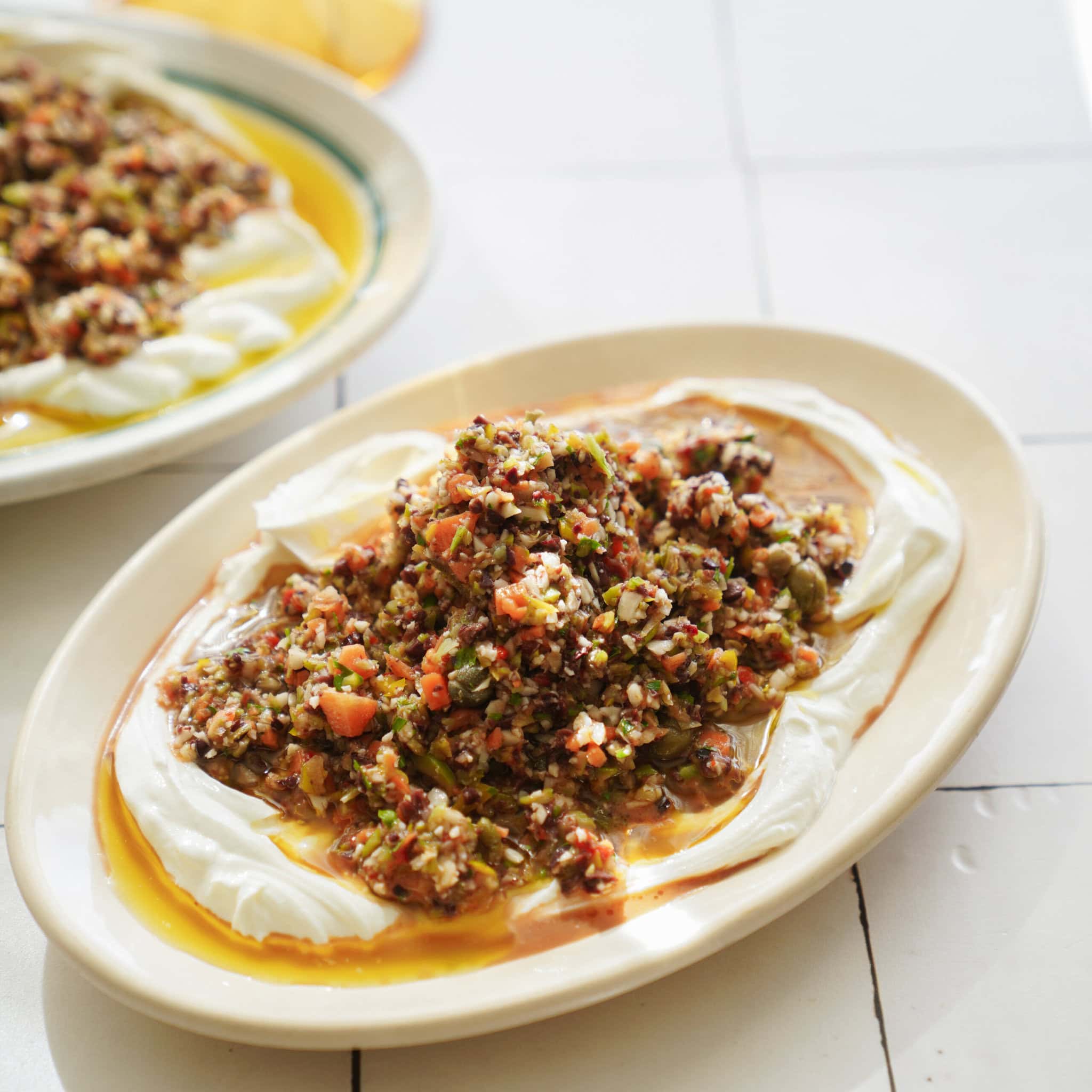
Olives deserve to be the main character and this olive salad recipe proves exactly that. Instead of being a topping or afterthought, this olive salad is bright, herby, and dressed simply the way it’s done in Greece. It uses good olive oil, fresh herbs, and lemon. It’s the kind of quick, no-fuss dish my family puts on the table with warm bread before every meal.
❤️ Why You’ll Love This Olive Salad
- Bold Mediterranean flavor: Briny olives, fresh herbs, and a lemony dressing that’s simple but layered to perfection
- Ready in 10 minutes: No cooking required! The perfect recipe for summer. Just chop, toss, and serve
- Endlessly versatile: Serve as a side, spoon over grilled meats, pile onto bruschetta, or toss with pasta
- Naturally healthy: Packed with heart-healthy fats, antioxidants, and nutrients that fit Mediterranean, keto, and Whole30 lifestyles
What is Olive Salad?
Olive salad can mean a few different things depending on where you are.
In the Mediterranean, especially Greece, olive salad is exactly what it sounds like… whole or halved olives dressed with olive oil, lemon, herbs, and simple add-ins. It’s fresh, and meant to be eaten as a salad or mezze.
In the U.S., many people think of the New Orleans muffaletta version which is a finely chopped olive spread mixed with pickled vegetables. That style (sometimes called Italian olive salad) is delicious, but it’s more of a condiment than a true salad.
This recipe leans into the Mediterranean original. With olives front and center, not chopped into a paste. Think of it as a more olive-forward cousin to a traditional Greek salad where olives take the spotlight.
Why marinating matters:
When olives sit in olive oil and acid (like lemon juice or vinegar), something magical happens. The acid cuts through the briny intensity, while the oil carries fat-soluble flavors from herbs and spices. Even 15 minutes makes a difference (but if you let it sit longer, it only gets better).
Ingredients for the Best Olive Salad
A great olive salad recipe comes down to quality ingredients and balance.
The Olives
Use a mix for the best flavor:
- Castelvetrano olives — buttery, mild, slightly sweet
- Kalamata olives — rich, briny, and deep
- Green olives (like Manzanilla or Halkidiki) — bright and tangy
Using 2–3 varieties creates complexity. Skip canned black olives as they don’t have the same texture or flavor.
The Vegetables & Add-Ins
- Cauliflower florets
- Carrots
- Celery
- Fresh chopped parsley
The Dressing
- Extra virgin olive oil (quality matters—see notes in this guide)
- Fresh lemon juice
- Red wine vinegar (just a splash)
- Garlic
- Dried oregano
- Salt and pepper
How to Pick the Best Olives for Salad
If you want your olive salad to taste incredible, this part matters more than anything else.
Curing styles:
- Brine-cured: juicy, salty, and perfect for salads
- Dry-cured: wrinkled and intense, great for depth in small amounts
- Lye-cured: milder but often less flavorful (common in canned olives)
Why jarred > canned:
Jarred olives in brine have better texture, fewer additives, and more natural flavor.
Use the olive bar if you can:
It lets you mix varieties and taste before buying which gives you a huge advantage.
What to look for:
- Firm, plump flesh
- Natural colour variation
- No mushiness
Castelvetrano olives have become super popular for a reason. They’re buttery, mild, and approachable, making them perfect even for people who think they don’t like olives.
Substitutions and Variations
This olive salad is incredibly flexible:
- Olive swaps: Use any mix. Kalamata-heavy, all green, or add oil-cured olives
- Add protein: Chickpeas, white beans, or feta turn it into a meal
- Make it Greek: Add cucumber, tomato, and feta (like this Greek salad)
- Make it Italian: Add artichokes, sun-dried tomatoes, and mozzarella
- Add crunch: Toasted walnuts or pine nuts
- Spice it up: Aleppo pepper or chili flakes
What to Serve with Olive Salad
This is where olive salad really shines.
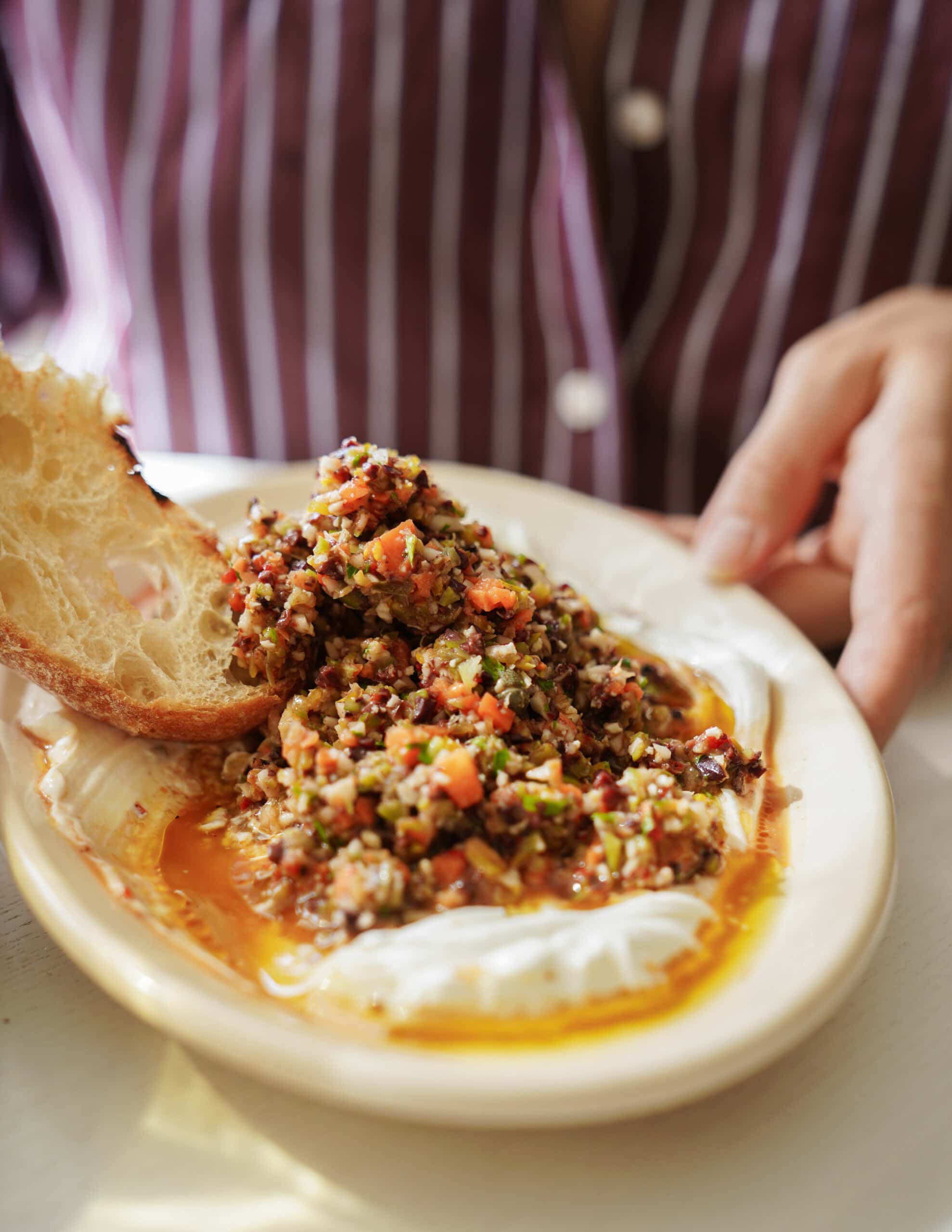
- With warm bread — Scoop it up with focaccia or pita
- As a dip — Spoon it over whipped feta for an unreal appetizer
- With grilled meats — Perfect alongside chicken, lamb, or fish
- On sandwiches — Use it like a Mediterranean-style spread
- On toast — Try it piled onto bruschetta
- With pasta — Toss with warm pasta and feta for a quick dinner
Tips for the Best Olive Salad
- Use room-temperature olives: Cold olives taste muted
- Dress it early: Letting it sit deepens flavor
- Don’t over-chop: You want texture, not paste
- Season in stages: Olives are already salty so taste first
- Finish with a drizzle: A little extra olive oil and lemon right before serving makes everything pop
How to Store Olive Salad
- Fridge: Keeps 5–7 days in an airtight container
- Make-ahead: Even better the next day, just add fresh herbs before serving
- Freezing: Not recommended because the veggies lose their texture
FAQs
A mix of 2–3 varieties works best. Castelvetrano for mildness, Kalamata for depth, and a green olive for brightness. Avoid canned black olives.
No. Muffaletta is finely chopped and used as a sandwich spread, while Mediterranean olive salad keeps olives whole or halved and is served as a salad.
About 5–7 days, and it tastes even better after sitting overnight.
Absolutely! Especially if you add beans or feta. It also pairs perfectly with bread.
Yes! It’s rich in healthy fats, antioxidants, and nutrients from olives, olive oil, and fresh herbs.
Bread, whipped feta, grilled meats, pasta, bruschetta, or sandwiches all pair so well with this recipe.
Your Greek mommy that is. 😍 Step into my kitchen to learn how to make yummy Greek food. 🍽️💃
Mediterranean Olive Salad Recipe
Ingredients
For the olive salad
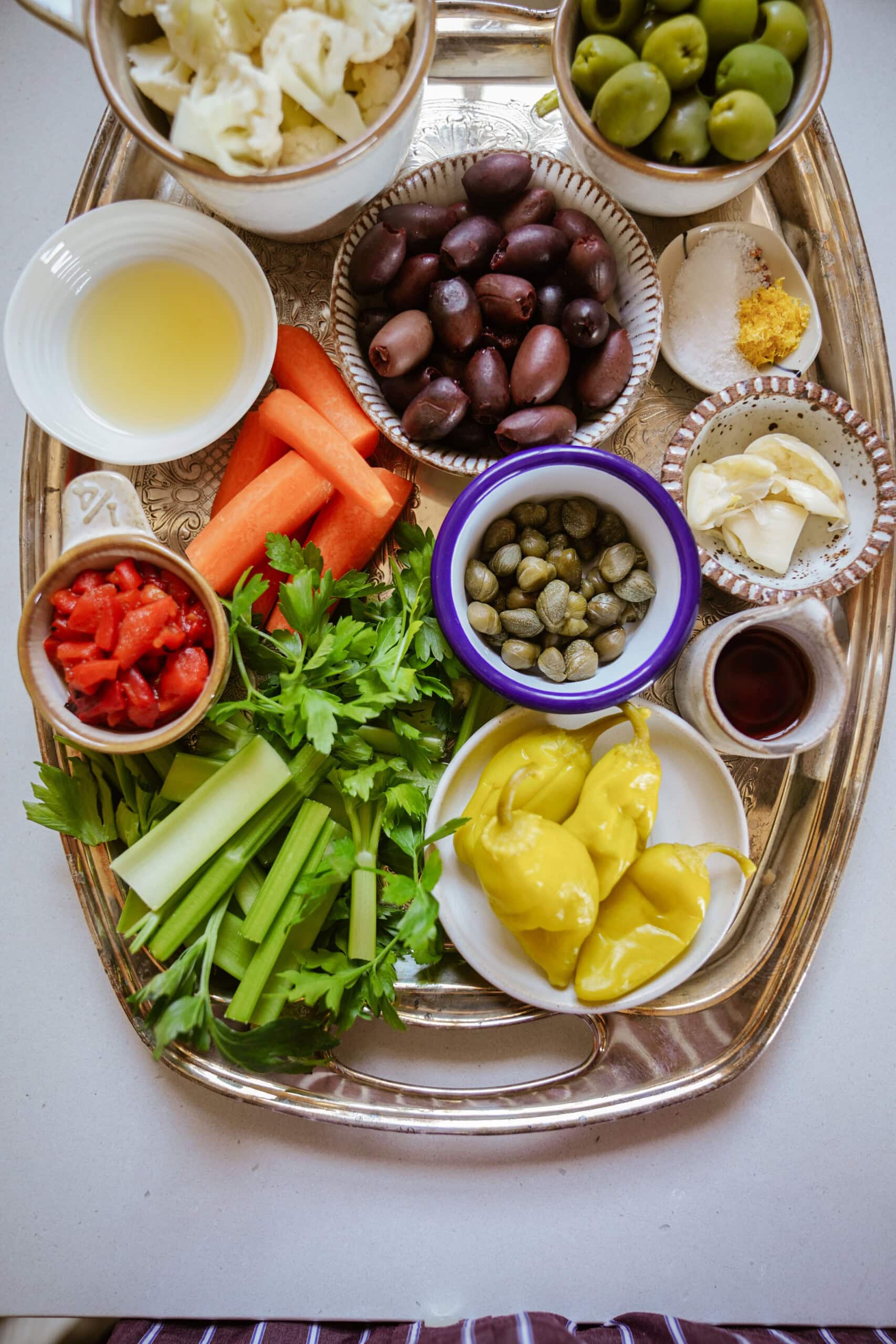
- ¾ cup pitted kalamata olives
- ¾ cup pitted castelvetrano olives
- ¼ cup chopped roasted red peppers
- 1 cup small cauliflower florets
- ½ cup roughly chopped carrot
- ½ cup roughly chopped celery
- 4 pepperoncini
- 2 garlic cloves
- 4 tbsp capers, drained from their juices, divided
- 1 ½ tsp kosher salt
- ¼ tsp chili flakes
- ½ lemon, juiced
- 1 tbsp red wine vinegar
- 1 tsp lemon zest
- 2 tbsp fresh chopped parsley
- 3 tbsp extra-virgin olive oil
For serving
- 425 ml container of labneh (or make our labneh recipe)
- Toasted sourdough or pita for serving
Instructions
- Add both types of pitted olives, roasted red peppers, cauliflower, chopped carrot, chopped celery, pepperoncini and garlic cloves to a food processor and pulse just a few times until the ingredients are chopped into smaller pieces – you want small pieces, not a paste.
- Add 2 tablespoons of capers, salt, chili flakes, lemon juice, red wine vinegar, lemon zest, chopped parsley and 3 tablespoons of olive oil. Pulse once just to combine. Add 2 tablespoons more of capers into the olive salad mixture and stir to combine. Taste and adjust seasoning with more salt if desired.
- Toast the sourdough (or pita) in a pan with a little olive oil or in a toaster.
- Spread the labneh on a large plate or in a shallow bowl. Top with the olive salad and then serve with pieces of toasted sourdough or pita.
Notes
- Instead of serving with labneh, you could use plain Greek yogurt or plain cream cheese.
- This is lovely served as an appetizer or store in an airtight container in the fridge for up to 5 days.
- Other ways to enjoy:
- As a sandwich spread
- Topping for grilled chicken or fish
- As a part of a charcuterie board