This post may contain affiliate links. Please read our disclosure policy.
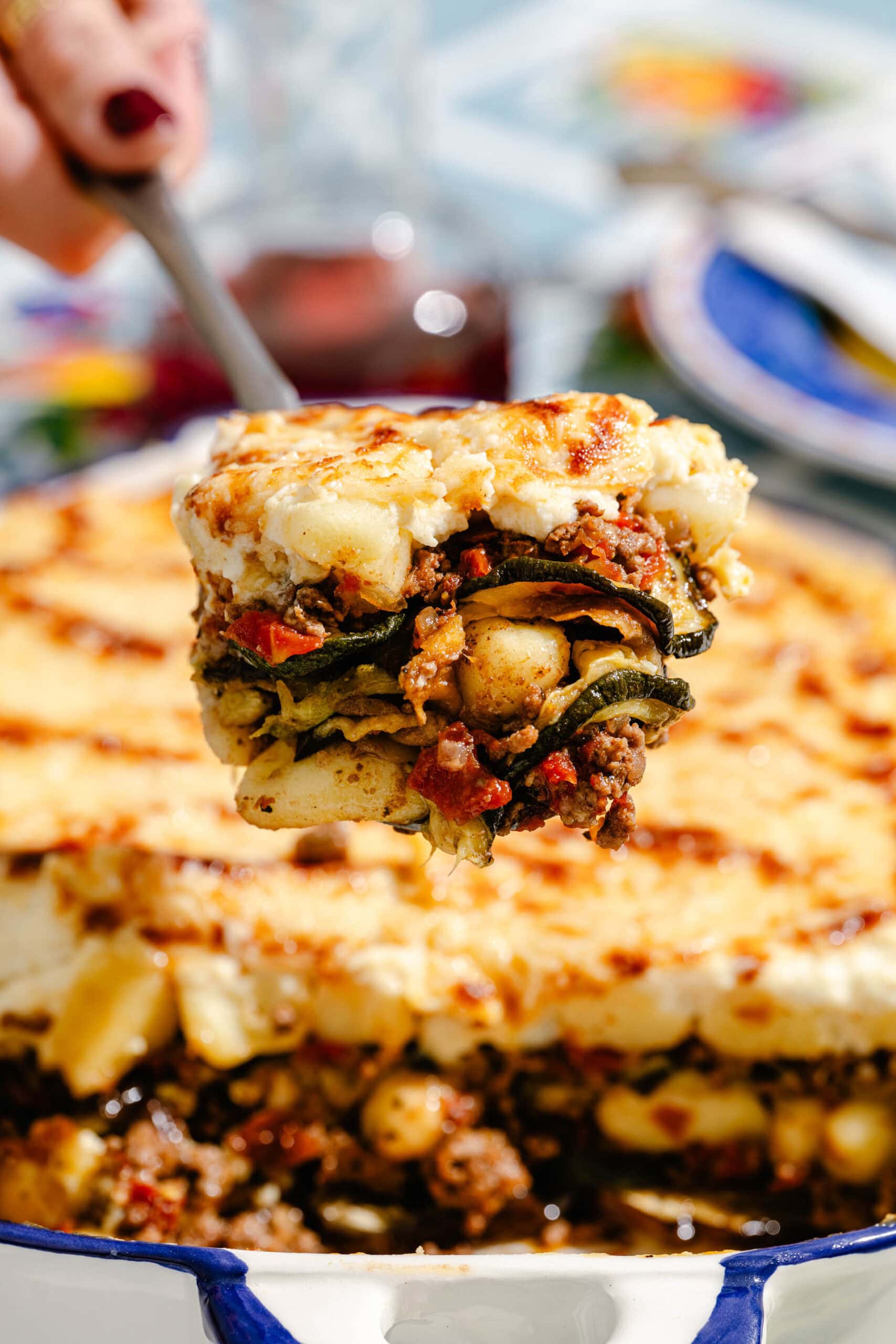
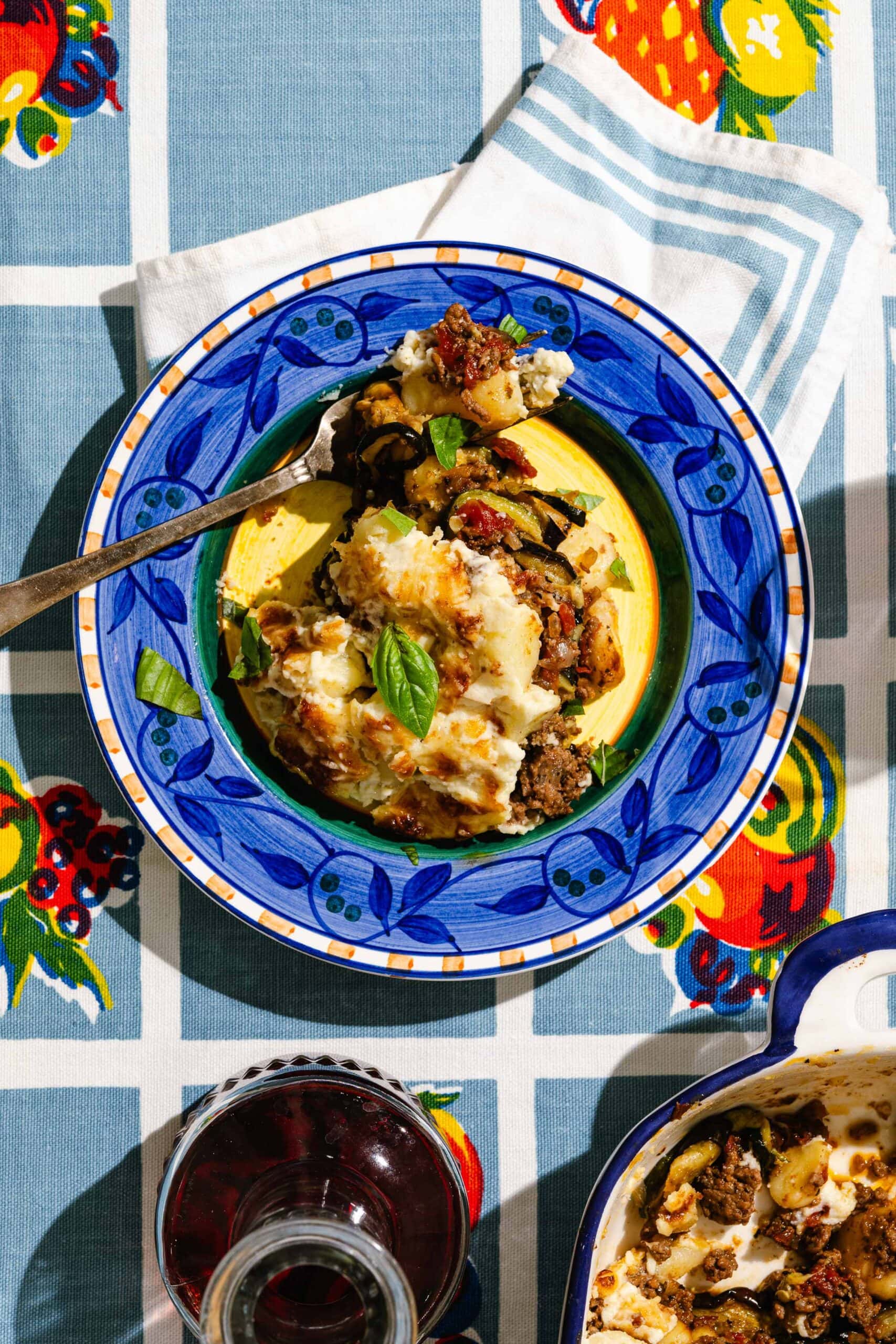
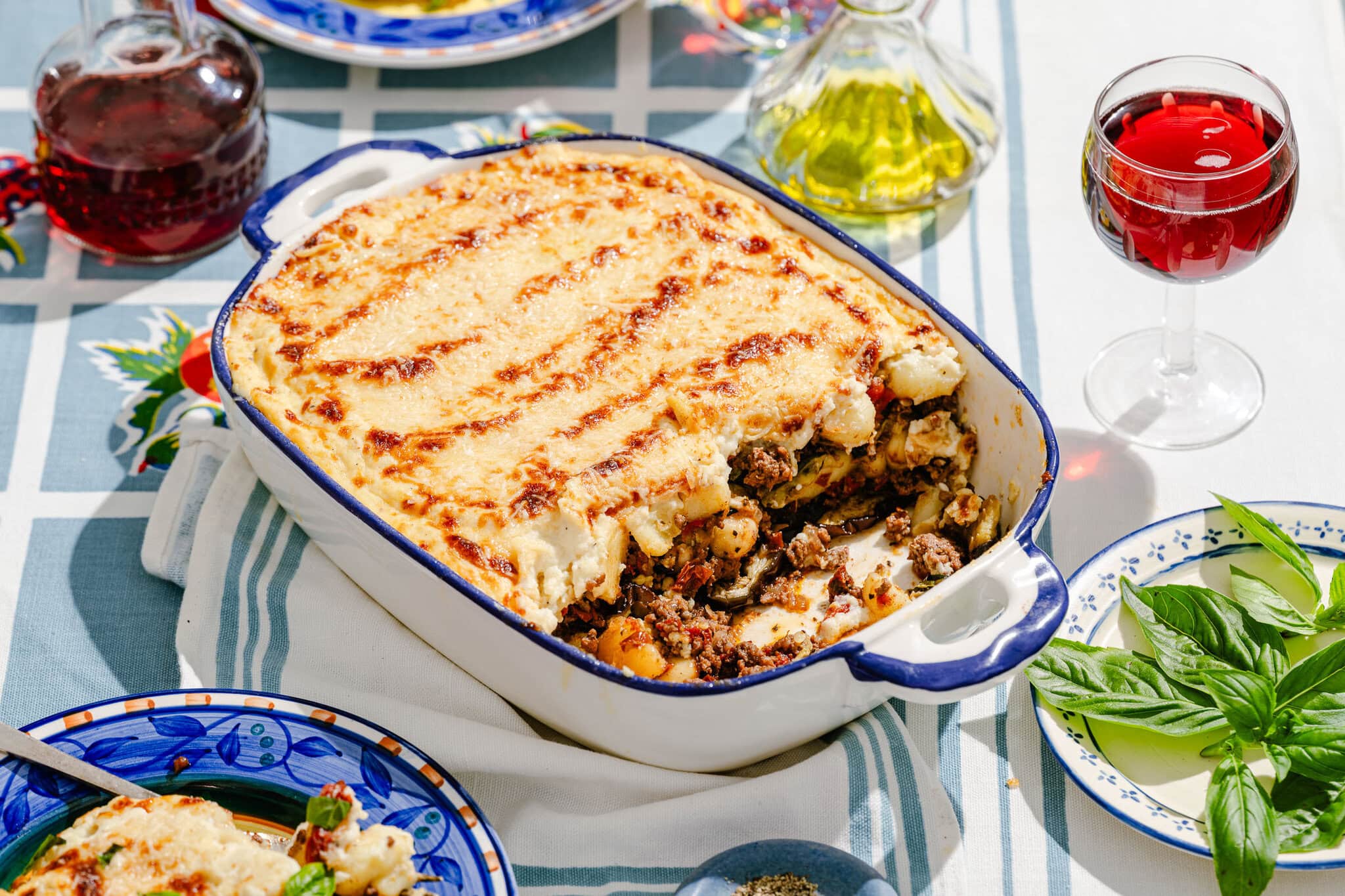
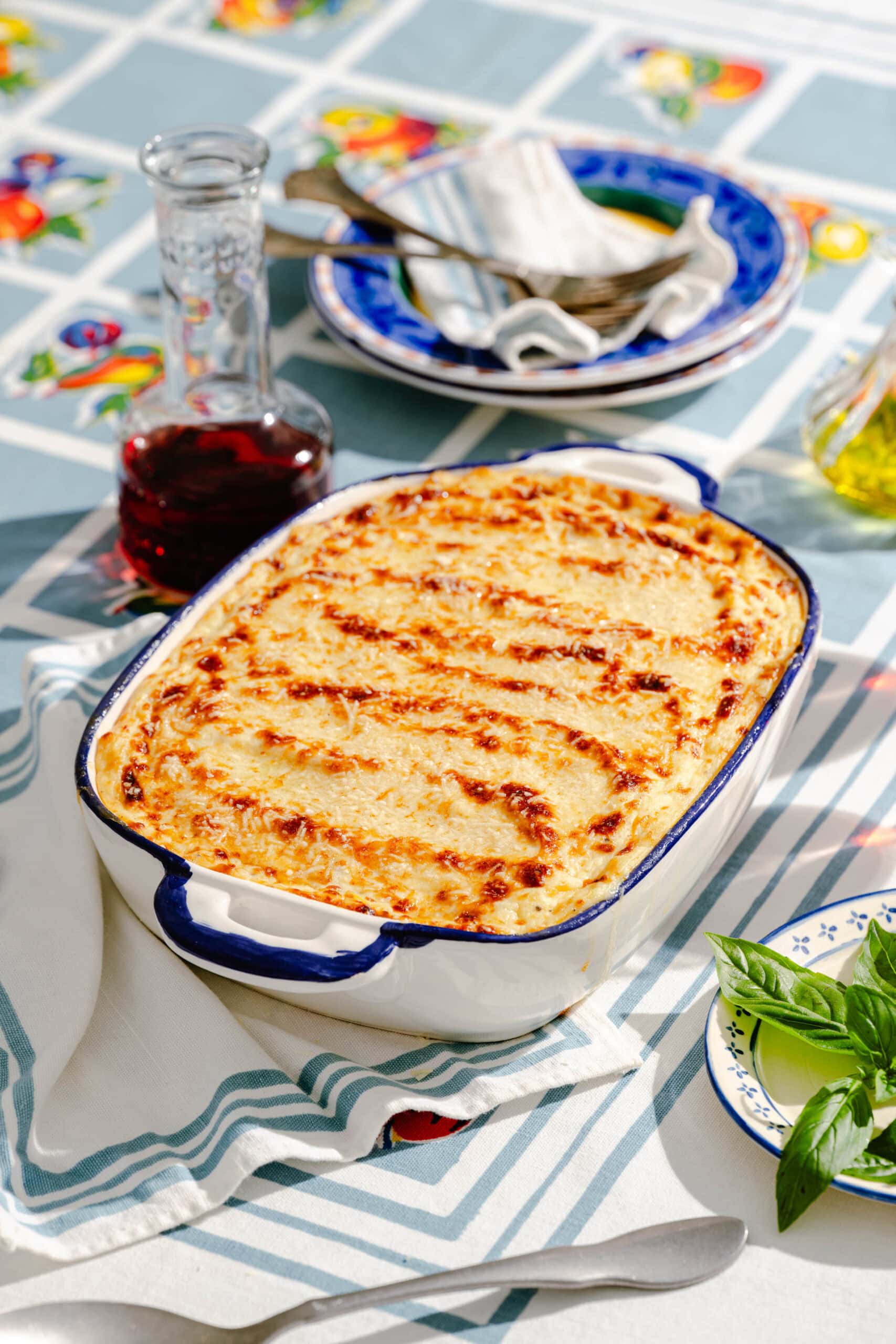
If you love a big, cozy casserole that feels like it was made to feed a table full of people, this Pesto Gnocchi Moussaka Bake is it. Roasted eggplant and zucchini are layered with a rich beef sauce made with pesto and sun-dried tomatoes, gnocchi straight from the package, and a creamy béchamel. It borrows the layers you know from moussaka, but the pesto and gnocchi give it its own identity. This is Greek-inspired rather than traditional moussaka, and that’s exactly what makes it fun.
Why You’ll Love This Moussaka Bake
It’s made for sharing: This is not a tiny weeknight casserole. This dish is a generous main course that serves 8–10 people. Great for a crowd, or if you want to just make it up for your family and have leftovers.

Maria Koutsogiannia
Maria is the creator of FoodByMaria and your go-to Greek food expert for cozy, flavor-packed recipes. Inspired by her Mediterranean roots, she brings traditional Greek flavors, feel-good ingredients, and a whole lot of joy to everyday cooking.
It’s familiar but different: If you know and love moussaka, you’ll recognize the idea behind the layers of vegetables, meat sauce, and béchamel. But this gnocchi moussaka goes in a completely different direction with pesto, sun-dried tomatoes, and potato gnocchi.
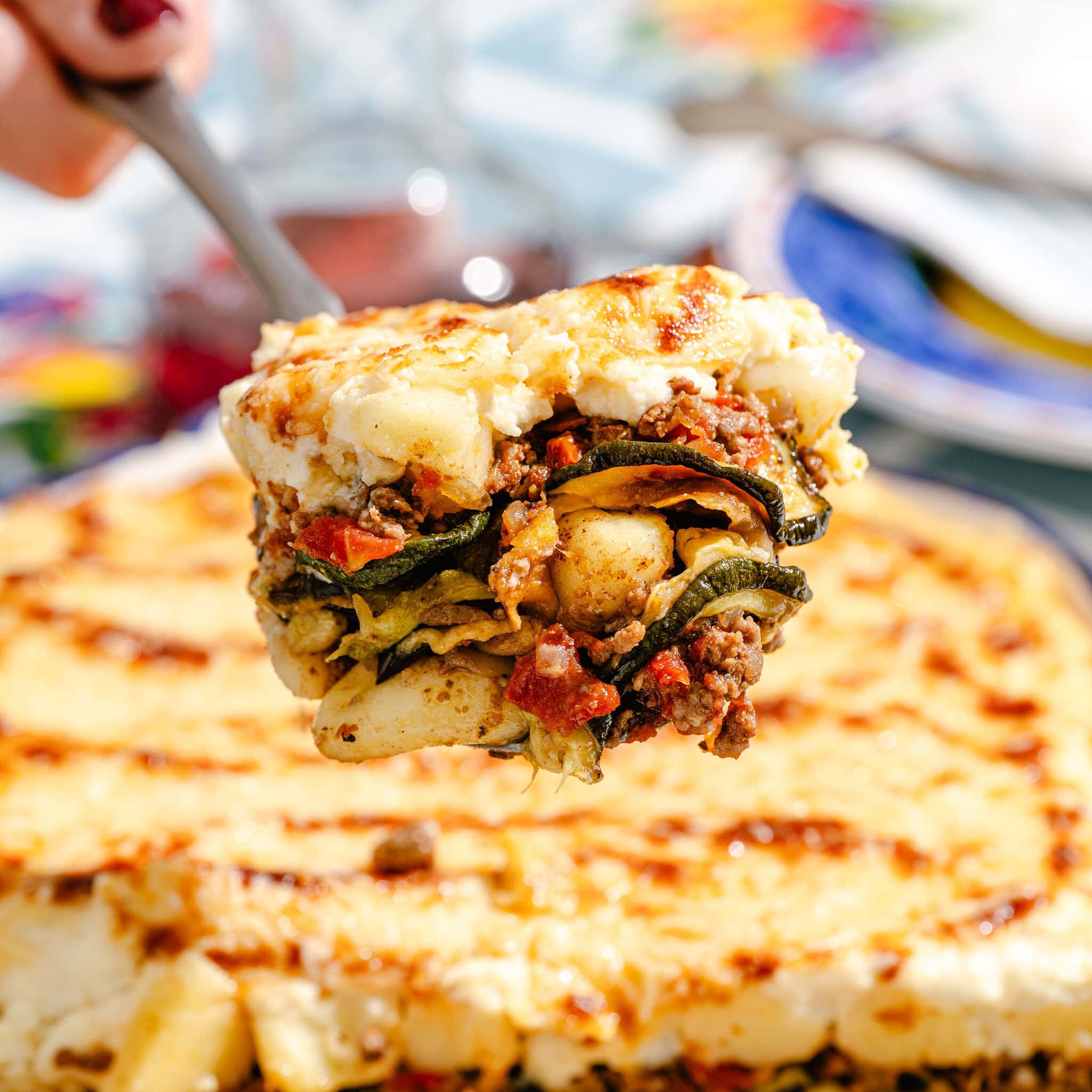
The texture is worth the patience: There is a reason we’re cooking the vegetables until tender and golden, reducing the meat sauce, thickening the béchamel, AND resting the finished casserole. That 45-minute rest isn’t dead time! It gives the béchamel time to set and for the layers to be the perfect consistency vs. runny.
It’s all about good ingredients: This recipe has a lot going on, but it doesn’t need a million extras. Good vegetables, extra-virgin olive oil, fresh Parmesan and basil, plus the pesto, sun-dried tomatoes, and gnocchi already bring so much to the dish.
What Makes This Greek-Inspired Instead of Traditional Moussaka?
Let’s clear this up right away: this isn’t traditional Greek moussaka. It’s a Greek x Italian hybrid that borrows the recognizable layered structure of vegetables, seasoned meat sauce, and béchamel, then takes a totally different turn with the more Italian-inspired ingredients. That’s what gives this recipe its own identity.
If you’re looking for another layered Greek dish with pasta, meat, and béchamel, my Traditional Greek Pastitsio Recipe is a great one to know. The concept of layering is familiar here, but this recipe leans more on Greek inspiration.
Key Ingredients for the Layered Bake
Eggplant and zucchini: You’ll use two medium eggplants and two medium zucchini, sliced into ⅓-inch pieces. They’re prepared and cooked separately because they have different cooking times. You want both vegetables tender and beginning to brown before they ever make it into your casserole.
Extra-virgin olive oil: You’ll need it for greasing your baking sheets and baking dish, roasting the vegetables, and starting the meat sauce. Use whatever you have on hand.
Extra-lean ground beef: One pound of extra-lean ground beef forms the base of that hearty meat sauce.
Onion + garlic: Every good sauce starts with onion and garlic, and this one is no different. This will form the aromatic foundation of your beef sauce!
Dry red wine: You’ll use ¼ cup and cook it down until it has evaporated. If you’re skipping alcohol, use the same amount of alcohol-free red wine or beef broth.
Allspice + cinnamon: Yes, cinnamon in a meat sauce! Along with allspice and dried basil, these spices give the beef its warm seasoning profile that is commonly found in Greek sauces.
The béchamel: Butter, flour, whole milk, egg, nutmeg, and Parmesan come together for the creamy layer that goes over the top. The important detail here is the egg. Instead of adding it straight to the hot sauce, you’ll temper it with some of the béchamel first.
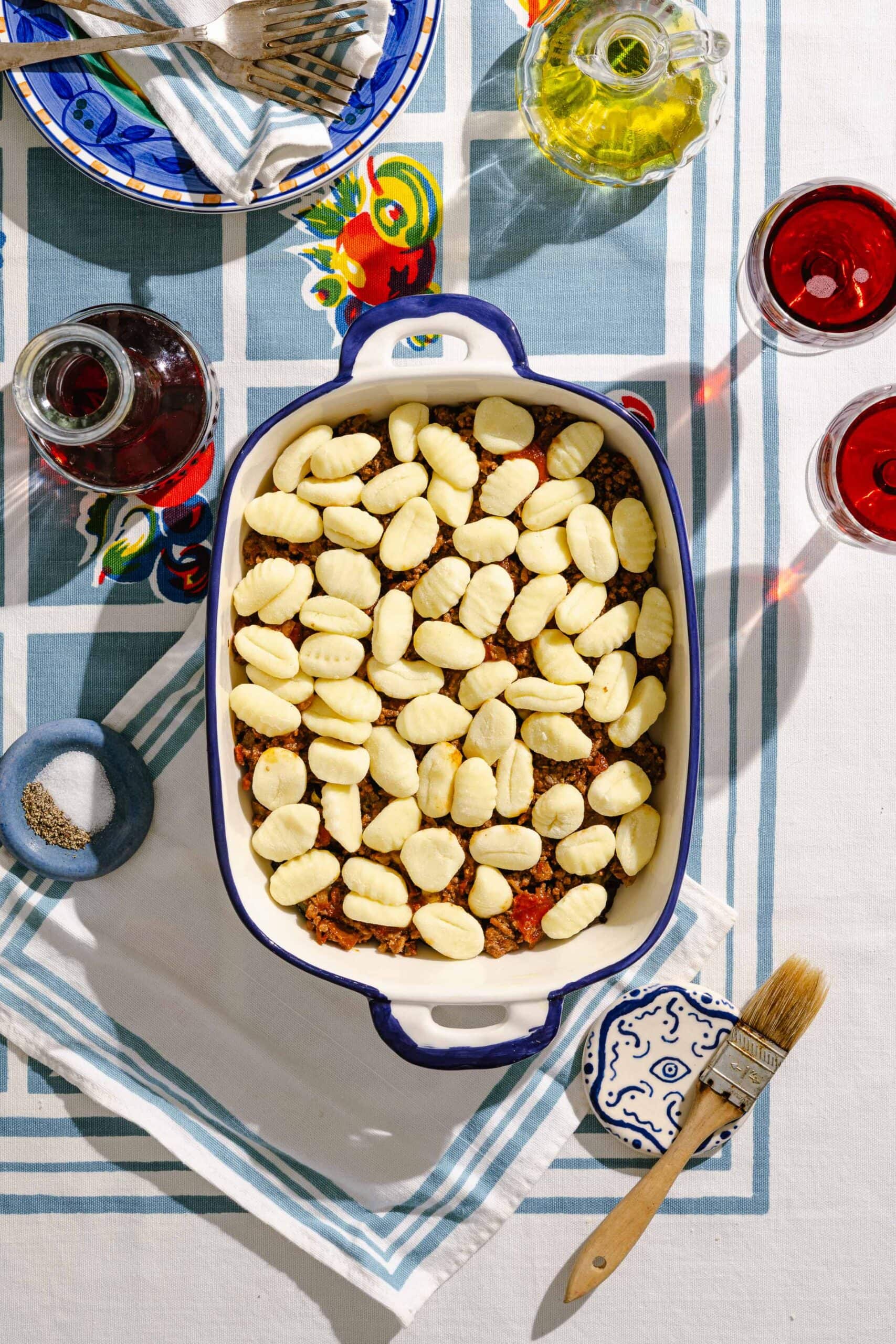
Potato Gnocchi: You’ll need two 450g packages and don’t boil them first. The gnocchi go directly from the packages into the casserole. They’ll cook as the casserole cooks.
Moisture Management for Vegetables and Sauce
When you’re making a big layered casserole, moisture matters. You want layers, not a pool of liquid at the bottom of your baking dish.
The eggplant is soaked in salted water for 15 minutes, while the zucchini is salted separately for 15 minutes and then blotted. The eggplant soak helps remove some of its bitterness, while the zucchini gets that surface moisture blotted away before roasting.
The vegetables are also roasted separately. The eggplant needs longer in the oven than the zucchini, so keeping them on their own baking sheets lets each one reach the right texture without overcooking the other.
The same thinking applies to the beef sauce. You want most of the liquid to evaporate before the casserole is assembled. If your vegetables aren’t cooked enough or the sauce is still very loose, you’re adding extra liquid to a dish that already has a lot of layers competing for space.
How the Egg-Tempered Béchamel Sets the Layers
If tempering an egg sounds intimidating, I promise it’s simple.
Rather than whisking a cold egg straight into a pot of hotter béchamel, you first combine it gradually with a reserved portion of the sauce. This slowly brings the egg closer to the temperature of the béchamel so it can be incorporated smoothly.
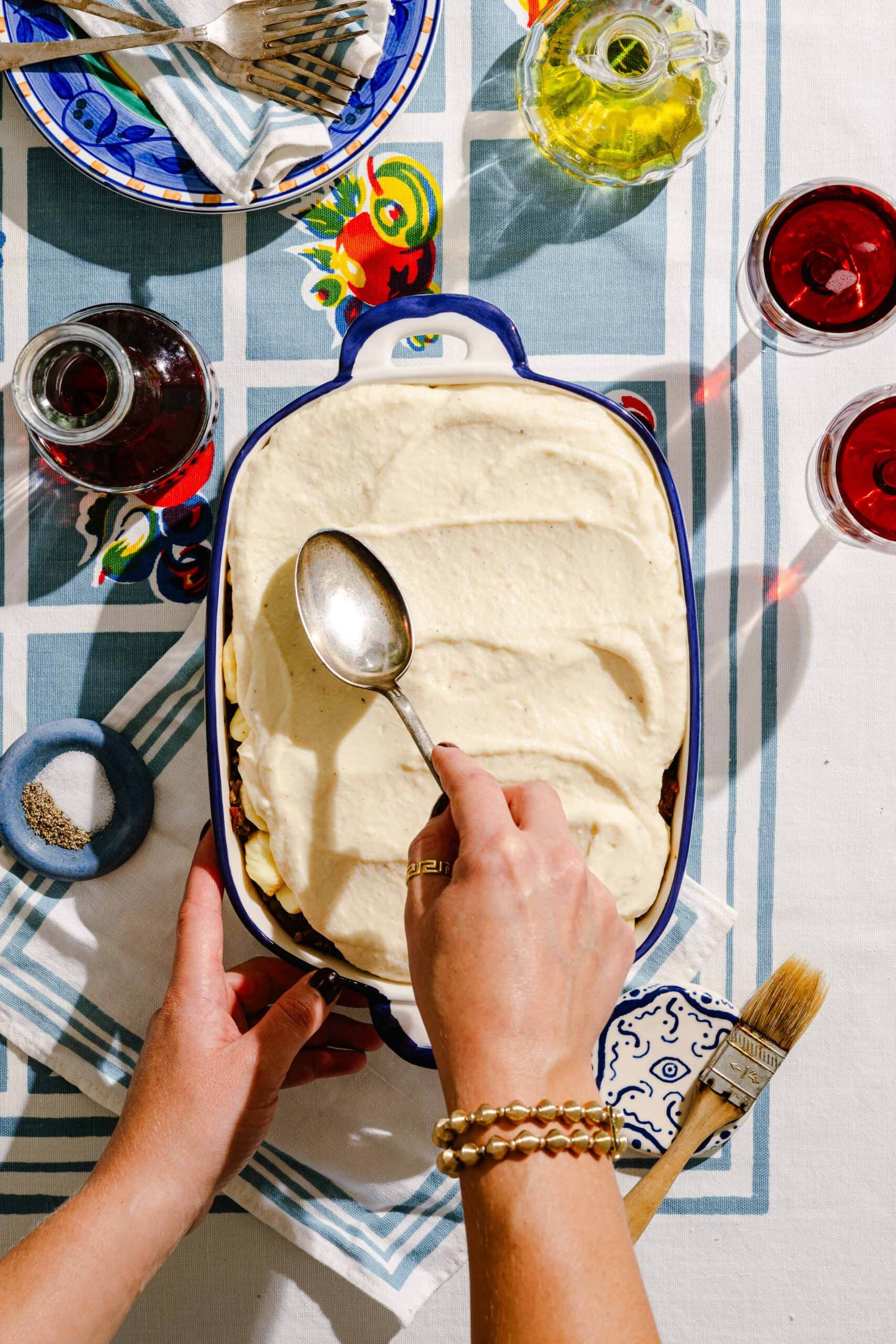
Once that tempered mixture goes back into the pot, the béchamel gets a final thickening over low heat. You’re looking for a sauce with enough thickness to sit over all those gnocchi and vegetables instead of disappearing between the layers.
This is also why that rest time is so important. You did all that work to create a creamy, structured top layer. Give it the time it needs to set before you cut into it! Trust me on this one.
Troubleshooting the Texture Before Serving
The meat sauce looks loose: The recipe expects most of the liquid to evaporate before assembly. Give the sauce time to reach that visual cue rather than assembling while it still looks watery.
The vegetables seem watery: Stick to the salting, soaking, blotting, separate baking sheets, and roasting instructions. You want tender vegetables with visible browning before they’re layered into the dish.
The béchamel looks thin: It should become slightly thickened before you incorporate the egg and then thicken further during its final time over low heat. Keep whisking gradually rather than trying to rush it.
Your egg starts to curdle: This is exactly why we’re tempering! Gradually whisk the egg into the reserved ½ cup of béchamel before returning that mixture to the pot.
The casserole seems loose when you cut it: Did you wait the full 45 minutes before cutting into it?
The top is getting golden quickly: Start checking your casserole at the 35-minute mark. The total suggested baking time is 40–45 minutes, but that golden top is your visual cue to keep an eye on things since every oven can be slightly different.
What to Serve with This Main Course
This is a rich, generous main dish, so I love the idea of putting something fresh and acidic beside it. My Cucumber Tomato Salad with Fresh Herbs and Sumac is exactly the kind of side that can balance out this creamy and rich dish.
You can also serve it with bread to catch any sauce and béchamel left behind on the plate because, hello, we are absolutely not wasting that! It’s arguably the best part.
And if the pesto-and-gnocchi combination is what brought you here, my simpler Pesto Gnocchi is a totally different way to enjoy those flavors without all of the moussaka-style layering.
Storage and Make-Ahead Guidance
- Fridge: Let the casserole cool, then transfer leftovers to an airtight container or cover the baking dish tightly. Refrigerate within 2 hours of cooking and use within 3–4 days.
- Freezer: You can freeze this dish for up to 2-3 months. Let it cool entirely and put it in a freezer-safe, airtight container. You can also cut it and portion it if you have a ton leftover. Note that the texture may change when freezing. Thaw in the fridge before reheating.
- Reheating: Reheat refrigerated portions until hot throughout. The oven is likely the better choice for maintaining the layered texture, while the microwave is convenient for individual portions. Reheat to 165°F / 74°C.
FAQs
No. This is a layered bake that combines eggplant, zucchini, beef sauce, gnocchi, and béchamel with pesto and sun-dried tomatoes. It borrows the layered architecture associated with moussaka but would not be described as traditional or authentic moussaka.
No. Layer the two 450g packages of Potato Gnocchi directly into the casserole without boiling them first. They bake between the meat sauce and béchamel as part of the layered dish.
Save this recipe for later
Ingredients
For the zucchini and eggplant
- Extra-virgin olive oil as needed
- 2 medium eggplants (about 800-900grams total of eggplants), sliced into ⅓ inch thick rounds
- 2 medium zucchini (about 800-900grams total of zucchini), sliced into ⅓ inch thick slices
- 3 tsp kosher salt, divided
- ½ tsp ground pepper, divided
For the meat sauce
- 1 tbsp extra-virgin olive oil
- 450 grams (1 lb) extra-lean ground beef
- 1 medium white onion, diced
- 2 garlic cloves, grated or pressed
- ¼ cup dry red wine
- ¼ tsp ground all spice
- ½ tsp ground cinnamon
- 1 ½ tsp dried basil
- 1 tsp kosher salt
- ¼ tsp ground pepper
- 400 ml can diced or whole tomatoes
- 1 tbsp DeLallo pesto
- ¼ cup DeLallo sundried tomatoes, drained of their oil and chopped
- 1 tbsp DeLallo tomato paste
- ½ tsp sugar
- ½ cup water
For the bechamel
- 1 large egg
- 3 tbsp unsalted butter
- ⅓ cup all purpose flour
- 3 cups whole milk, room temperature
- ¾ tsp kosher salt
- ¼ tsp ground pepper
- ⅛ tsp ground nutmeg
- ¼ cup freshly grated parmesan cheese
- 2 – 450 gram packages DeLallo gnocchi
Toppings and garnishes
- ½ cup freshly grated parmesan cheese
- Fresh basil leaves
Instructions
Start CookingPrepare and cook eggplant and zucchini
- Preheat the oven to 375F and generously grease two baking sheets with olive oil. Set aside.
- Place the eggplant slices in a large bowl and add enough water to cover. Stir in ½ tsp of the salt and let the eggplant soak for 15 minutes.
- Meanwhile, line a baking sheet with a paper towel. Lay the slices of zucchini in a single layer and sprinkle 1 ½ teaspoons of salt all over the slices. Let sit for 15 minutes.
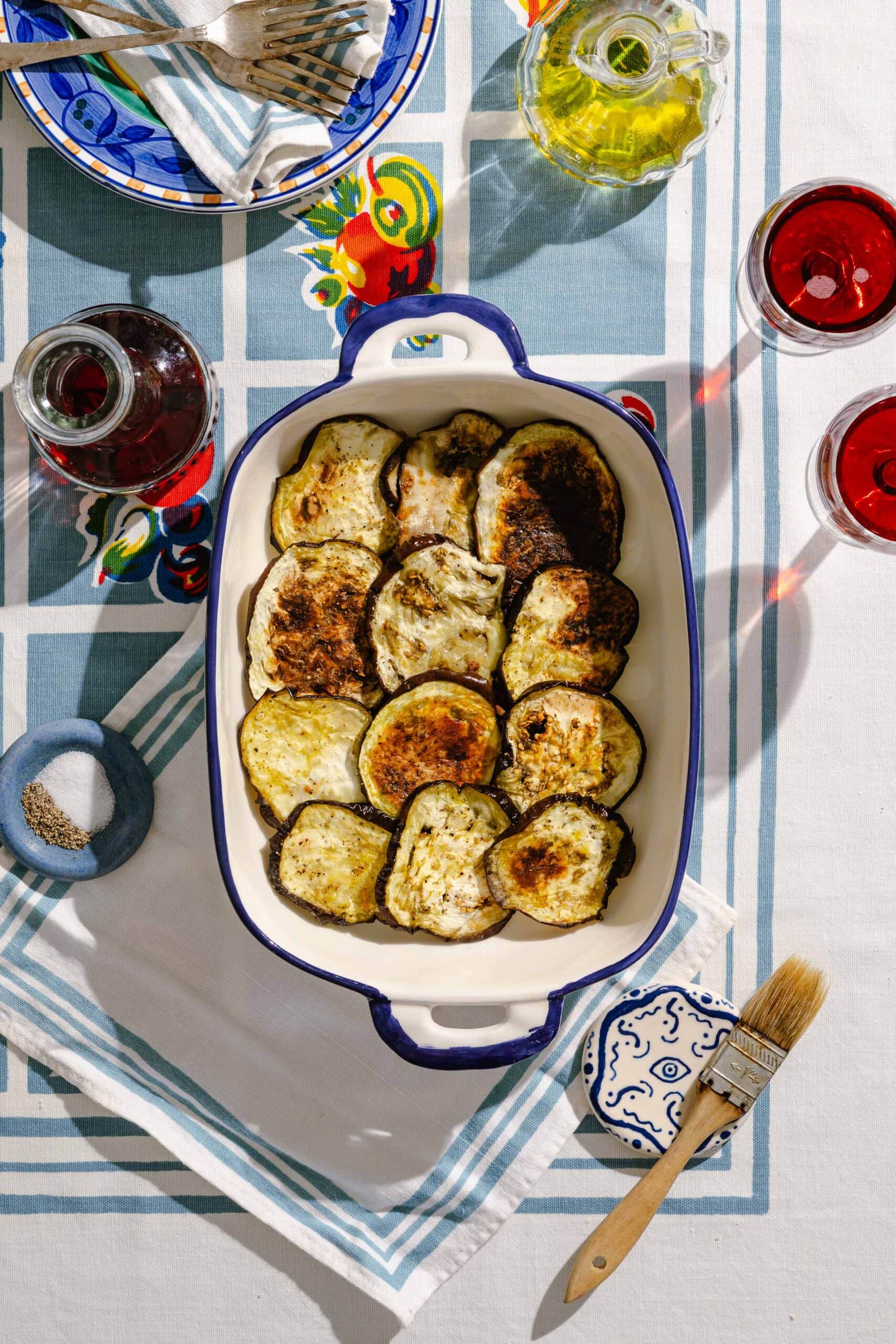
- While the zucchini slices sit, drain the eggplant slices and gently pat dry. Add the slices to one of the olive-oil coated baking sheets, overlapping slightly if needed. Drizzle the slices with more olive oil to coat and season with ½ teaspoon salt and ¼ teaspoon ground pepper. Bake until the eggplant is tender and golden brown, about 35-40 minutes.
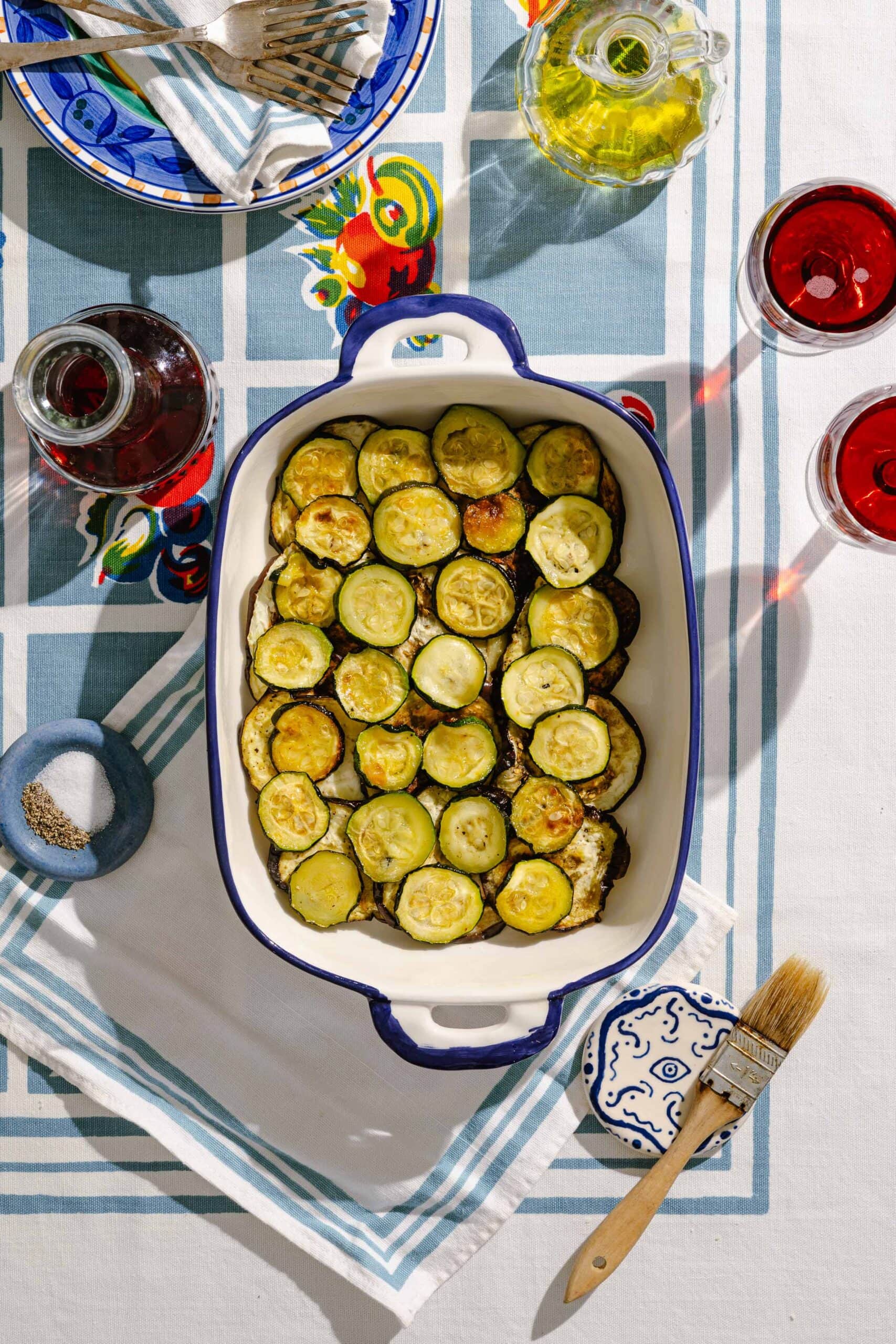
- While the eggplant starts to bake, blot the water from the zucchini slices off with a paper towel. Add the zucchini slices to the second baking sheet, overlapping slightly if needed and drizzle with more olive oil to coat. Season with ½ teaspoon salt and ¼ teaspoon ground pepper. Bake along with the eggplant slices, about 20-25 minutes until tender and starting to brown.
- Leave the oven on.
Make the meat sauce
- While the eggplant and zucchini are baking, start the meat sauce. Heat the olive oil in a large pot over medium-high heat. When the oil shimmers, add the ground beef, onions and garlic and use your spoon to break up the meat into small pieces. Cover and cook for 10-12 minutes, stirring occasionally, until there are no longer juices in the pot.
- Add the red wine and cook, stirring often, until evaporated.
- Stir in the ground all spice, ground cinnamon, dried basil, salt and pepper to combine.
- Add the tomatoes (break them up with your spoon if using whole tomatoes), pesto, sundried tomatoes, tomato paste and sugar plus ½ cup water. Increase the heat to high and stir everything together in the pot until combined. Once at a boil, reduce the heat to medium-low and cover. Simmer until most of the liquid has evaporated, about 15-20 minutes.
- Remove the pot from the heat.
Make the bechamel
- While the sauce is simmering, make the bechamel. Whisk the egg well in a small bowl. Then in a medium pot melt the butter over medium-low heat. Add the flour and whisk constantly for 2 minutes. Continue whisking while you slowly pour in all of the milk. Then, add the salt, pepper and nutmeg and stir to combine. Increase the heat to medium and bring the mixture to a simmer. Cook, whisking often, until slightly thickened, about 3-5 minutes. Remove the pot from the heat and whisk in the freshly grated parmesan cheese until well combined and the sauce is creamy and smooth, about 1-2 minutes.
- Transfer ½ cup of the bechamel sauce to a medium bowl. Gradually whisk the egg into the sauce in the medium bowl. Then, gradually whisk that mixture into the sauce in the pot. Return the sauce to low heat and continue to cook, whisking occasionally, until it thickens even more, about 3-5 minutes.
Assemble and bake
- Grease an oval 10×15 inch (3.8L or 4 quart) baking dish or rectangular 9×13 inch baking dish with olive oil.
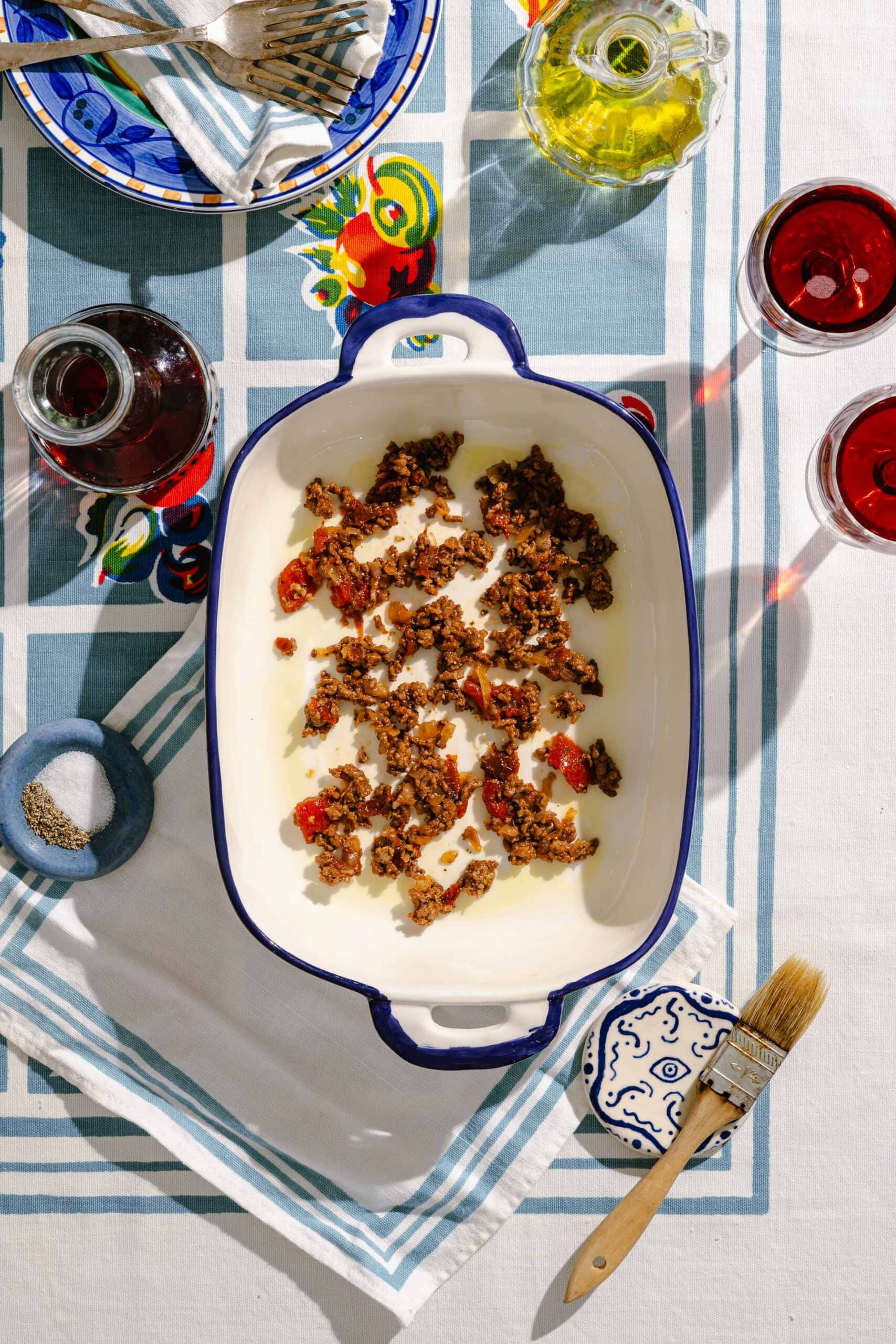
- Layer ½ cup of the meat sauce over the bottom of the greased baking dish.
- Next layer half of the eggplant slices, overlapping as needed followed by half of the zucchini slices, overlapping as needed.
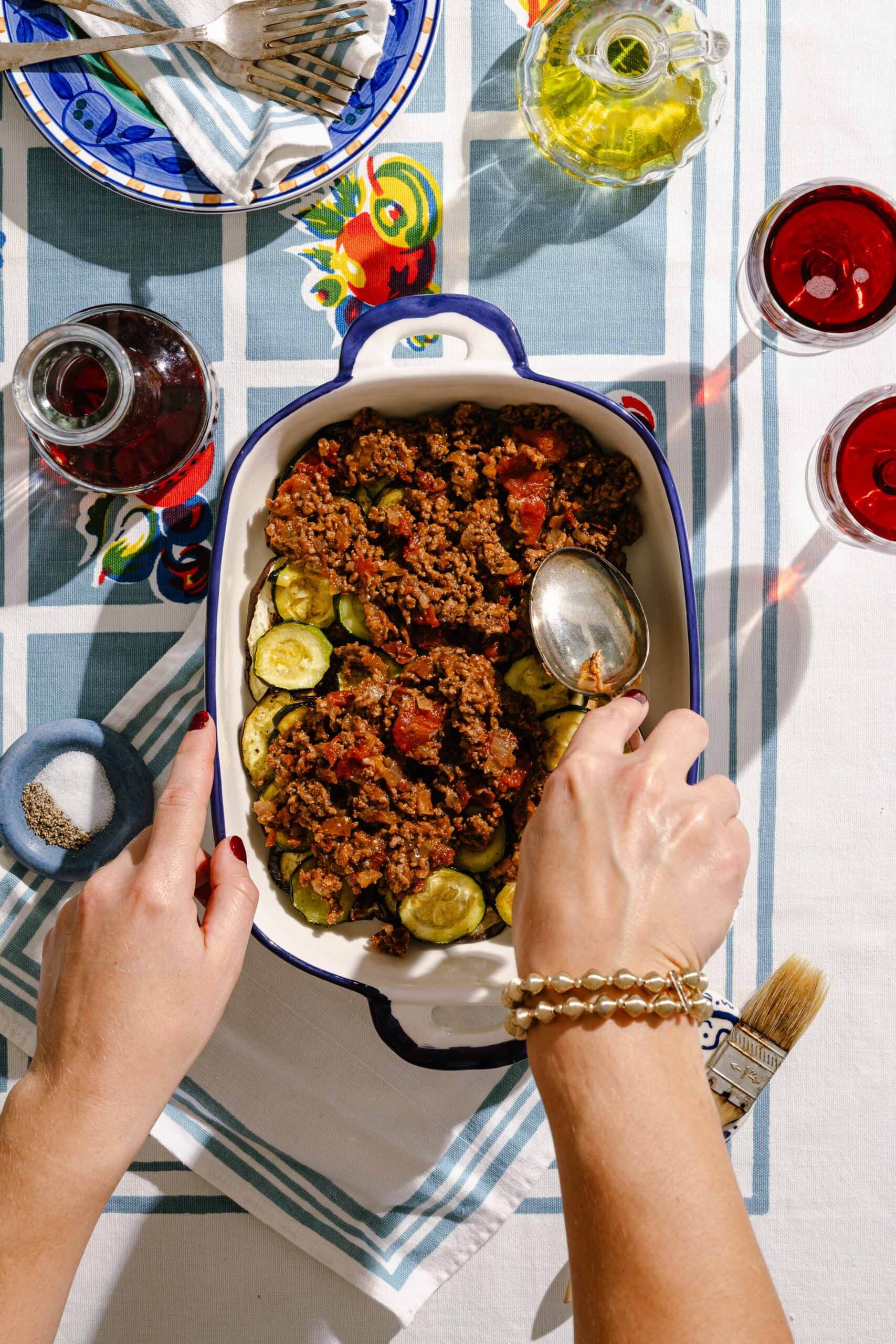
- Spread about half of the meat sauce over the zucchini and then layer one package of gnocchi over the top of the sauce.
- Repeat the layers one more time starting with the remaining eggplant slices followed by zucchini slices, the rest of the sauce and then the gnocchi. Next add all of the bechamel and use a spoon or spatula to even out / smooth the top. Top with 1/2-1 cup of freshly grated parmesan cheese.
- Bake for 40-45 minutes until the top is golden brown. Start checking at the 35 minute mark.
- Let the moussaka gnocchi cool until it’s just warm, about 45 minutes. This allows the bechamel to set. Then dig in and serve with fresh basil leaves.
Notes
- Soaking the eggplant in water with salt removes some of the bitterness of the eggplant so don’t skip that step.
- For the meat sauce, if you don’t want to use red wine, you can try substituting with alcohol-free red wine or beef broth.
- If you love this recipe you’re sure to enjoy our Traditional Greek Pastitsio Recipe (Greek Lasagna)

Be the first to discuss this recipe.