This post may contain affiliate links. Please read our disclosure policy.
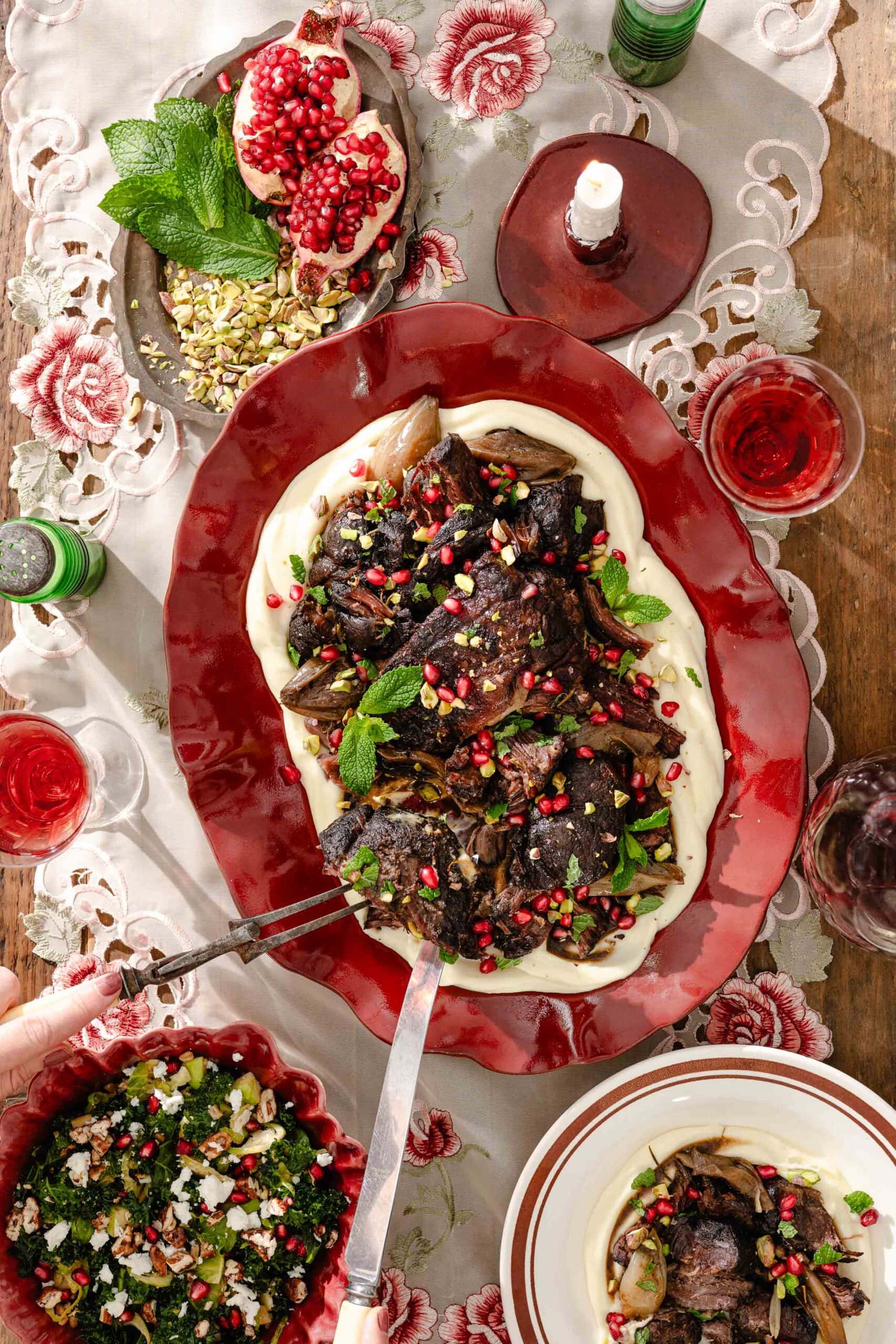
This pomegranate lamb pairs a seared, boneless shoulder with pomegranate juice, herbs, garlic, and shallots, then serves it over whipped parsnips. A covered 350°F Dutch oven braise makes the lamb fork-tender before an uncovered finish browns the top! Mint, pomegranate arils, and pistachios bring freshness and crunch as a topping in the end.
Why You’ll Love Pomegranate Lamb
- Tart, savory braising liquid: Pomegranate juice, red wine, beef broth, rosemary, thyme, orange peel, cinnamon, garlic, and shallots create a fragrant pan sauce that’s tart and loose rather than thick and sticky.
- Fork-tender lamb with a browned finish: The lamb cooks low and slow at 350°F until it’s incredibly tender, then goes back into the oven uncovered as the temperature rises to 425°F. This gives you that beautiful browned, crisped surface after the long braise.
- A creamy base for the lamb: The whipped parsnips aren’t just something extra on the side. They’re the creamy, buttery base that catches the lamb and all that pan sauce.
- Fresh and crunchy contrast: Fresh mint, juicy pomegranate arils, and chopped pistachios brighten up the rich lamb and add texture to every plate.
What Makes This Formula Work
Sear the lamb, deglaze the pot, braise until fork-tender, then finish it uncovered so the top can brown.

Maria Koutsogiannia
Maria is the creator of FoodByMaria and your go-to Greek food expert for cozy, flavor-packed recipes. Inspired by her Mediterranean roots, she brings traditional Greek flavors, feel-good ingredients, and a whole lot of joy to everyday cooking.
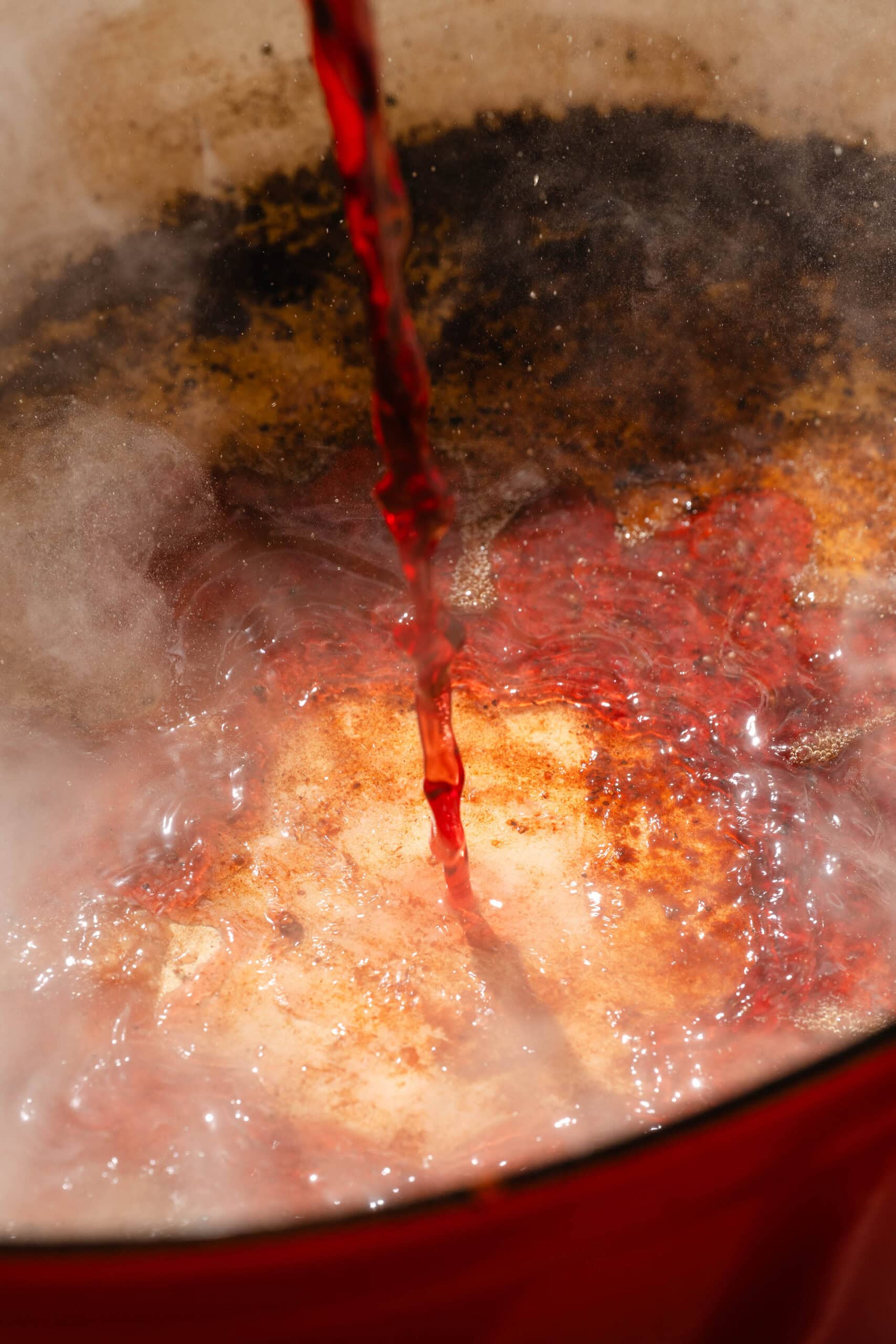
Sear & Braise: Starting with a dry, seasoned boneless lamb shoulder helps you develop a deeply browned exterior during searing. The red wine loosens the browned bits in the pot and carries them into the braising liquid.
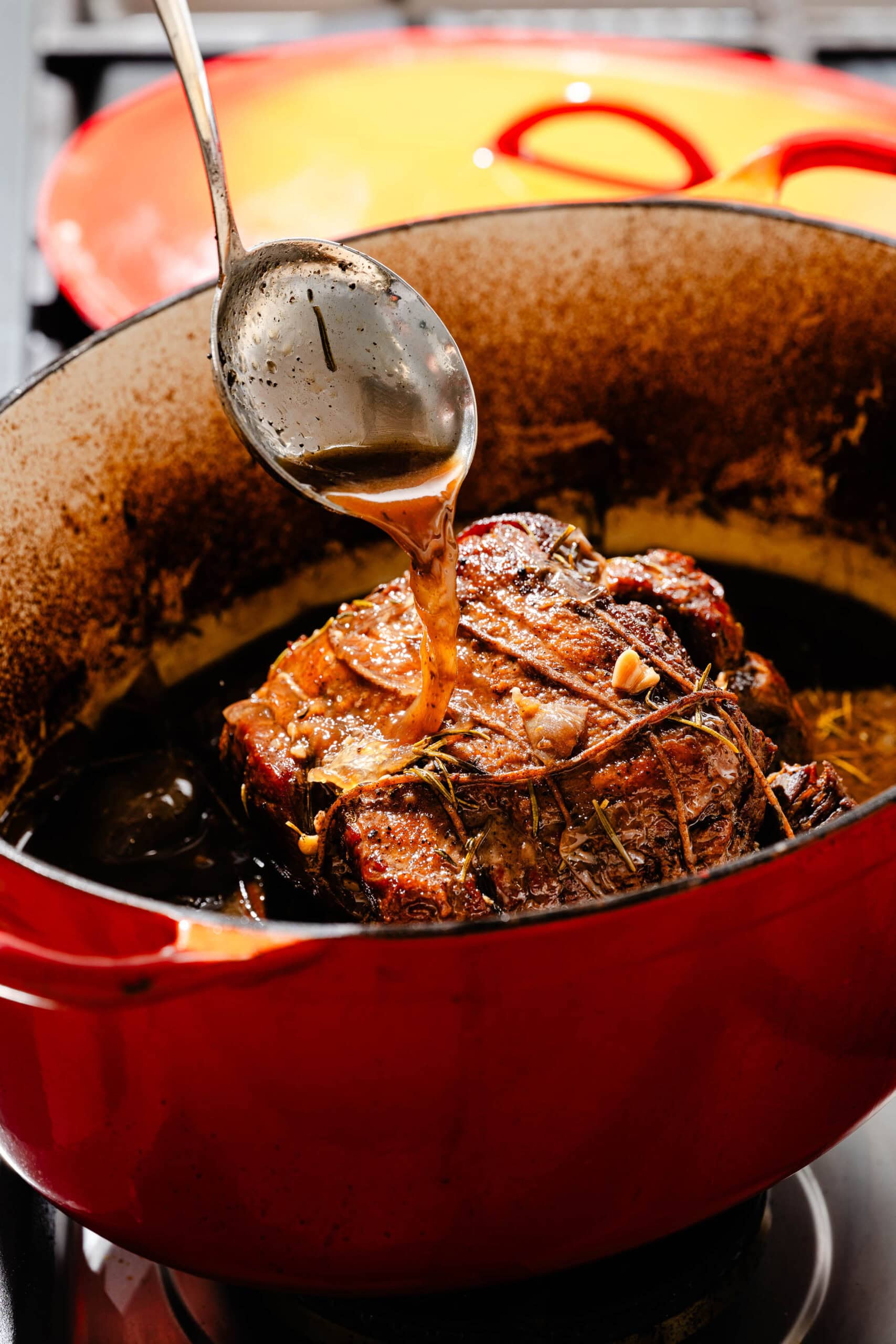
Baste: During the long covered cook, parchment, foil, and the Dutch oven lid help trap moisture around the lamb. Basting it hourly keeps the exposed surface moist while the shoulder slowly becomes tender enough to pull apart with a fork.
Crisp: Then comes the final step that makes such a difference. Uncovering the lamb while the oven increases to 425°F gives the surface concentrated heat, helping it brown and crisp after spending hours in that moist braising environment.
Ingredients and What Each One Does
Lamb
This recipe uses a 2–2.2 kg (4.5–5 lb) boneless lamb shoulder with the excess fat trimmed away.
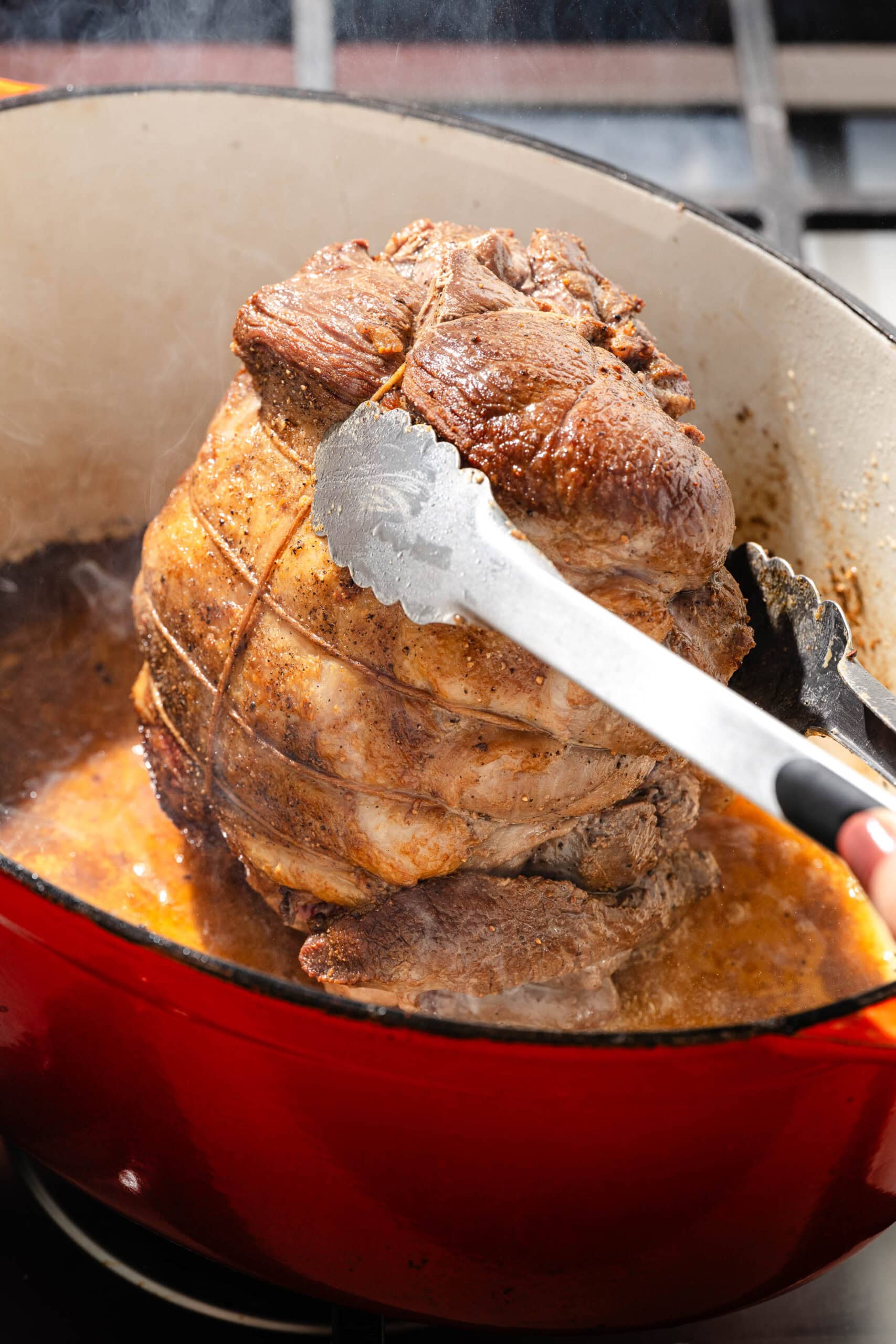
One of the most important things you can do before searing is pat the lamb dry. A wet surface encourages steaming, while a dry surface gives you a much better chance of developing that gorgeous golden-brown exterior.
Kosher salt and ground pepper season the lamb, while 2 tablespoons of extra-virgin olive oil are used for searing.
Braising Liquid and Aromatics
The braising liquid starts with ⅓ cup red wine, 1 cup beef broth, and 1½ cups pomegranate juice.
The pomegranate juice is key here. It gives you tartness and fruitiness without turning the sauce into a sticky glaze. Rosemary, thyme, orange peel, cinnamon, whole halved garlic heads, and shallots sit around the lamb and perfume the braising liquid as everything cooks.
The orange peel and cinnamon stick aren’t meant to end up on anyone’s plate, so make sure they’re removed before serving.
Whipped Parsnips
Three pounds of parsnips form the creamy foundation for the finished plate. Once they’re tender, they’re blended with whole milk and butter until smooth and spreadable.
The goal is a silky puree that’s smooth enough to spread onto the plate and catch both the lamb and that yummy pan sauce.
Garnishes
Fresh mint leaves, ¾ cup pomegranate arils, and ½ cup chopped pistachios are the finishing touches, and every one brings something different.
Mint gives you freshness, the pomegranate arils add juicy pops of tart sweetness, and pistachios bring that final bit of crunch. Mint, pomegranate arils, and pistachios are enough to finish the plate.
How to Judge Tenderness, Liquid, and Browning
With a long braise, your eyes and a fork are way more helpful than blindly trusting a timer.
After about 3–3½ hours of covered braising, the lamb should be extremely tender and pull apart easily with a fork. That’s the cue that matters. Depending on the exact size of your shoulder, Dutch oven, and oven itself, your timing can vary.
While the lamb cooks, baste it hourly and keep an eye on the braising liquid. You should still have liquid in the Dutch oven before the uncovered stage. If you don’t, add ½ cup beef broth before it goes back into the oven.
During the final approximately 30-minute uncovered finish, you’re looking for a browned, crisped top. The lamb can return to the oven while it’s still coming up to 425°F, so once again, pay attention to what the food is telling you rather than relying only on the clock.
Whipped Parsnips: The Creamy Base
I don’t want the whipped parsnips treated like an optional scoop on the side because they’re part of what makes this whole plate work.
The 1-inch pieces of parsnip are cooked in salted water until fork-tender, which gets them soft enough to blend into a smooth puree. Whole milk and butter make them creamy and rich without taking away from that slightly sweet parsnip flavor.
The finished texture should be smooth, creamy, and spreadable rather than chunky or watery.
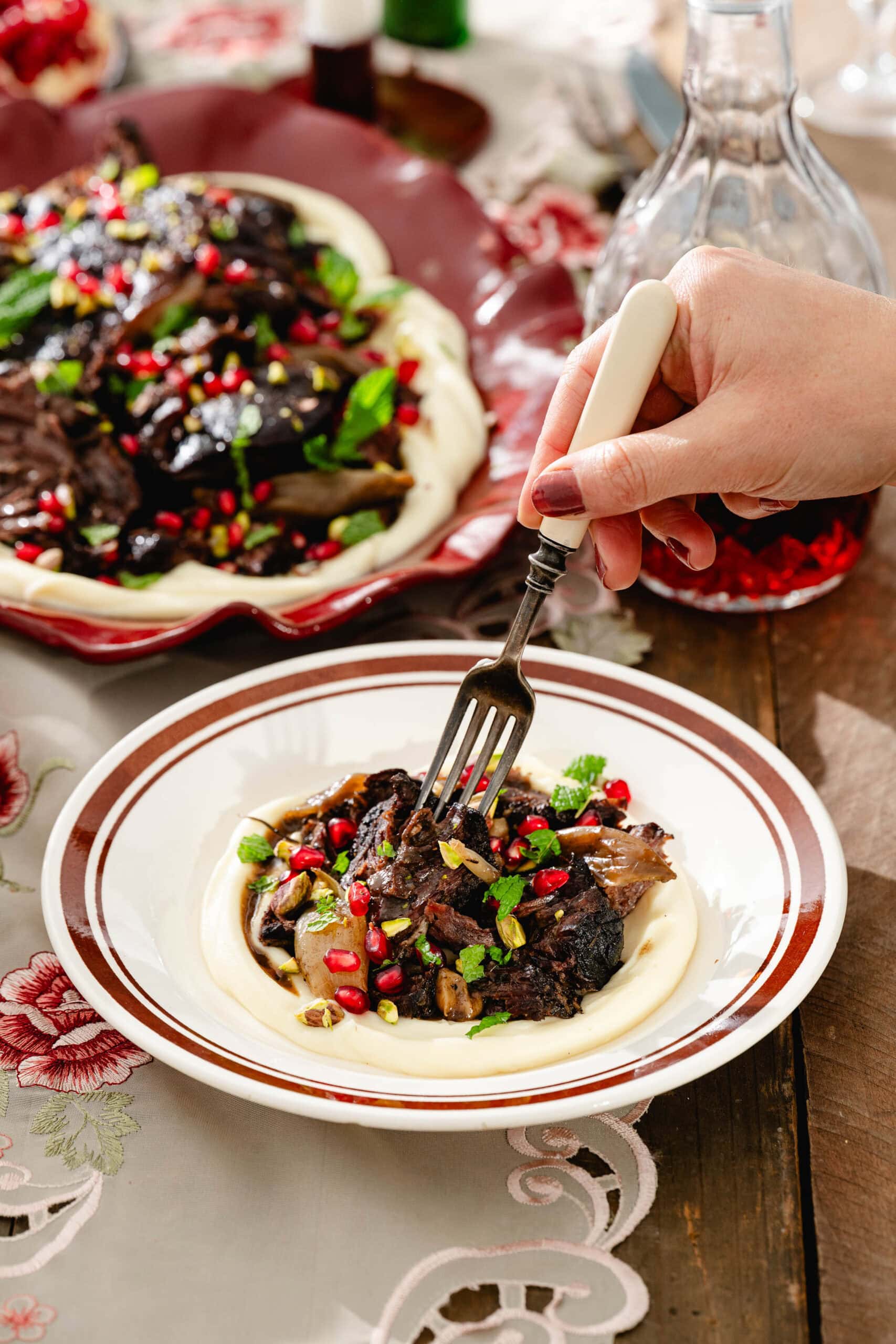
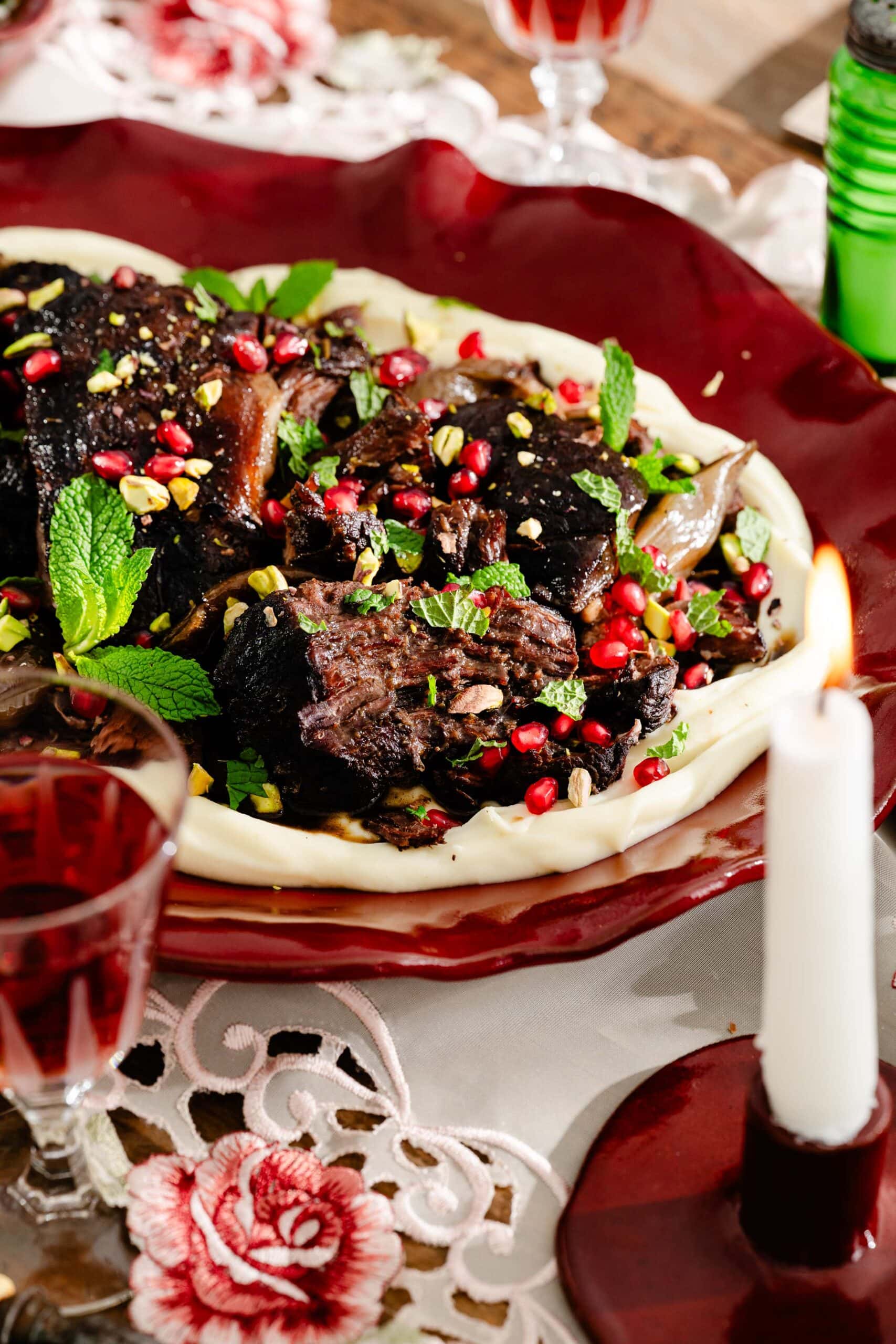
When it’s time to serve, spread the puree across the center of your plate first. That creates a creamy landing place for the pieces of lamb and, more importantly, gives all that pomegranate pan sauce somewhere delicious to go.
Substitutions and Variations
There aren’t a ton of swaps here because I don’t want you changing the things that make this recipe what it is.
Smaller boneless shoulder: If you’re using a smaller boneless lamb shoulder, start checking it around 2½–3 hours. The lamb pulling easily with a fork is still your most important doneness cue.
Bone-in shoulder: You can use a bone-in lamb shoulder, but it may require more braising time. Follow the tenderness of the meat rather than assuming it’ll cook on the same schedule as the boneless shoulder.
Red wine: If you don’t want to use red wine, replace the ⅓ cup with non-alcoholic wine or additional beef broth.
Pomegranate juice: Pomegranate molasses is sweeter, thicker, and more concentrated, so it is not a 1:1 substitute for the juice here. This recipe is specifically built around the looser, tart braising liquid you get from pomegranate juice.
What to Serve with Pomegranate Lamb
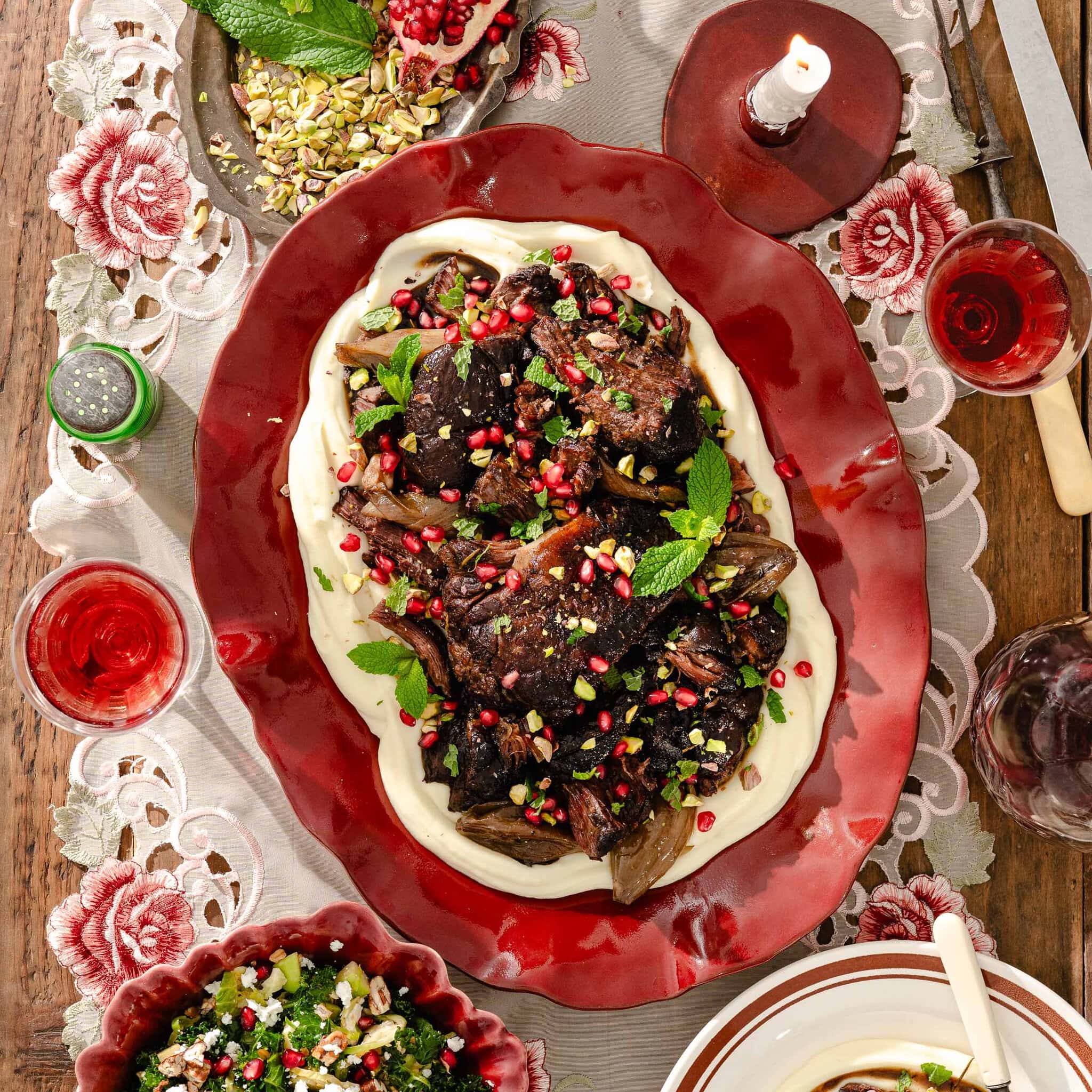
To serve, spread those creamy whipped parsnips across the plate, add smaller pieces of lamb, and spoon over some of that pan sauce. Finish with the toppings.
For a meze or appetizer before dinner, serve my whipped feta with roasted garlic, red pepper, and chili olives. If you want something crisp and fresh alongside the rich lamb, my iceberg fennel salad with lemon dill vinaigrette is a great pairing!
For a holiday-style spread, my shaved Brussels sprout salad with kale, farro and pomegranate brings even more seasonal color and texture to the table.
And if you love lamb shoulder but want to take the flavors in a different direction next time, try my Greek lemon-and-herb lamb shoulder.
Storage, Make-Ahead, and Reheating
For this pomegranate lamb, I’d store the components separately when possible so the lamb stays juicy and the whipped parsnips keep their texture.
- Lamb + pan sauce: Let the lamb cool, then transfer it with the pan sauce to an airtight container and refrigerate. Keeping some sauce with the meat will help prevent it from drying out. Lamb will keep for up to 3 days.
- Whipped parsnips: Store separately in an airtight container in the refrigerator. Parsnips will keep for 3-4 days.
- Garnishes: Keep the mint, pomegranate arils, and pistachios separate and add them after reheating so they stay fresh and crunchy.
Troubleshooting
My Lamb Isn’t Fork-Tender Yet
Don’t treat the 3–3½-hour braising window as an absolute finish line. The lamb should pull apart easily with a fork. If it doesn’t, continue evaluating it based on tenderness rather than assuming it’s done because the timer went off.
My Braising Liquid Is Running Low
Keep an eye on the liquid throughout the covered braise and add beef broth if needed.
Before the final uncovered stage, there needs to be liquid remaining in the Dutch oven. If there isn’t, add ½ cup beef broth before returning the lamb to the oven.
The Top Isn’t Browned
The uncovered finish is there for a reason! The lamb returns to the oven for about 30 minutes while the oven increases to 425°F. Look for a browned, crisped surface rather than judging it by temperature or time alone.
My Parsnip Puree Needs Adjusting
Start with the supplied ¼ cup butter, 1 teaspoon salt, whole milk, and pepper. Taste the finished puree before adjusting, then stay within the butter and seasoning ranges provided in the recipe.
My Lamb Isn’t Browning During the Sear
Make sure you’ve patted the lamb dry before seasoning and searing. Excess surface moisture works against the browning you’re trying to develop.
FAQs
It uses 1½ cups pomegranate juice in the braising liquid. The juice gives the lamb a tart, looser pan sauce, while pomegranate molasses isn’t part of the approved formula and shouldn’t be treated as an equivalent substitute.
After about 3–3½ hours at 350°F, the lamb should be very tender and pull easily with a fork. Use that texture cue to judge doneness, and keep basting hourly while watching the liquid in the Dutch oven.
For a smaller boneless shoulder, start checking at 2½–3 hours and use the fork-tender cue. A bone-in shoulder may also be used, but it may require more braising time than the boneless shoulder in the recipe.
Save this recipe for later
Ingredients
For the lamb
- 2-2.2 kg (4.5-5 lbs) boneless lamb shoulder, trimmed of excess fat
- kosher salt and ground pepper
- 2 tbsp extra-virgin olive oil
For the braising liquid
- ⅓ cup red wine
- 1 cup beef broth
- 1 ½ cups pomegranate juice
- 2 fresh rosemary sprigs
- 2 fresh thyme sprigs
- 2 inch orange peel
- 1 cinnamon stick
- 2 large heads of garlic whole, not peeled, cut in half
- 6 shallots peeled
For the whipped parsnips
- 3 lbs parsnips, peeled and cut into 1 inch pieces
- ¼ – ½ cup unsalted butter
- ½ cup whole milk
- 1 – 1 ½ tsp kosher salt
- ¼ tsp ground pepper
For the garnishes
- fresh mint leaves
- ¾ cup pomegranate arils
- ½ cup chopped pistachios
Instructions
Start CookingFor the lamb
- Preheat the oven to 350F.
- Cut off any excess fat from the lamb and then pat the lamb dry with a paper towel. Place the lamb shoulder on a cutting board. Season both sides generously with salt and pepper.
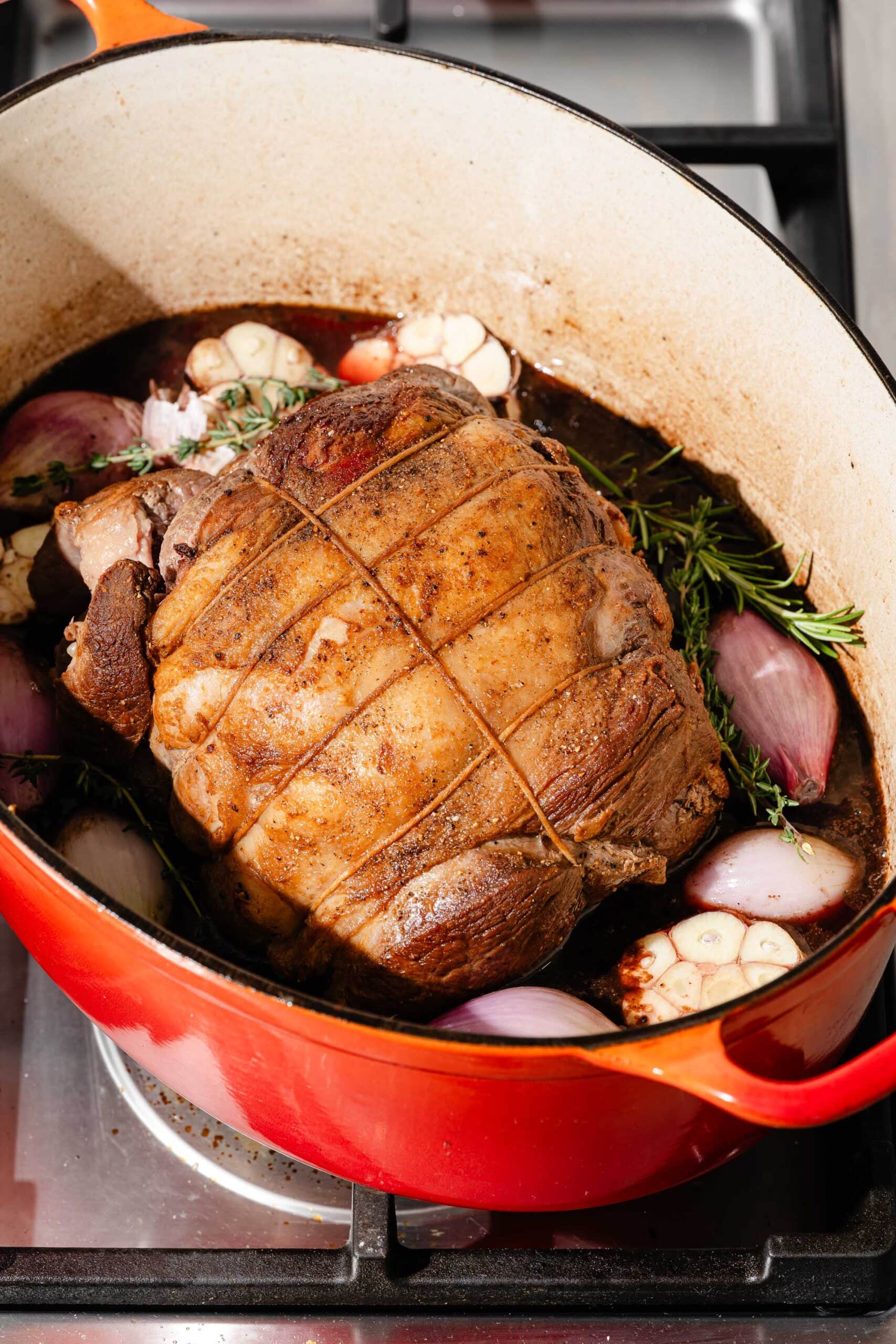
- To a dutch oven, add 2 tbsp extra-virgin olive oil over medium-high heat. When the oil is hot, sear the lamb until golden brown on all sides, about 3-4 minutes per side. Remove the lamb to a plate and set aside. Drain all but 1 tablespoon of oil from the pot.
- Deglaze the dutch oven with red wine and let most of it cook off, leaving 1-2 tablespoons, scraping off any browned bits from the bottom of the pan. Then, add the beef broth, pomegranate juice, rosemary sprigs, thyme sprigs, orange peel and cinnamon stick and bring to a simmer over medium-high heat.
- Once the liquid in the dutch oven is simmering, turn off the heat and add the seared lamb back into the middle of the dutch oven. Then, nestle the halved heads of garlic and peeled shallots around the lamb shoulder.
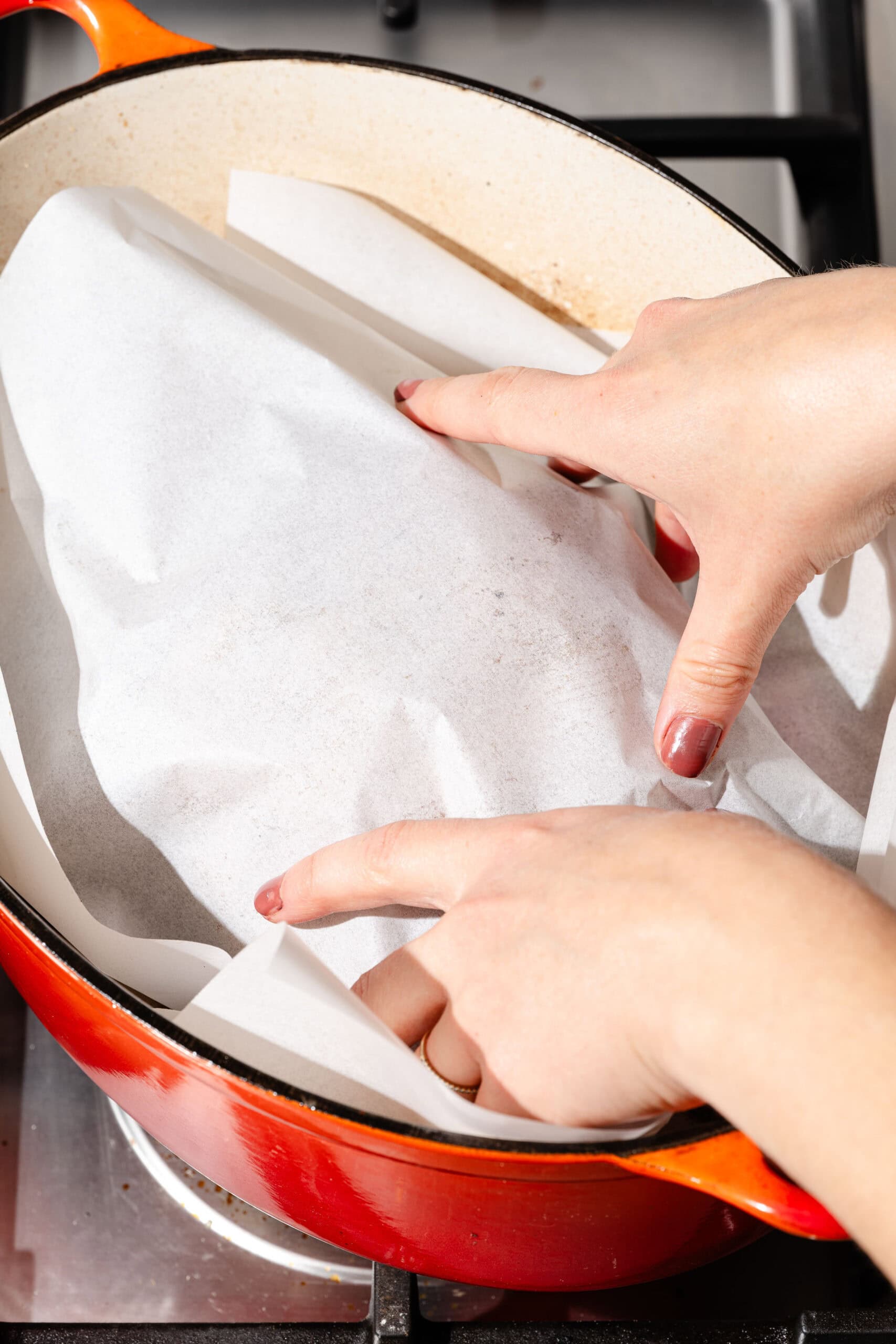
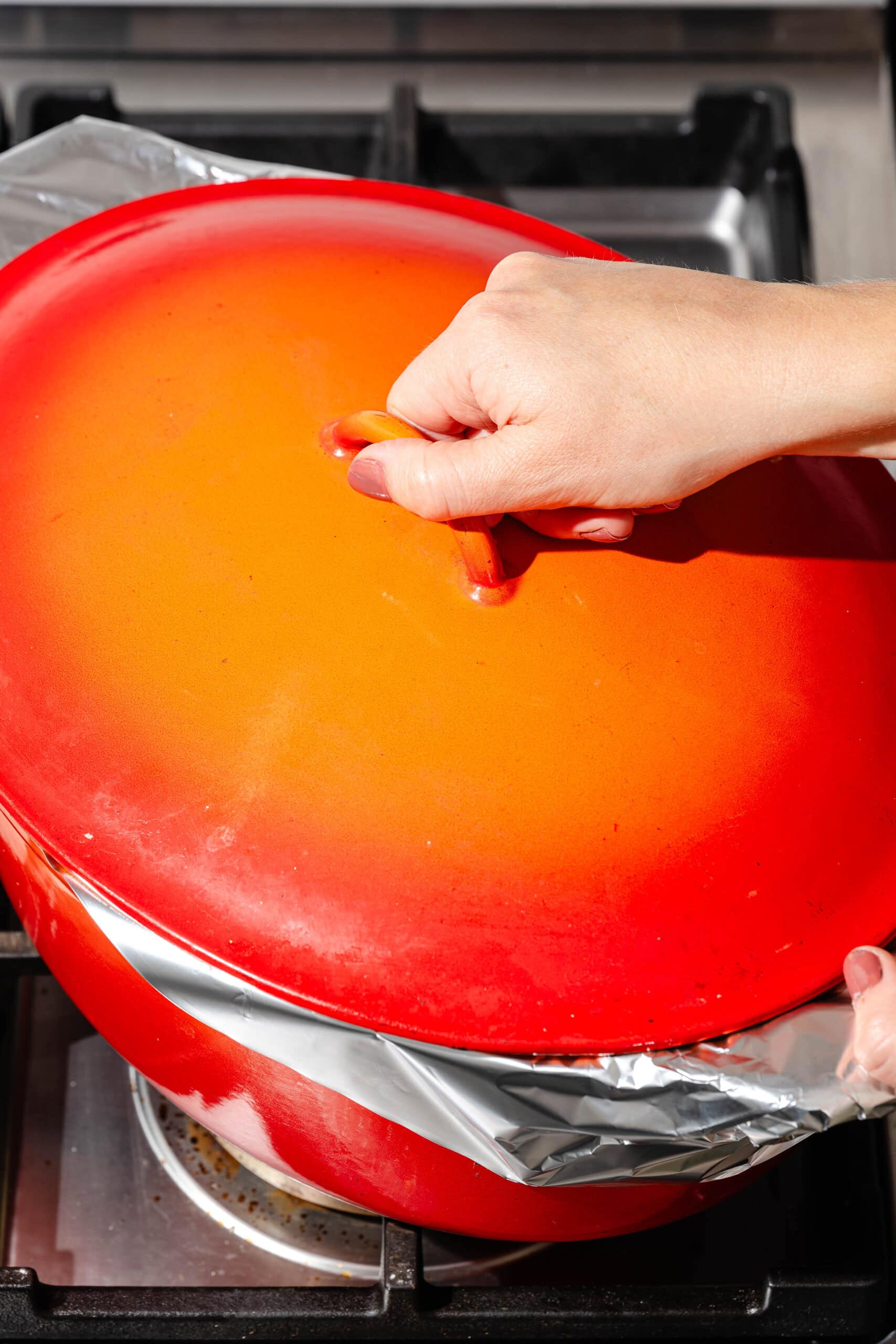
- Cover the lamb with a piece of parchment paper and then cover the entire dutch oven with foil, place the lid on and then put into the preheated oven.
- Bake for about 3-3.5 hours, basting with the pan sauce every hour, until the lamb is very tender and the meat starts to pull away easily with a fork. Keep an eye on the pan sauce levels, if needed add a little bit more beef broth. When the lamb meat starts to pull away easily, remove the lamb from the oven and turn the heat up to 425F. While the oven heats up a bit, use a ladle to skim some of the fat from the liquid in the pan to a safe vessel and discard later.
- Before placing back in the oven, make sure there is still liquid in the pan, if not add another ½ cup beef broth.
- Place the lamb back in the oven uncovered (even if the oven isn’t preheated yet to 425F, that’s ok) for about 30 minutes, until the top of the lamb is nicely browned / crispy.
Make the whipped parsnips
- When the lamb is in the last 30 minutes of cook time, make the parsnip puree.
- Add the peeled and cut parsnips to a large pot of salted water (1 tsp salt).
- Bring to a boil over medium-high heat and boil the parsnips for 10-12 minutes or until fork tender.
- Once cooked, remove from the heat and drain the water.
- Add the drained parsnips to a blender or food processor with ¼ cup butter, whole milk, 1 tsp kosher salt and ground pepper. Blend the mixture until smooth. Taste and adjust seasoning with ½ tsp more salt, pepper and/or 1-2 tbsp more butter. Set aside.
Assemble the final dish
- Once the lamb is done cooking, remove heads of garlic, cinnamon stick and orange peel from the pot before pulling the lamb into smaller pieces.
- Optional: Squeeze out some of the roasted garlic cloves into the pan sauce or serve alongside the lamb. Alternatively, you could add a few to the parsnip puree.
- Spread a portion of the parsnip puree on a plate and serve pieces of the lamb on top. Garnish with fresh mint leaves, pomegranate arils and chopped pistachios.
Notes
- If you’re using a smaller boneless lamb shoulder, start with 2.5 – 3 hours.
- If you can only find a bone-in lamb shoulder, you can still use that within this recipe, however, it may require more cook / braising time.
- If you don’t want to use wine, you can use a non-alcoholic wine or more beef broth instead.
- If you love this recipe, try our Greek Braised Lamb Shoulder Recipe (Tender, Fall-Off-the-Bone)

Be the first to discuss this recipe.