Main Dishes
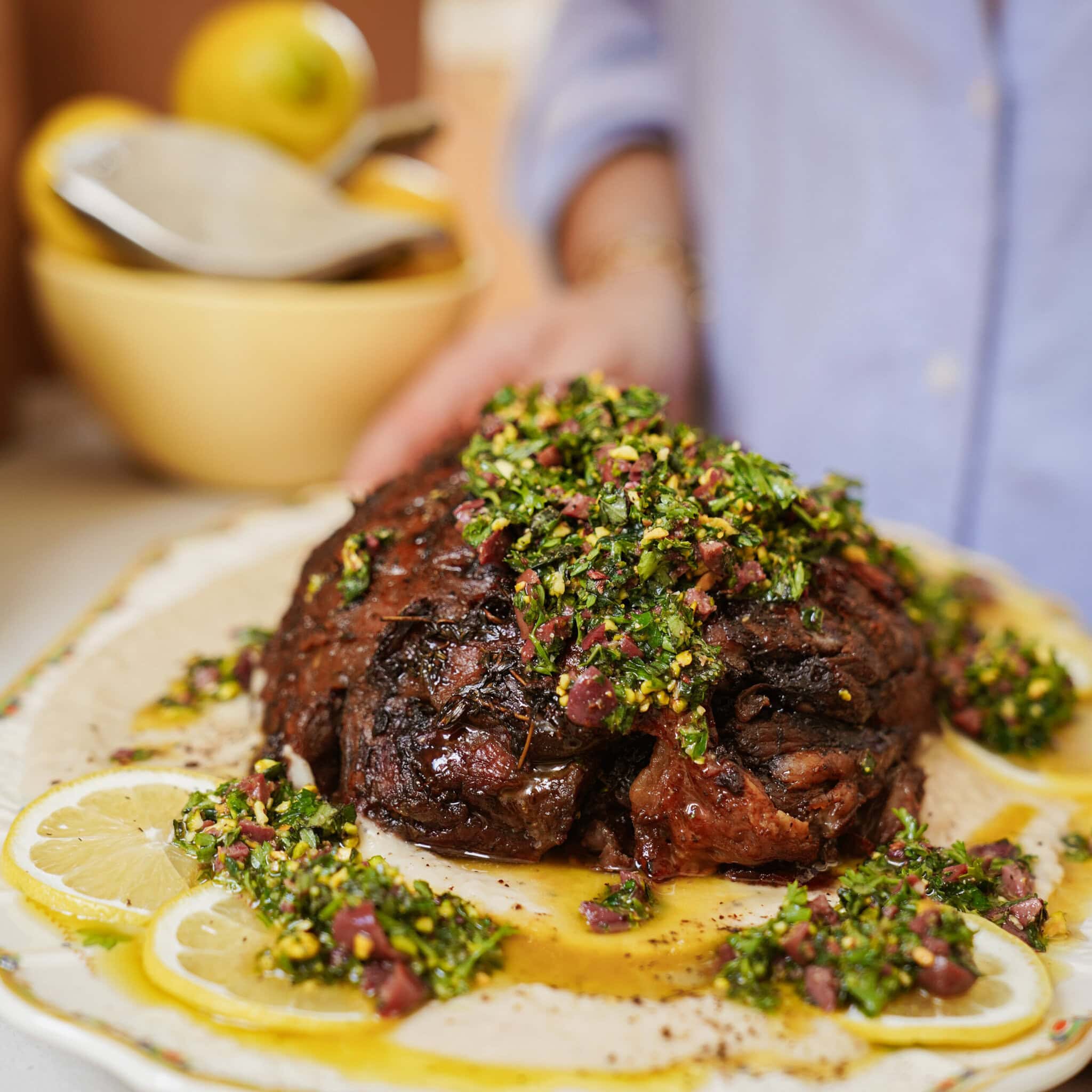
Greek Braised Lamb Shoulder Recipe (Tender, Fall-Off-the-Bone)
Prep
30 minutes
Cook
3 hours 30 minutes
Yield
6 -8
This braised lamb shoulder is slow cooked until fall-apart tender in a rich, aromatic sauce with garlic, herbs, lemon, and wine. It’s an easy, impressive lamb dinner that’s mostly hands-off and perfect for feeding a crowd.
Braised Lamb Shoulder might just be the easiest impressive dinner you’ll ever make. In Greek households, slow-cooked lamb is a tradition. It’s the kind of meal that fills the kitchen with amazing smells and brings everyone to the table. Braising is the absolute best way to cook this cut because it’s low, slow, and makes the lamb deeply flavorful. It’s hands-off, forgiving, and perfect for feeding a crowd.
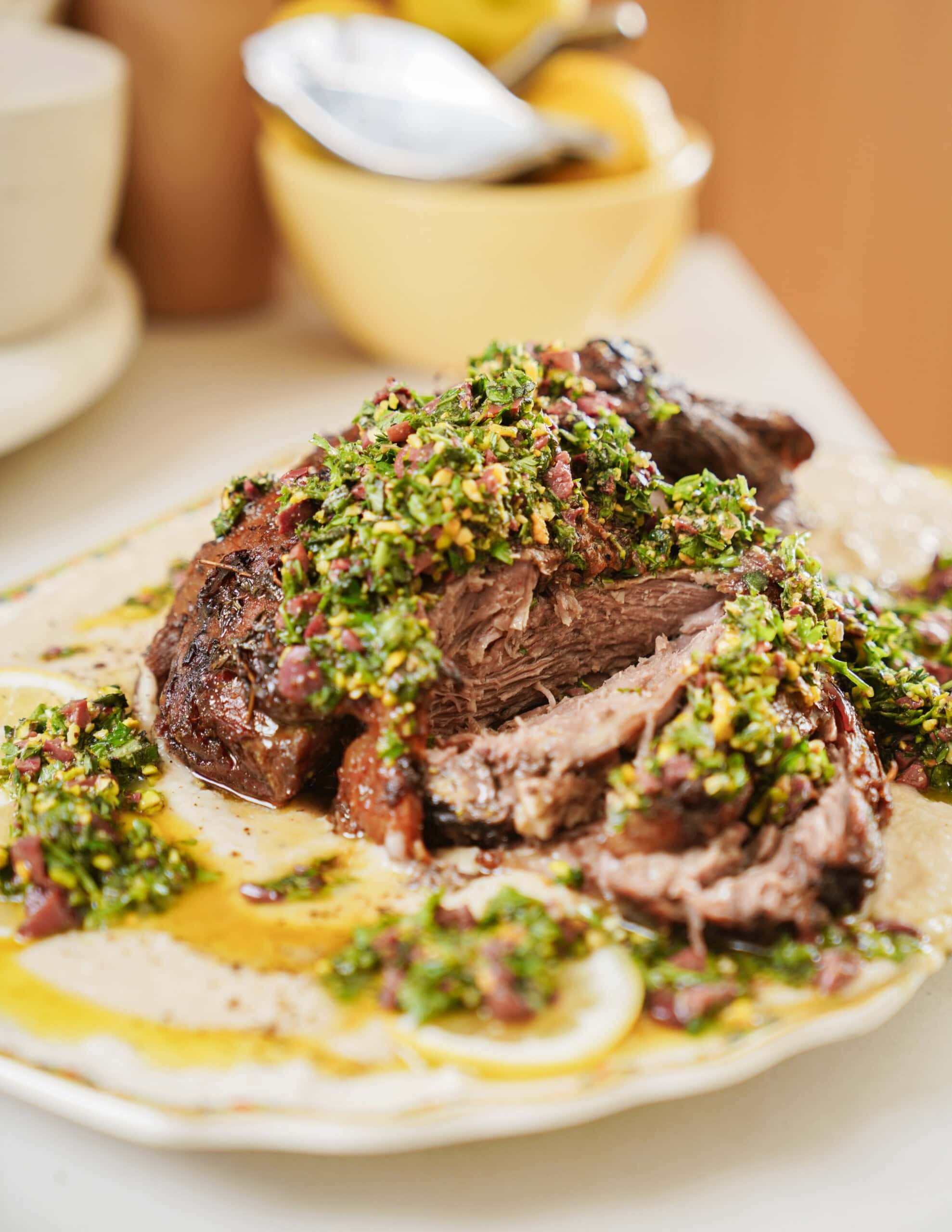
❤️ Why You’ll Love This Braised Lamb Shoulder
- Fall-apart tender: Low and slow braising converts tough collagen in this cut of meat into silky gelatin. The meat practically shreds itself.
- Hands-off and forgiving: Once it’s in the oven, you can walk away for a few hours. It’s the easiest way to make a show-stopping lamb dinner for a special occasion or dinner party.
- Even better the next day: The sauce thickens overnight, the fat is easy to skim, and the flavors deepen. It’s the perfect make-ahead dinner party food.
Ingredients
This Lamb Shoulder Recipe keeps things simple but flavorful. Each ingredient plays a role in building that rich, slow-braised sauce that you’re going to love.
Lamb Shoulder
Bone-in lamb shoulder (around 3.5–4 lbs) is ideal. It’s fattier than lamb leg and has more connective tissue than premium cuts, which is exactly what you want for braising. That connective tissue melts during the long cook time, turning into gelatin and creating tender meat with a delicious sauce.
Olive Oil
You’ll use olive oil to sear the lamb and start building the flavor base. A good extra-virgin oil makes a difference here since it carries the aromatics through the browning process.
Wine
Both red and white wine work in this braise. Red wine creates a deeper, richer sauce, while white wine keeps things brighter and a little lighter. So you can choose your own adventure.
Aromatics
Onion, garlic, celery, and carrot form the classic braising base. Fresh oregano and rosemary add herbal depth that pairs beautifully with lamb.
Warm Spices
Cinnamon sticks, bay leaves, and dried oregano are what push this dish into Greek territory. Cinnamon might surprise some people, but it’s incredible with lamb as it’s warm, aromatic, and just slightly sweet. It adds depth without tasting like dessert.
Stock
Chicken or beef stock both work. Chicken keeps the sauce lighter and lets the lamb shine. Beef stock creates a richer, deeper braising liquid.
If you love the combination of herbs and yogurt-based sauces with lamb, you’ll also love this Greek Tzatziki Sauce. It’s perfect for braised meat recipes like this one.
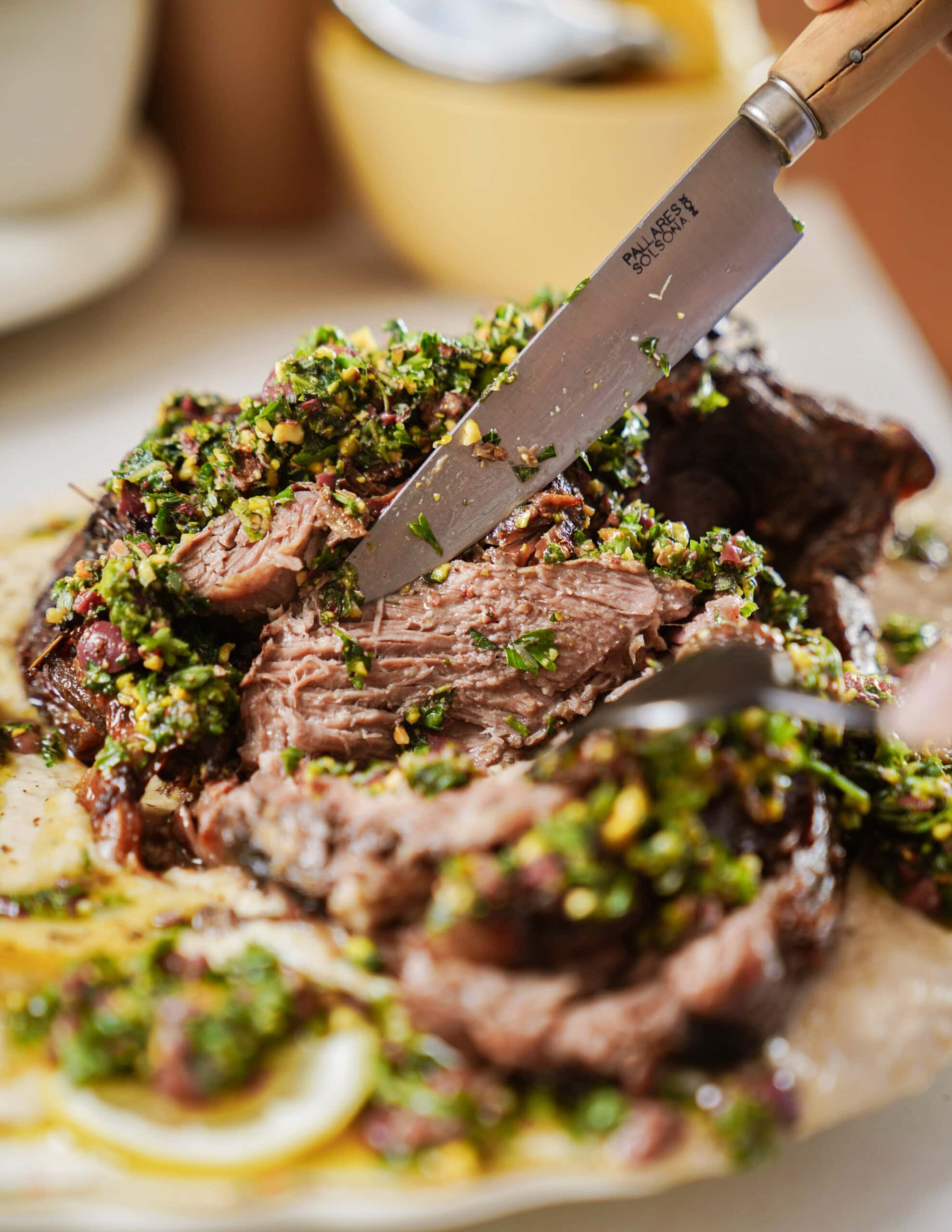
Tips and Tricks
Score and Manage the Fat Cap:
Score the fat cap in a crosshatch pattern before searing. During braising, keep the fat side facing up so it slowly renders and bastes the meat as it cooks. For a crispy finish, run the lamb under the broiler for a few minutes at the end.
Pat Dry and Sear Hard:
Dry the lamb well before searing. Browning isn’t about “sealing in juices,” it’s about making that deep golden crust that builds the flavor foundation for the entire dish.
Bone-In vs Boneless:
Bone-in is always my preference. The bones release collagen and flavor into the sauce while the meat cooks. Boneless works too, but it will cook about 30–45 minutes faster, and the sauce may be a bit lighter.
Braising Liquid (Don’t Drown It):
The liquid should come about one-third to halfway up the meat. You’re braising, not boiling. Too much liquid dilutes flavor and prevents the lamb from developing texture.
Low and Slow (Don’t Rush It):
Cook the lamb at around 300–325°F for several hours. A slow-cooked lamb shoulder becomes tender only when collagen has time to convert into gelatin. The lamb is ready when a fork slides in easily and the meat starts pulling from the bone.
Make-Ahead Advantage:
Honestly, this dish is even better the next day. The sauce thickens, the fat solidifies for easy removal, and the flavors meld perfectly. Just reheat gently in the oven.
Substitutions
Wine: Wine can easily be replaced with extra stock plus a splash of red wine vinegar or even pomegranate juice for brightness.
Cuts of Lamb: Boneless lamb shoulder works well if that’s what you find at the store. Just make sure you reduce the cooking time slightly. Lamb leg is too lean for this method and won’t become nearly as tender.
Stock: Chicken, beef, or vegetable stock all work for the braising liquid, depending on what you have available.
Spices: You can also shift the spice profile of this lamb recipe. Moroccan spices like ras el hanout create a deeper, warming flavor, while an Italian version with rosemary, fennel, and tomatoes gives a different Mediterranean twist.
Variations
Greek-Style (what this recipe is)
Oregano, cinnamon, bay leaf, lemon, and wine create a deeply aromatic braise. Serve it with crispy Greek Potatoes and a spoonful of Greek Tzatziki Sauce.
Moroccan-Inspired
Add ras el hanout, dried apricots, or prunes to the braising liquid, and finish with toasted almonds and fresh mint.
Italian
Use white wine, fennel, tomatoes, rosemary, and olives. The sauce is incredible spooned over polenta.
Middle Eastern
Add pomegranate molasses to the braise and finish with sumac and herbs. Serve over rice with crispy chickpeas.
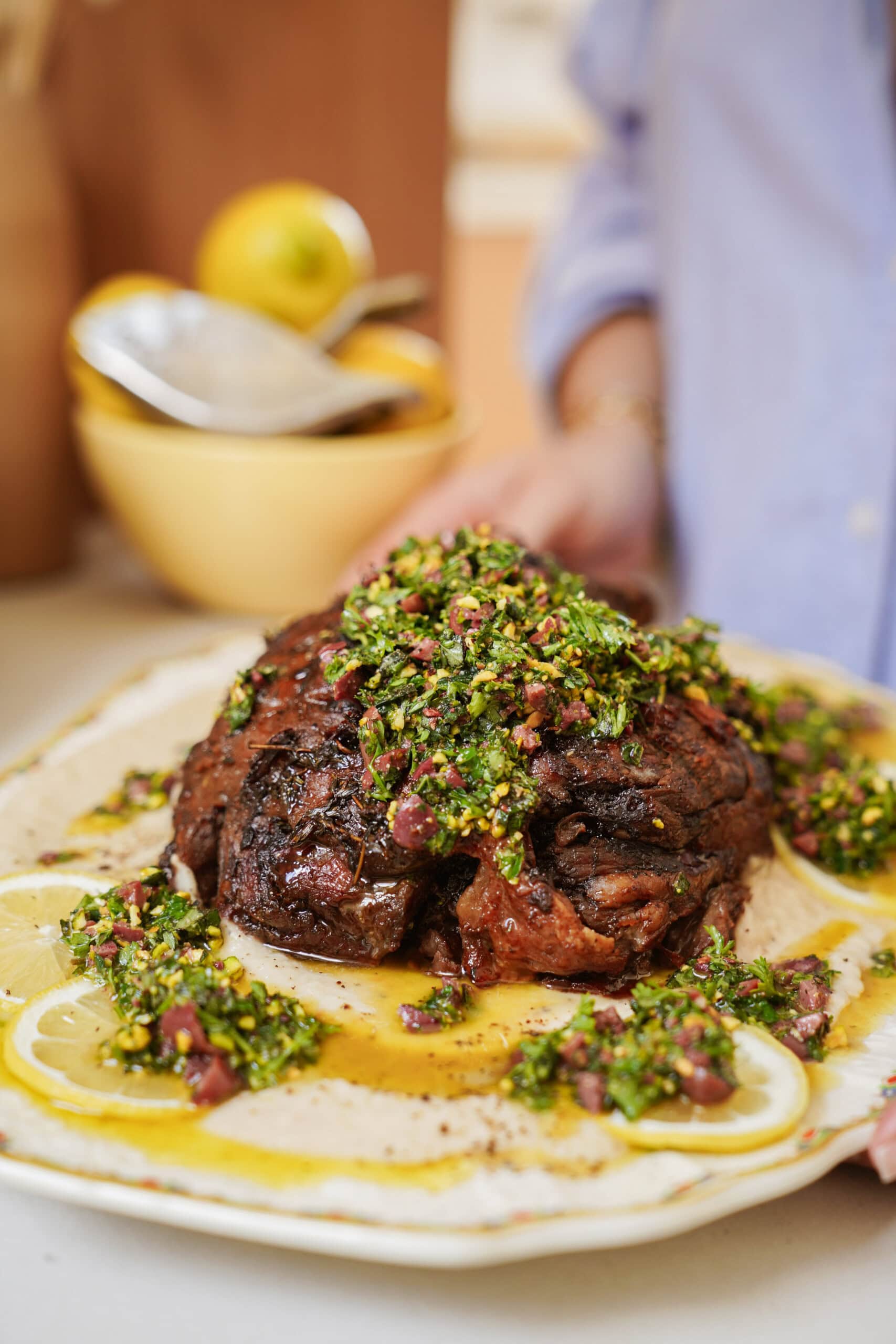
Best Served With
A rich braise always needs something to soak up the sauce. Here are some of my favorite options for side dishes:
- Potatoes or Starch: Crispy Greek Potatoes are the obvious pairing. Or serve the lamb over polenta, orzo, or fluffy couscous.
- Sauces: Cooling dips like Greek Tzatziki Sauce cut through the richness beautifully. Garlic lovers should try Skordalia, a traditional Greek potato-garlic dip that’s incredible with braised meats.
- Fresh Salad: A bright Greek Salad adds crunch and acidity to balance the rich lamb.
- Bread: Warm Fluffy Greek Pita Bread is perfect for soaking up every drop of sauce.
How to Store Leftovers
Leftover Braised Lamb Shoulder keeps incredibly well, which is why it’s one of my favorite dinner party dishes.
In the fridge, store the lamb and sauce together in an airtight container for up to 4 days. For longer storage, freeze portions with some braising liquid for up to 3 months. Thaw overnight in the fridge before reheating.
The best way to reheat is in the oven at 300°F, covered, until warmed through. On the stovetop, add a splash of stock to loosen the sauce. Microwave works in a pinch.
Tip: Leftover lamb is amazing shredded into Pita Pockets, tossed into pasta with the braising liquid as sauce, or piled onto grain bowls.
Troubleshooting
Lamb is tough after 3 hours:
Keep cooking. Lamb shoulder goes through a “tough phase” before collagen fully converts into gelatin.
Braising liquid too thin:
Remove the lamb and reduce the liquid on the stovetop until thicker.
Sauce too fatty:
Chill the pot in the fridge. The fat then solidifies on top and becomes easy to skim.
Meat is dry:
The braising liquid may have been too low, or the pot wasn’t sealed tightly. Check liquid levels midway through cooking.
Common Questions
Plan for 3-4 hours at 300–325°F for a 3.5–4 lb bone-in shoulder. Larger cuts can take up to 4–4.5 hours. The lamb is done when a fork slides in easily and the meat pulls apart.
Both are excellent braising cuts. Shoulder is fattier and more marbled, which keeps it juicy and produces a richer sauce. Shanks have more exposed bone marrow and create an even more gelatinous braising liquid. If you love Braised Lamb Shanks, the shoulder is the bigger-format version.
Bone-in is preferred because the bones add collagen and flavor to the braising liquid. Boneless works but cooks a bit faster and produces a slightly thinner sauce.
It hasn’t cooked long enough. Lamb shoulder needs sustained low heat for collagen to convert into gelatin. Keep braising at the same temperature until the meat becomes tender.
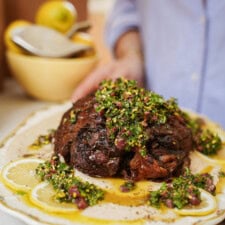
Braised Lamb Shoulder
Ingredients
For the lamb shoulder
- 2.2 kg (4.8-5 lbs) boneless lamb shoulder
- Kosher salt and ground pepper
- 2 tbsp extra virgin olive oil
- 3 large garlic cloves, quartered
- 2-3 sprigs of fresh thyme, each sprig cut into 3 smaller pieces
- ¼ cup white wine
- 2 ½ cups chicken broth
- 2 bay leaves
- 1 large lemon, sliced (about 10 slices)
For the gremolata
- ¼ cup toasted pistachios, finely chopped
- 2 tbsp finely chopped fresh mint
- ½ cup finely chopped fresh parsley (about 1 bunch of fresh parsley)
- 2 tbsp finely chopped fresh oregano
- 1 tbsp fresh thyme leaves
- ¼ cup finely chopped kalamata olives
- 1 large lemon, zested (about 1 tsp lemon zest)
- 3 tbsp extra-virgin olive oil
- 2 tsp lemon juice (optional)
- Salt to taste
For the white bean puree
- 2 (14- or 15-ounce) cans cannellini beans, drained and rinsed
- 3 garlic cloves, minced
- 4 tbsp extra-virgin olive oil, divided
- ¼ cup chicken broth or water
- 1 tsp kosher salt
- ¼ tsp ground pepper
- 2 tsp lemon juice
Instructions
For the lamb –
- Preheat the oven to 350F.
- Pat the lamb dry with a paper towel. Place the lamb shoulder on a cutting board. Season both sides generously with salt and pepper.
- To an oven-safe dutch oven, add 2 tbsp extra-virgin olive oil over medium-high heat. When the oil is hot, sear the lamb until golden brown on all sides, about 3-4 minutes per side. Remove the lamb to a plate and set aside. Drain all but 1 tablespoon of oil from the pot.
- Deglaze the pot with wine and let most of it cook off, scraping off any browned bits from the bottom of the pan. Then, add the chicken broth and bay leaves and bring to a simmer over medium-high heat.
- While you wait for the liquid in the pot to simmer, pierce the lamb about 8-12 times on the top side with a sharp knife and then insert a quarter garlic clove and small piece of a thyme sprig into each cut.
- When the liquid in the pot is simmering, turn off the heat and add the garlic & thyme stuffed lamb back to the pot. Nestle in 5 lemon slices around the lamb shoulder (set the rest of the lemon slices aside for garnish).
- Cover the lamb leg with a piece of parchment paper and then cover the entire dutch own with foil, place the lid on and then put into the preheated oven.
- Bake for about 3-3.5 hours, basting with the sauce every hour, until the lamb is very tender and the meat starts to pull away from bone with a fork. At this point, remove the lamb from the oven and turn the heat up to 425F. While the oven heats up a bit, use a ladle to skim some of the fat from the liquid in the pan to a safe vessel and discard later.Before placing back in the oven, make sure there is still liquid in the pan, if not add another ½ cup chicken broth.
- Place the lamb back in the oven uncovered (even if the oven isn’t preheated yet to 425F, that's ok) for about 30 minutes, until the top of the lamb is nicely browned / crispy.
Make the gremolata –
- While the lamb roasts, make the gremolata – toast the pistachios in a small pan until fragrant over low heat. Pour the toasted pistachios onto a plate and let cool.
- Once the pistachios are cooled, finely chop the pistachios (you can use a food processor for this as well – pulse until finely chopped).
- In a small bowl mix together the finely chopped toasted pistachios, finely chopped fresh mint, finely chopped parsley, thyme leaves, finely chopped oregano, finely chopped kalamata olives and lemon zest. Then, stir in the olive oil and lemon juice if desired. Taste and adjust seasoning with kosher salt.
- Store in the fridge until ready to use.
Make the white bean puree –
- When the lamb is in the last 30 minutes of cook time, make the white bean puree.
- To a medium pot add 2 tablespoons of olive oil over medium heat. When the oil is warmed, add the garlic and cook for 2-3 minutes until fragrant.
- Stir in the drained and rinsed cannellini beans, chicken broth (½ cup), salt and pepper. Turn the heat to medium high, cooking for about 7-8 minutes, stirring occasionally until the chicken stock has reduced by about half.
- Remove from the heat and add everything from the pot plus 2 tablespoons of olive oil to a food processor or high-speed blender. Pulse / blend until you get a mostly smooth consistency. Taste and adjust seasonings as needed – add a squeeze of lemon juice from a quarter of a lemon if desired.
Assemble the final dish –
- Once the lamb is done cooking, remove the bay leaves from the pot before pulling / cutting the lamb into smaller pieces.
- Spread a portion of the bean puree on a plate and serve pieces of the lamb on top. Top the lamb with the gremolata, garnish with lemon slices and serve.
Notes
- If you’re using a smaller boneless lamb shoulder, start with 2.5 – 3 hours.
- If you can only find a bone-in lamb shoulder, you can still use that within this recipe, however, it may require more cook / braising time.
- If you don’t want to use wine, you can use a non-alcoholic wine or more chicken broth instead.