30 Minute Meals
Greek Pork Chops (Brizola) – Golden, Juicy & Drizzled with Ladolemono
Prep
15 minutes
Cook
30 minutes
Yield
4 -6
Bone-in Greek pork chops (brizola) pan-seared until golden, oven-finished, and drizzled with a bright ladolemono that ties everything together. Serve with lahanosalata, tzatziki, and grilled sourdough.

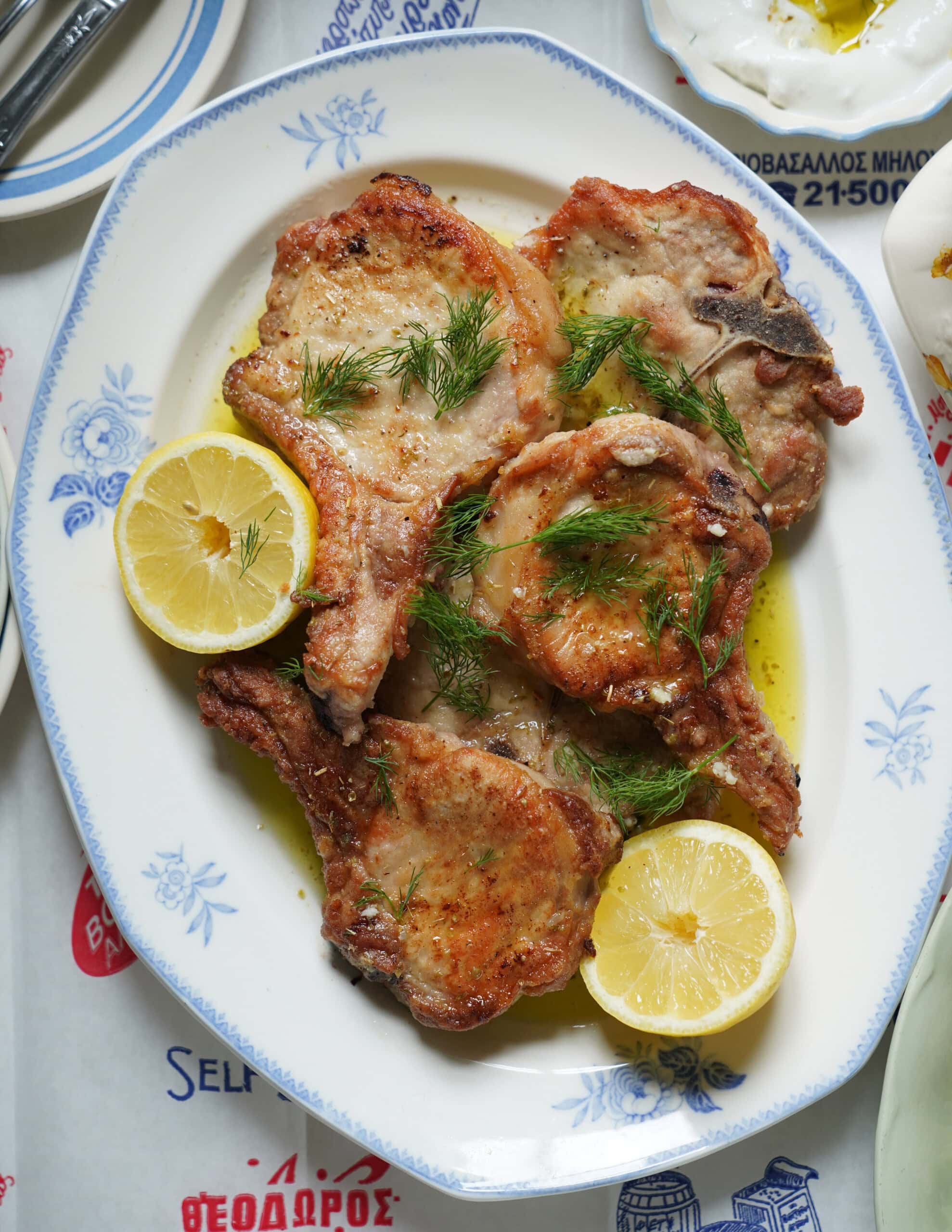
There’s nothing quite like the sound of Greek pork chops hitting a hot skillet. The sizzle, the aroma of olive oil, and the golden flour crust forming on the outside instantly transport me back to a Greek taverna. These Greek-style pork chops follow a simple technique: a flour dredge, pan-sear, oven-finish, then a generous drizzle of ladolemono (a delicious lemony Greek sauce).
This isn’t a marinade recipe. It’s a traditional method that gives you the best of both worlds: a crisp crust and juicy, perfectly cooked pork every single time.
❤️ Why You’ll Love Greek Pork Chops
Golden Flour Crust + Juicy Interior
The seasoned flour dredge creates a golden crust that a marinade can’t replicate. Finishing the chops in the oven ensures the inside stays tender while cooking evenly to the perfect temperature.
Ladolemono Changes Everything
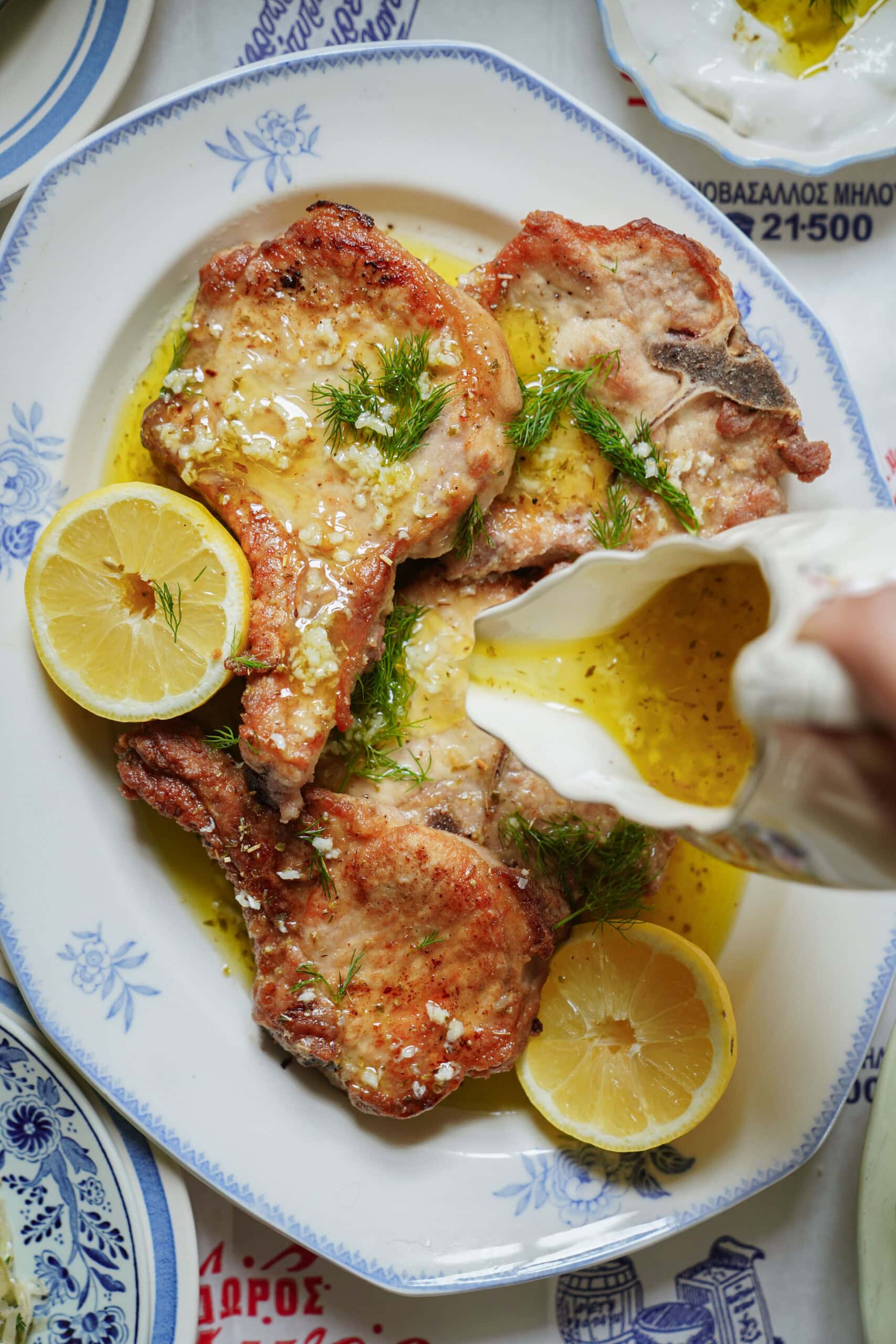
The ladolemono gets drizzled over the chops after they rest. It soaks into the crust just enough while adding bright citrus flavor that balances the richness of the pork.
A Complete Greek Taverna Plate
Served with lahanosalata, tzatziki, and grilled sourdough, this meal feels like something you’d order overlooking the sea in Greece. It’s more than pork chops on a plate; it’s a full Greek dining experience.
45 Minutes, Start to Finish
No marinating required. While the oven preheats, you can prep everything, sear the chops, finish them in the oven, and have dinner on the table in under an hour.
What Is Brizola? (And Why Greeks Order It at Every Taverna)
Brizola (μπριζόλα) is the Greek word for a chop or steak, and if you’ve ever sat down at a Greek taverna, you’ve probably seen it on the menu. While many North Americans associate Greece primarily with lamb, pork is actually the most commonly consumed meat throughout the country. That makes brizola (μπριζόλα) one of the most popular everyday meals you’ll find.
At seaside tavernas, a brizola often arrives with nothing more than fresh bread, a salad, and plenty of ladolemono. It’s simple food done exceptionally well. The focus isn’t on complicated sauces or lengthy marinades, but on quality ingredients and proper cooking techniques.
These Greek pork chops are a perfect example of that philosophy. The pork is cooked simply, then finished with olive oil, lemon, and oregano. It’s the kind of meal Greeks order regularly, while lamb tends to be reserved for holidays and larger celebrations.
If you’re interested in exploring more dishes like this, check out our guide to traditional Greek food and discover just how diverse Greek cuisine really is.
What Makes This Ladolemono Different
Ladolemono (λαδολέμονο) is one of the most iconic sauces in Greek cooking. Traditionally, it’s made from extra-virgin olive oil, fresh lemon juice, and oregano whisked together until emulsified. You’ll find it served with fish, chicken, vegetables, and grilled meats throughout Greece.
For these pork chops, I make a slightly different version. I add fresh garlic for extra depth and, optionally, a touch of honey to balance the natural tartness of the lemon juice. The result is still unmistakably Greek, but with a little extra complexity.
The biggest difference is how it’s used. This sauce isn’t meant to be a marinade. Pouring it over hot, rested pork chops allows the crust to absorb all that bright flavor while maintaining its texture. If you used the same mixture as a marinade, the flour coating would never develop properly during cooking.
If you’d like the classic version, check out our ladolemono recipe, which breaks down the traditional sauce in detail.
Key Ingredients
The beauty of these Greek pork chops comes from a handful of simple ingredients working together.
Bone-In Pork Chops
Bone-in chops stay juicier than boneless and provide the traditional brizola experience. Standard chops around 1 inch thick work perfectly.
All-Purpose Flour
The flour dredge is what creates the signature golden crust. A light coating is all you need (too much flour can become heavy or gummy).
Kosher Salt + Ground Pepper
Mixed directly into the flour, they season every bite rather than just the surface.
Extra-Virgin Olive Oil
Greek cooking relies heavily on quality olive oil. It helps create that beautiful crust while adding flavor.
Fresh Lemon Juice
Freshly squeezed lemon provides the bright acidity that makes ladolemono so refreshing.
Extra-Virgin Olive Oil
The foundation of any good ladolemono, helping create a silky, emulsified sauce.
Dried Oregano
Greek oregano, often called rigani, has a floral flavor that’s ideal for traditional Greek dishes.
Garlic
Just enough to add savory depth without overpowering the lemon.
Honey
Optional, but highly recommended if your lemons are particularly tart.
Sourdough Bread
Grilled sourdough is essential for soaking up every last drop of ladolemono.
Tzatziki
Cool, creamy, and refreshing. I always serve these chops with plenty of tzatziki on the side.
The Right Way to Sear and Finish Pork Chops
What makes this Greek pork chop recipe special isn’t just the ingredients, but the technique.
Lightly flattening the pork chops helps create an even thickness throughout the meat. You’re not pounding them thin, but you’re helping them cook more consistently.
Patting the chops dry before dredging is equally important. Surface moisture prevents proper browning and encourages steaming instead of searing.
The flour dredge plays a major role in creating flavor. Starches brown through the Maillard reaction at lower temperatures than proteins alone, which means you develop a golden crust faster and more evenly.
Starting with a hotter pan initiates browning quickly, while reducing the heat slightly prevents the flour from burning. Giving each chop plenty of room in the skillet also helps maintain pan temperature and encourages proper crust formation.
Once the crust is established, the oven takes over. Finishing at 350°F gently brings the interior to temperature without overcooking the exterior. This method combines the best qualities of pan frying and roasting.
Finally, resting allows juices to redistribute throughout the meat. The internal temperature continues to rise slightly through carryover cooking, resulting in pork that’s both juicy and evenly cooked.
Variations
Boneless Pork Chops
This method works great with boneless chops. Reduce the oven time slightly since they cook faster.
Grilled Brizola
Skip the flour dredge and grill seasoned chops directly over medium-high heat. Finish with plenty of ladolemono for a classic taverna-style preparation.
Lamb Chops (Paidakia)
The same honey-lemon ladolemono is incredible on lamb chops (paidakia), making it a versatile Greek finishing sauce.
What to Serve with Greek Pork Chops
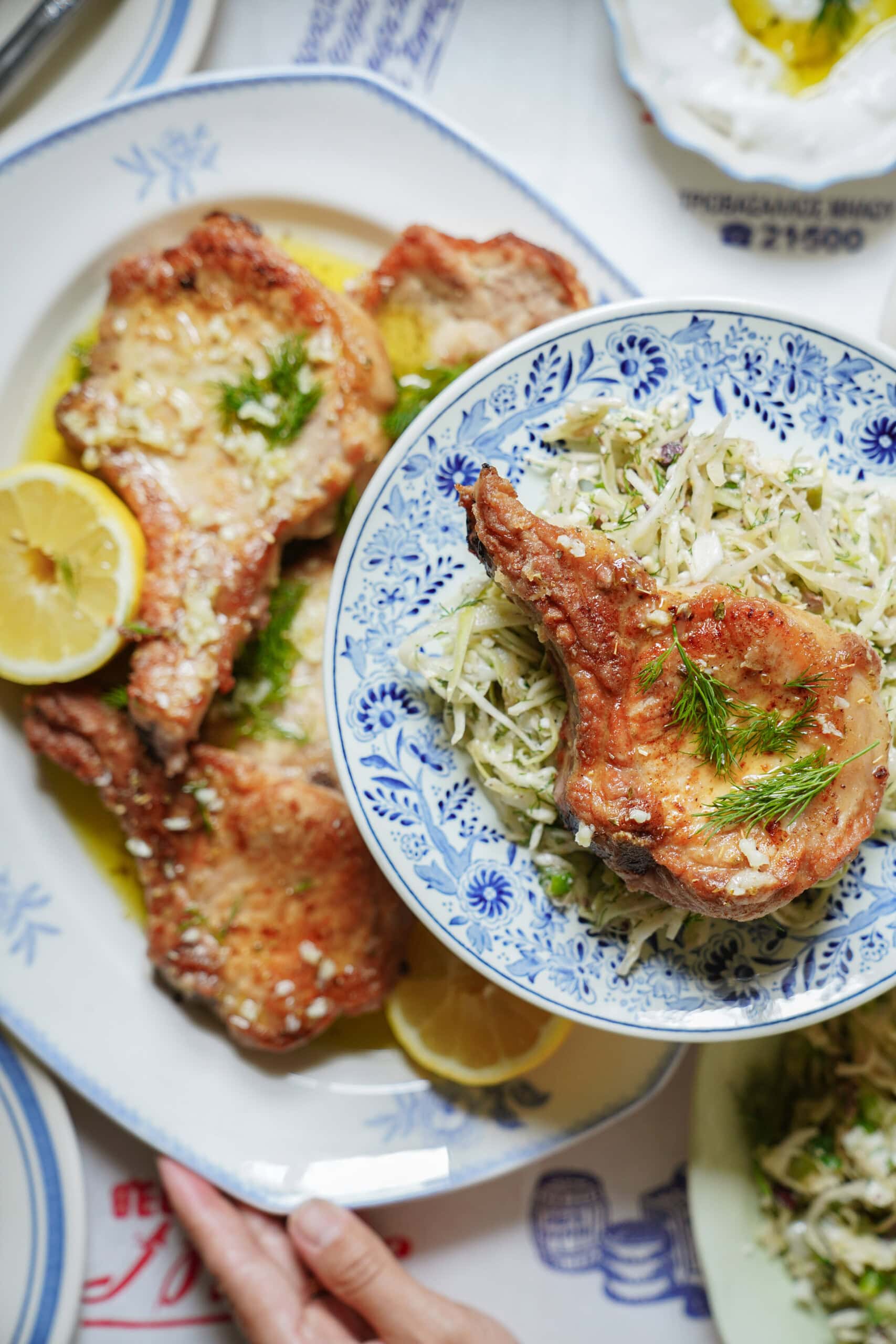
A proper Greek meal is all about balance.
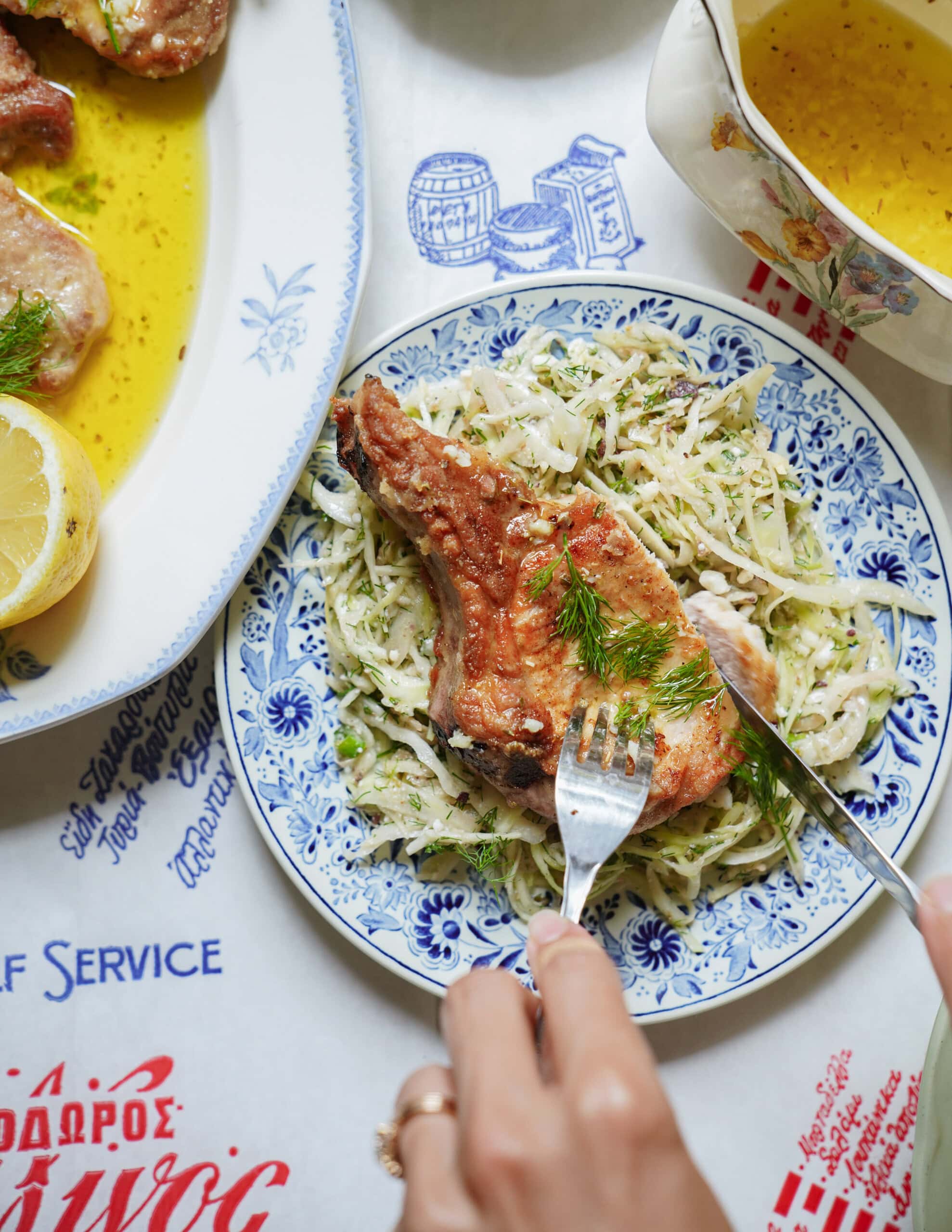
Lahanosalata (Greek Cabbage Salad)
The traditional pairing. Crisp cabbage dressed with vinegar cuts through the richness of the pork beautifully.
Tzatziki
Cool, creamy, and packed with flavor. Use it as a dip, a spread, or both.
Greek Lemon Potatoes
Roasted with lemon and olive oil, these potatoes are made for soaking up leftover ladolemono.
Horiatiki (Greek Salad)
Fresh tomatoes, cucumber, olives, feta, and olive oil make this a natural pairing.
Warm Greek Potato Salad
A heartier side that’s especially great during cooler months.
Pork Souvlaki Bowls
Turn leftovers into lunch by slicing the pork and serving it over potatoes and vegetables.
Grilled Sourdough with Olive Oil
Don’t skip the bread. It’s there for a reason.
How to Store and Reheat Greek Pork Chops
Store leftover pork chops in an airtight container in the refrigerator for up to 3 days. If possible, keep the ladolemono separate so it stays fresh and vibrant.
For reheating, place the chops in a 300°F oven for 8–10 minutes and loosely cover with foil. This helps preserve moisture while maintaining the crust.
Cooked pork chops can also be frozen for up to 2 months. Thaw overnight in the refrigerator before reheating.
The ladolemono can be stored separately in a sealed jar in the fridge for up to 5 days. Since the oil and lemon naturally separate, simply shake or whisk before serving.
FAQs
Bone-in pork chops are the traditional choice for brizola. The bone helps retain moisture during cooking, keeping the meat juicy. Look for chops that are about 1 inch thick. If you can only find boneless, reduce the oven time slightly.
Ladolemono (λαδολέμονο) is a classic Greek sauce made from extra-virgin olive oil, fresh lemon juice, and oregano. This version includes an optional touch of honey to balance the acidity.
Yes. Grilling is actually the traditional taverna method. Skip the flour dredge and grill seasoned chops over medium-high heat before finishing with ladolemono.
The USDA recommends an internal temperature of 145°F followed by a 3-minute rest. If you prefer well done, cook closer to 160°F.
The flour creates a thin, golden crust that develops quickly through the Maillard reaction. It also helps retain moisture during cooking.
Absolutely. Store it in a sealed jar in the refrigerator for up to 5 days. Shake or whisk before serving.
Your Greek mommy that is. 😍 Step into my kitchen to learn how to make yummy Greek food. 🍽️💃
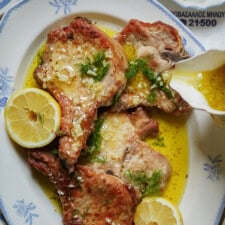
Greek Pork Chops
Ingredients
For the ladolemeno
- 2 tbsp fresh-squeezed lemon juice (about 1/2 large lemon)
- 2 ½ tbsp extra-virgin olive oil
- ¼ tsp dried oregano
- 1 small garlic clove pressed
- ¼ tsp kosher salt
- Pinch of ground pepper
- Optional: 1 tsp honey to balance out acidity if needed
Optional: Lahanosalata – see link below to make this recipe if serving with the pork chops
- 1 Lahanosalata recipe Greek Cabbage Salad recipe
For the pork chops
- 6 bone-in pork chops (4 if they are on the larger side)
- ½ cup all purpose flour
- 2 tsp kosher salt
- ½ tsp ground pepper
- Extra-virgin olive oil for frying
For serving
- 2-3 slices sourdough bread, grilled
- Tzatziki for dipping
Instructions
- Preheat the oven to 350F.
- Make the ladolemeno: Make the ladolemeno by whisking together the lemon juice, olive oil, dried oregano, pressed garlic, kosher salt and ground pepper until combined. Taste for seasoning adding more salt if needed or honey to balance out acidity. Set aside.
- Optional: Make the lahanosalata – Follow our instructions to make the lahanosalata (Greek Cabbage Salad) if you want to serve this with the pork chops and place the salad in the fridge.
- Prepare the pork chops: Place one pork chop at a time between two sheets of parchment paper. Use a mallet or rolling pin to lightly flatten each pork chop just slightly. Place the pork chops on a plate and pat both sides of the pork chops well with a paper towel.
- Season the pork chops: On a plate mix together the all purpose flour, salt and pepper until combined. Dredge the pork chops one at a time in the flour and shake off any excess flour. Place the floured pork chops back on the plate.
- Sear the pork chops: Once the oven is preheated, sear the porkchops in batches so that you don’t overcrowd the pan. Coat the bottom of a large skillet or frying pan with olive oil. Heat to medium high and when the oil is hot, turn to medium heat. Cook the pork chops for 3-4 minutes on each side, until a nice crust forms. Once the pork chops are seared, add them to a large baking sheet in an even layer.
- Bake the pork chops: After all the porkchops are seared and on the baking sheet, bake for 8-12 minutes or until they are cooked to your desired temperature (internal temperature of the pork chops should be a minimum of 145F degrees for medium rare and a maximum temperature of 160F degrees for well done). Remove the chops from the oven.
- Let the pork chops rest for 5 minutes while you toast the sourdough bread.
- Serve the pork chops alongside the (optional – lahanosalata), toasted bread, tzatziki and drizzle the pork chops with the ladolemeno.
Notes
- We love to serve these with our Greek Cabbage Salad recipe
- If you love this recipe, try our Pork Souvlaki Bowls with Lemon Potatoes