

This post may contain affiliate links. Please read our disclosure policy.
These healthy Greek dinner recipes are proof that the world’s most celebrated way of eating isn’t a trend; it’s simply how Greek families, including my own, have cooked for generations. Long before anyone called it the “Mediterranean Diet”, my yia-yia and mama were serving grilled chicken souvlaki with tomato salad, olive oil, lentils, roasted vegetables, and fish straight from the oven. Greek food never needed a “healthy makeover” because it has always been healthy. Built on olive oil, vegetables, legumes, herbs, seafood, and lean proteins.
From the chicken and seafood dishes that sustain Ikaria’s Blue Zone (where some of the longest living people live) to comforting lentil soups and olive oil-rich vegetable stews, these dinners are the recipes I grew up eating and still make in my own kitchen today. You’re going to love these just as much as I have growing up!

Maria Koutsogiannia
Maria is the creator of FoodByMaria and your go-to Greek food expert for cozy, flavor-packed recipes. Inspired by her Mediterranean roots, she brings traditional Greek flavors, feel-good ingredients, and a whole lot of joy to everyday cooking.
Why You’ll Love This Guide
- Written by a Greek home cook: I grew up eating these dinners at my family’s table. This isn’t a generic roundup of “Mediterranean-inspired” bowls. These are the dishes I watched my mama and yia-yia cook my whole life.
- Every recipe is tested and linked: Every dish below links directly to a full recipe with instructions, tips, and nutrition information from your Greek mama, me!
- Organized the way Greeks actually eat: Chicken, seafood, vegetable-forward dinners, soups, and bowls, not a random list, but the way meals are naturally grouped in a Greek kitchen.
- Healthy without trying: Greek food is naturally rich in olive oil, vegetables, legumes, herbs, seafood, and lean proteins. The Mediterranean lifestyle became world-famous because of how nourishing and sustainable it already was.
- Cultural context you won’t find elsewhere: Greek names, Blue Zone traditions, meze-style dinners, seasonal cooking, and the stories behind the dishes, the things that make Greek food feel like home.
Healthy Greek Chicken Dinners
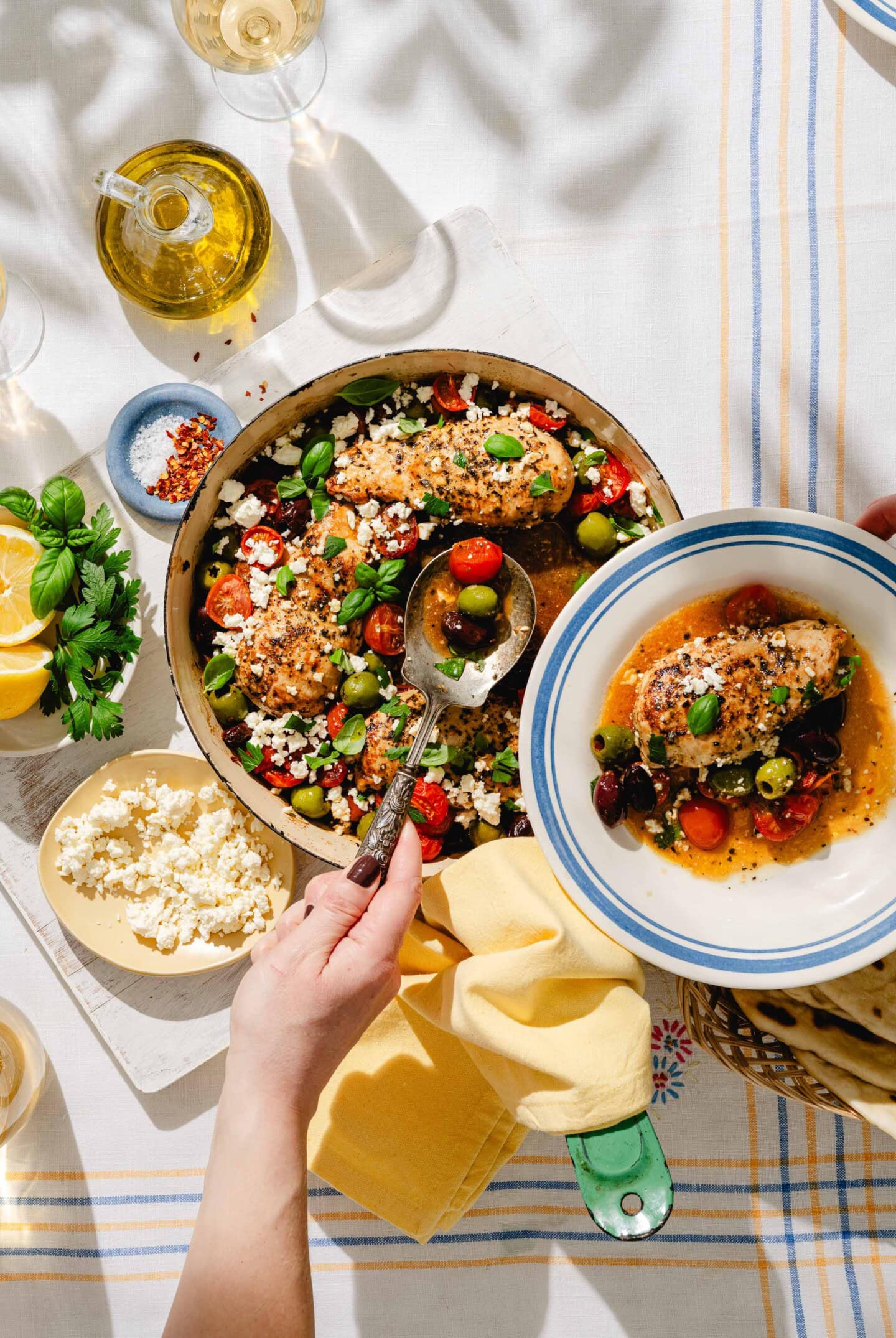
Chicken is one of the foundations of everyday Greek cooking. These healthy Greek chicken recipes showcase the flavors that define Greek kitchens: lemon, oregano, garlic, olive oil, and herbs. These key ingredients are used in dishes that range from quick grilled skewers to slow-roasted comfort meals. Chicken has long been one of the lean proteins at the heart of the Mediterranean table, marinated in olive oil and herbs generations before anyone called it meal prep.
Chicken Souvlaki (Κοτόπουλο Σουβλάκι)
The undisputed king of Greek street food, made right at home. Marinated in olive oil, lemon juice, garlic, and oregano, then grilled until smoky and juicy, chicken souvlaki proves that the simplest ingredients often create the best meals.
Growing up, this was one of those dinners that meant everyone would gather around the table with warm pita, tomatoes, tzatziki, and whatever salad my mama had chopped that day. Naturally high in protein and packed with anti-inflammatory herbs, it’s one of the healthiest and most satisfying Greek dinners you can make.
Greek Chicken and Potatoes (Κοτόπουλο Λεμονάτο)
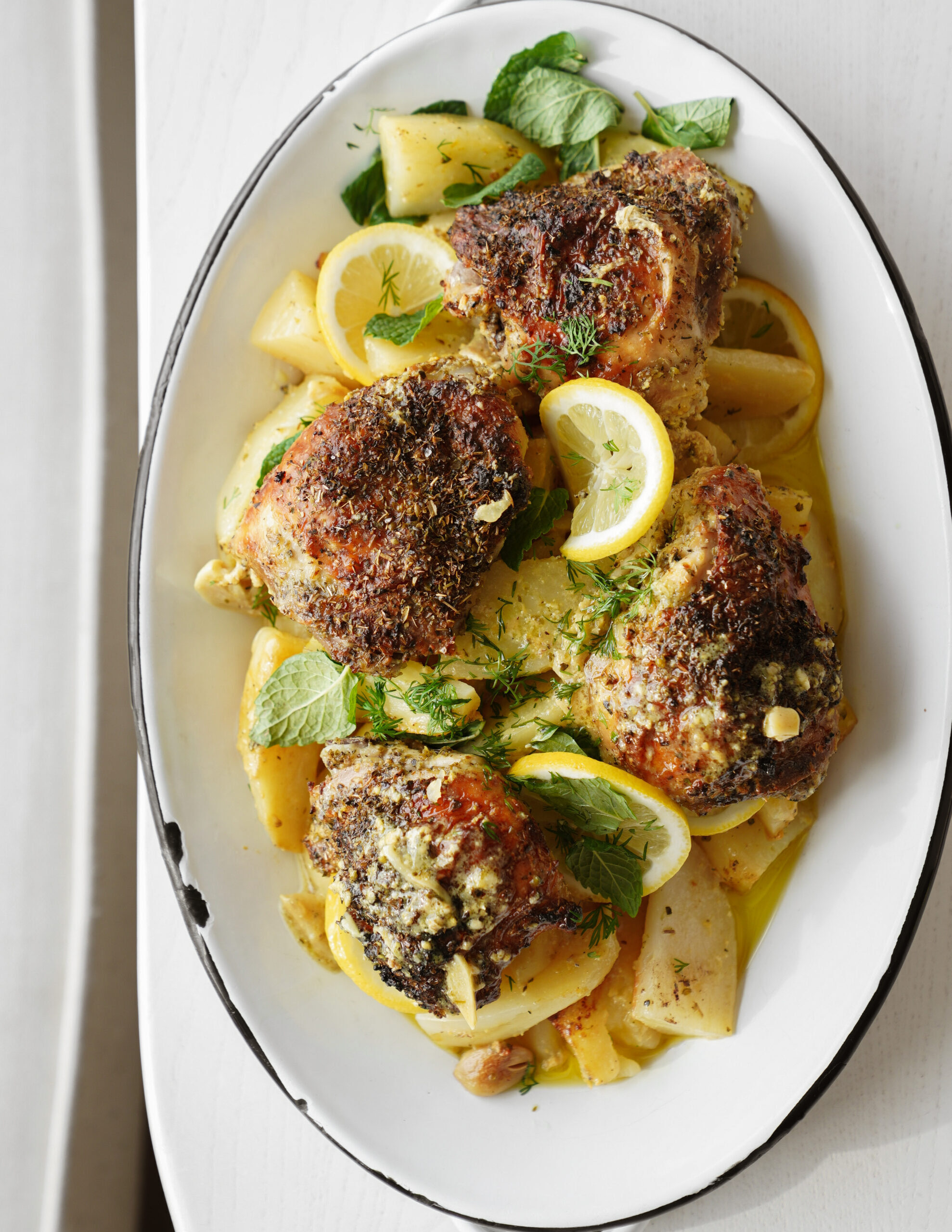
If you ask me what smells like a Greek home, it’s lemon chicken roasting in the oven with potatoes soaking up every drop of olive oil and pan juices. Greek chicken and potatoes is the Sunday dinner of my childhood!
The potatoes roast directly in the lemony chicken juices until golden and tender, absorbing flavor instead of relying on heavy sauces. It’s hearty, filling, and exactly the kind of meal that makes Greek food feel generous without ever feeling complicated.
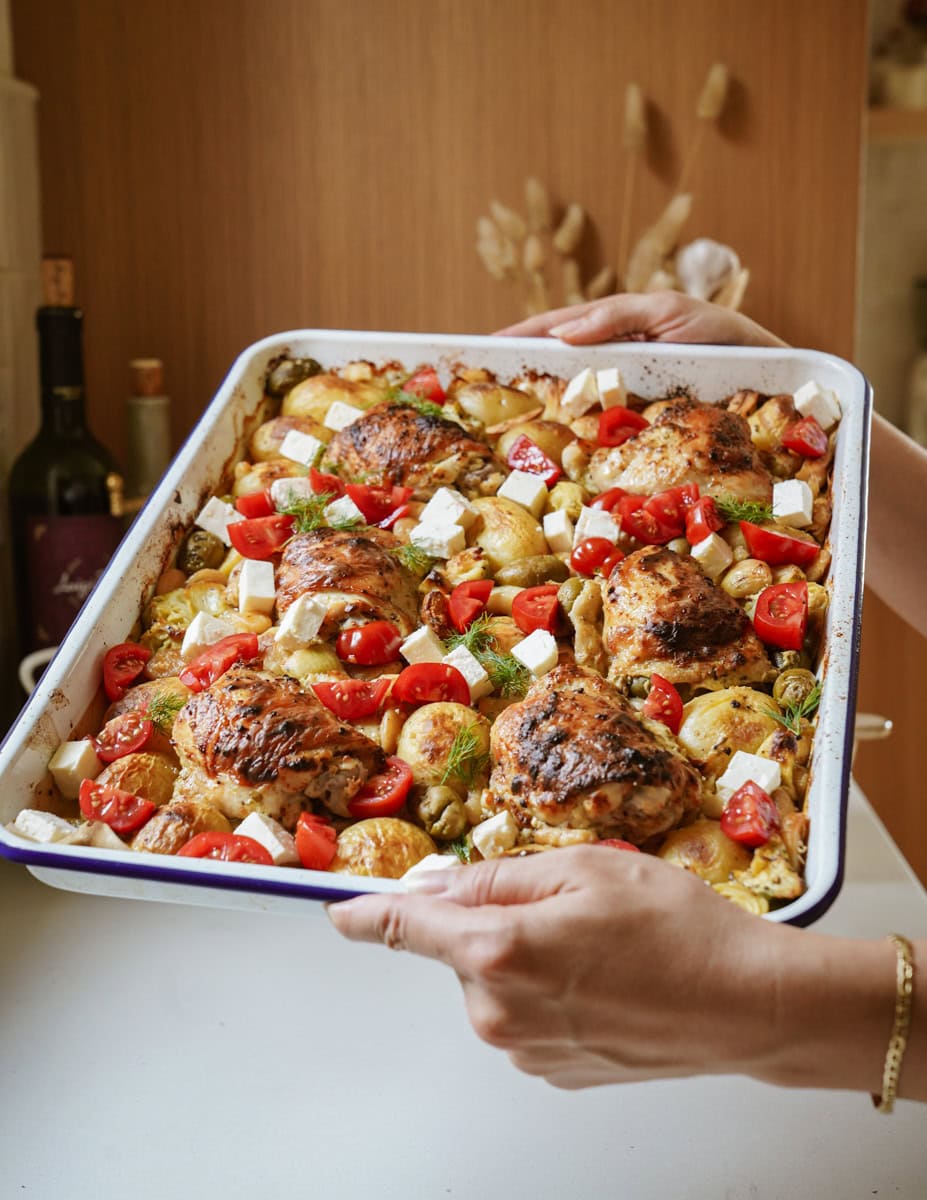
Greek Chicken Thighs Sheet Pan (Κοτόπουλο στο Ταψί)
Bone-in chicken thighs roasted with butter beans, tomatoes, and Mediterranean spices in a single pan, one of the easiest ways to get big Greek flavor on a busy weeknight!
This style of cooking, known as “sto tapsi” (in the pan), has always been part of Greek home cooking. Everything roasts together until the edges caramelize and the olive oil mingles with the tomatoes and herbs into a sauce you’ll want to dip bread into. Between the chicken and the beans, it’s the kind of balanced dinner Greeks have always made instinctively.
Greek Chicken Gyros (Γύρος Κοτόπουλο)
Thinly sliced chicken tucked into warm pita with tzatziki, tomatoes, onion, and fries, the Greek gyro done at home without needing a restaurant spit.
The cool yogurt-based tzatziki adds protein and freshness, while the chicken is seasoned with warm Mediterranean spices, making every bite feel comforting and bright. It’s a complete dinner wrapped up in one hand and one of those meals everyone at the table gets excited about.
Kotopoulo Youvesti aka Chicken and Orzo (Κοτόπουλο Γιουβέτσι)
Chicken baked with orzo in a rich tomato sauce until the pasta absorbs every bit of flavor. This is pure Greek comfort food! It’s so damn good on a cold winter’s day (or anytime).
Youvesti is the kind of meal Greek mamas make when the whole family is coming over. It fills the house with warmth, tastes even better the next day, and somehow always disappears fast. Between the lean chicken, tomato-rich sauce, olive oil, and satisfying orzo, it’s a deeply nourishing one-pot dinner that feels like a hug from your yia-yia.
Mediterranean Seafood Dinners
Fish and seafood are central to traditional Greek eating, especially in the islands and coastal villages where some of the world’s longest-living people reside. In places like Ikaria (one of the world’s Blue Zones), fish is eaten regularly alongside vegetables, olive oil, legumes, and herbs. This is the Mediterranean diet at its purest and one of the reasons the traditional Greek dinner table is so closely linked to longevity research.
Sheet Pan Salmon
Salmon roasted with potatoes, olives, and Mediterranean herbs in one pan is exactly the kind of effortless dinner that fits beautifully into a busy weeknight.
Salmon is rich in omega-3 fatty acids, which play a huge role in why the Mediterranean diet is associated with heart health and longevity. The sheet pan approach for this recipe keeps things simple: olive oil, lemon, herbs, and letting the oven do the work.
Mediterranean Cod (Μπακαλιάρος)
Cod baked with potatoes, tomatoes, olive oil, garlic, and lemon is one of the simplest seafood dinners in Greek cooking.
This dish is also known as Bakaliáros and has deep roots in Greek tradition, especially during fasting periods when seafood often replaces meat at the table. The mild flavor makes it perfect for anyone who says they “don’t like fish,” while the olive oil, tomatoes, and herbs create a light but deeply flavorful meal.
Oven Baked Fish (Ψάρι στο Φούρνο)
Fish baked with tomatoes, onions, olive oil, and herbs is one of the most honest expressions of Greek cooking there is.
In Greece, oven-baked fish isn’t about complicated sauces or elaborate techniques; it’s about quality ingredients treated simply. Good fish, good olive oil, seasonal vegetables, and time around the table. It’s a nutrient-rich dinner that feels fresh, light, and comforting all at once.
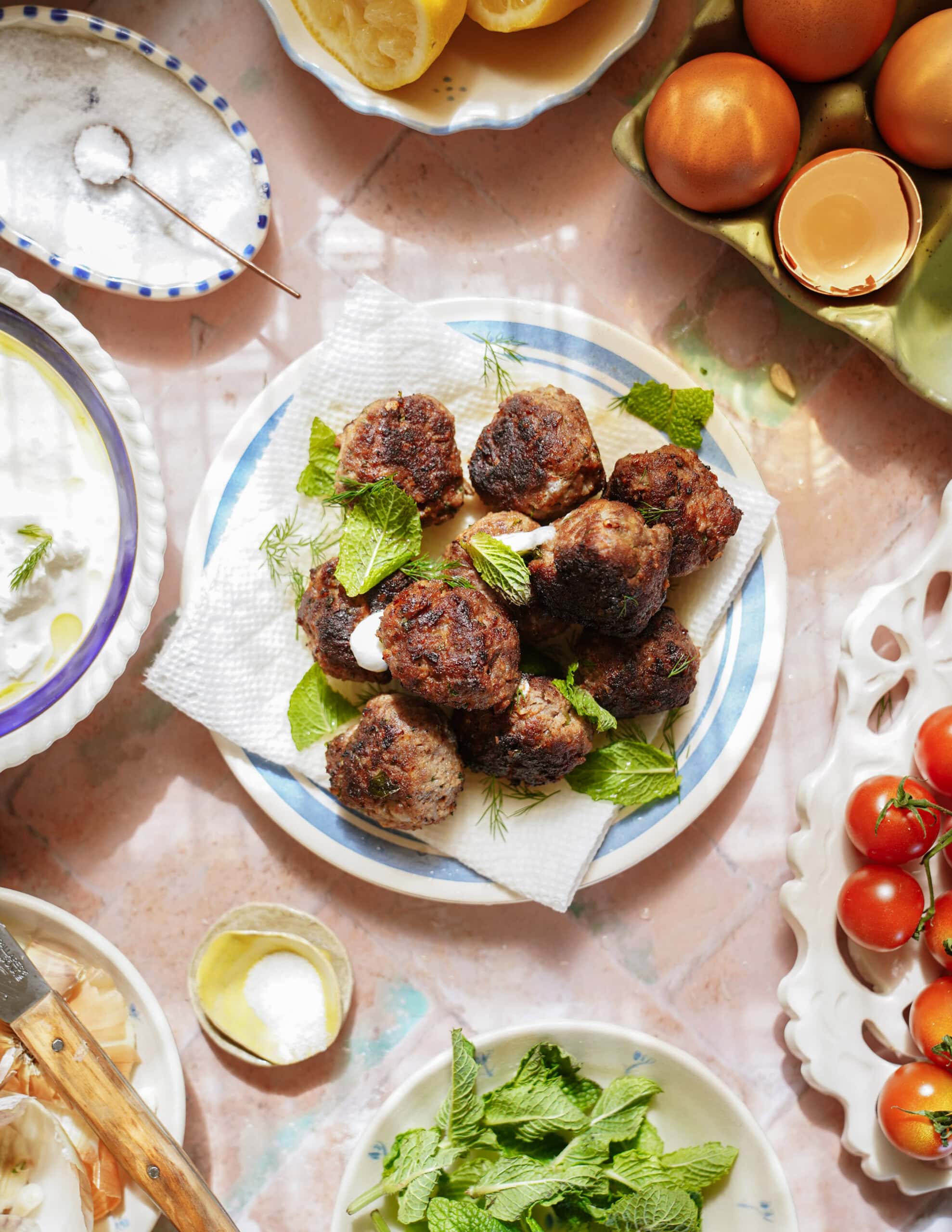
Greek Meatball Dinner
While traditional Greek cooking uses less red meat than many Western diets, keftedes are one beloved exception. Greek meatballs stretch a small amount of meat with herbs, onions, and spices, proving once again that Greek cooking has always been about flavor and balance rather than excess.
Greek Meatballs (Κεφτέδες)
Hand-rolled meatballs loaded with mint, oregano, onion, and cumin, keftedes are one of the most recognizable dishes at any Greek table.
The herbs do the heavy lifting here, creating bold flavor without needing huge portions of meat. Served with tzatziki, warm pita, and salad, keftedes become the kind of balanced meze-style dinner Greeks naturally gravitate towards.
Plant-Forward Greek Dinners
One of the healthiest parts of traditional Greek cooking is the ladera (λαδερά) tradition, which is a vegetable dish cooked generously in olive oil until tender, silky, and deeply flavorful. In Greece, these dishes aren’t “sides” or substitutes for meat. They are dinner, usually served with bread, feta, olives, and wine around the table.
Ladera dishes are a huge reason the traditional Greek diet is tied so closely to Blue Zone longevity research. They’re naturally rich in fiber, antioxidants, healthy fats, and seasonal produce.
Spanakopita (Σπανακόπιτα)
Golden, flaky phyllo wrapped around spinach, feta, dill, and scallions, Spanakopita is one of the most iconic Greek dishes for a reason.
Every yia-yia swears hers is the best, and honestly, they’re probably all right. Spanakopita is an iron-rich dish that is creamy from the feta, crispy from the pastry, and so delicious!! Everyone loves spankopita.
Fasolakia (Φασολάκια)
Green beans are slowly braised in olive oil with tomatoes, onions, and potatoes until everything becomes tender and velvety. This is quintessential Greek ladera cooking.
Fasolakia is one of those humble dishes that surprises people with how comforting it is. The olive oil becomes part of the sauce, carrying the flavor of the tomatoes and herbs into every bite. Served with feta and bread, it’s one of the most nourishing dinners on the Greek table.
Briam (Μπριάμ)
Layers of zucchini, potatoes, tomatoes, peppers, and onions roasted slowly in olive oil until caramelized and sweet, the Greek answer to ratatouille.
Briam is pure summer in a baking dish. Every family makes it slightly differently, depending on what’s growing in the garden or sitting on the counter that week; it’s all based on seasonality. It’s deeply satisfying despite being entirely vegetable-focused, proving once again that Greek cooking never needed meat to feel complete.
Gemista (Γεμιστά)
Tomatoes and peppers stuffed with herbed rice and baked until soft and fragrant, one of the most beloved dinners in all of Greek cooking.
Gemista is the taste of late summer at my family’s table when tomatoes are sweetest, and herbs are overflowing. The rice absorbs all the juices from the vegetables as they roast, creating a dinner that’s simple, comforting, and incredibly wholesome.
Greek Soups and Bowls
Legumes are one of the true backbones of traditional Greek eating. Lentils, beans, and chickpeas appear multiple times a week in many households because they’re affordable, filling, protein-rich, and nourishing.
Modern Greek bowls take inspiration from the meze tradition, which is assembling a variety of small, fresh components into a dinner that feels vibrant and satisfying.
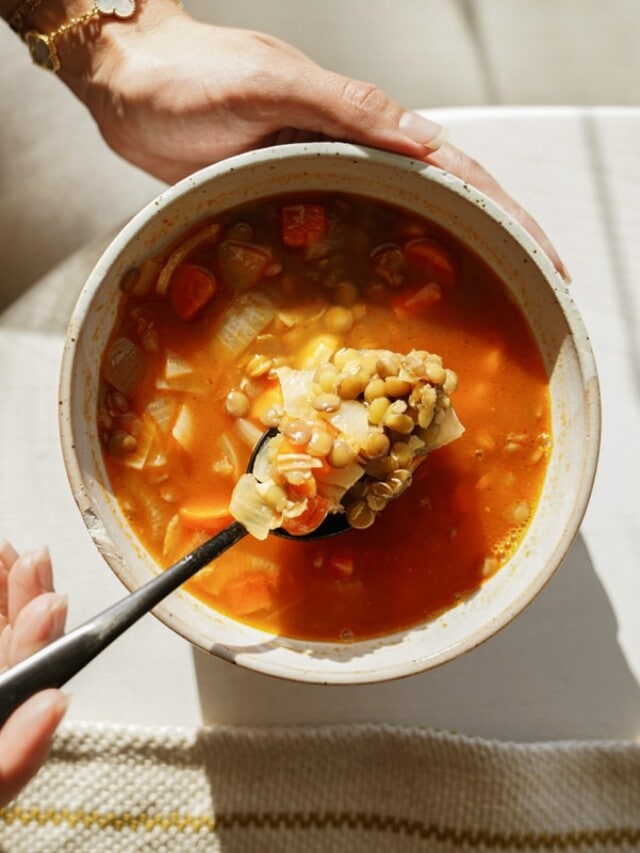
Greek Lentil Soup (Φακές)
A thick lentil soup seasoned with bay leaves, garlic, and finished with a splash of vinegar, fakes is one of the most eaten dinners in Greece.
This was one of the weeknight staples in my childhood home because it’s simple, affordable, and comforting. Lentils are packed with plant protein, iron, fiber, and folate, making this soup one of the healthiest and most traditional meals on the Greek table.
Greek Bowls
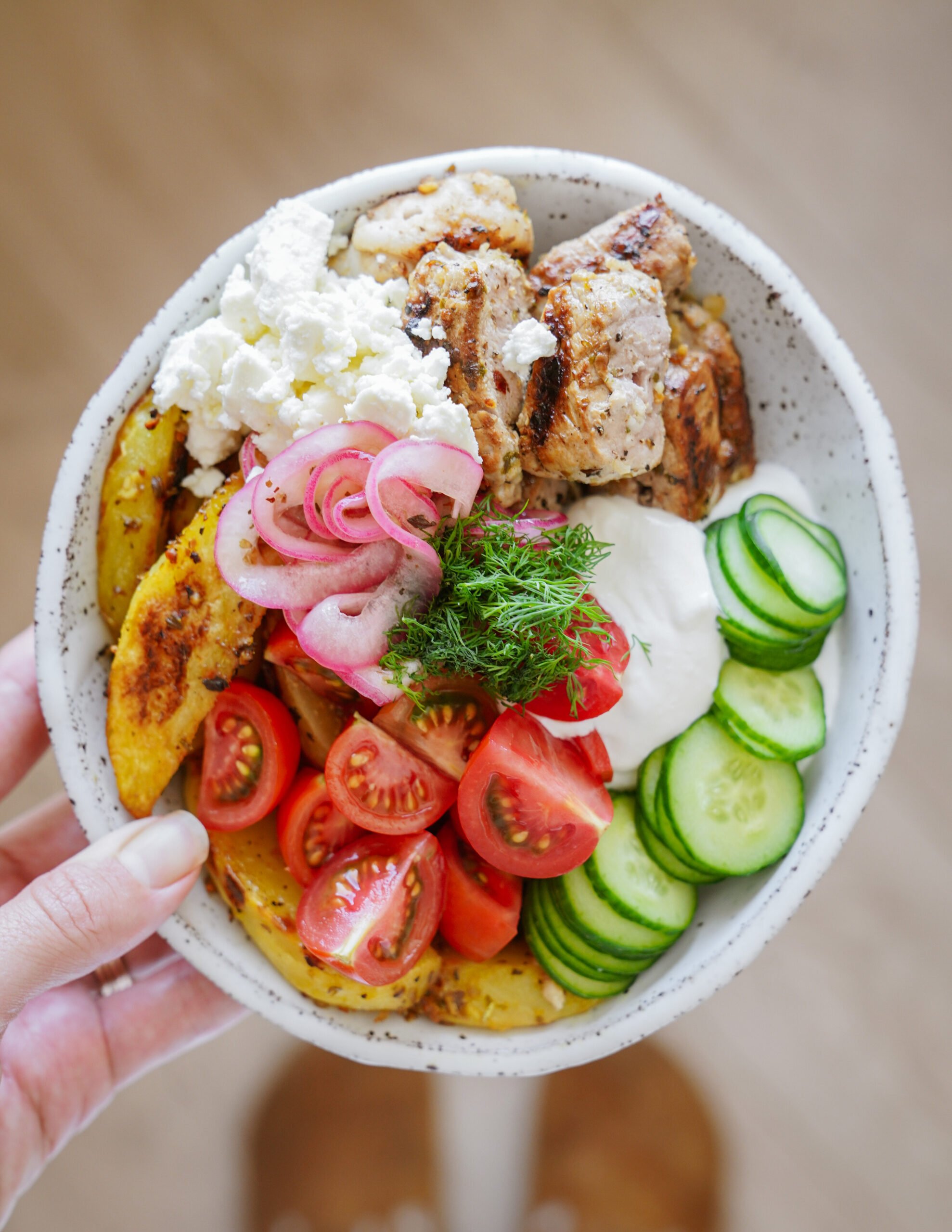
All the best Greek flavors in one bowl — grilled protein, cucumber-tomato salad, olives, feta, tzatziki, and warm pita, assembled into one colorful bowl.
Greek bowls are perfect for busy weeks because you can prep components ahead of time and mix and match throughout the week. They capture the spirit of meze-style eating in a modern, flexible format while still relying on the Mediterranean ingredients Greeks have always cooked with.
How to Build a Healthy Greek Dinner Menu
One of the biggest differences between Greek eating and the way many North Americans think about dinner is that Greeks rarely focus on one giant entrée. Dinner is usually a table of shared dishes like bread, salad, olives, feta, vegetables, proteins, and dips, all meant to be passed around slowly. It’s less about restriction and more about abundance, balance, and community.
These healthy Greek dinner recipes work great for every occasion because they’re naturally designed for mixing and matching. A quick Tuesday dinner might look like chicken souvlaki with a tomato salad and pita, or simple Greek bowls assembled from leftovers in the fridge.
For a classic Sunday family meal, nothing beats Greek chicken and potatoes with a side of fasolakia or briam, warm bread, olives, and feta in the middle of the table. This is exactly how many Greek families still eat every weekend (including my own).
If you’re meal prepping for the week, make a large pot of Greek lentil soup and prep components for Greek bowls. You can also make a batch of Greek meatballs and freeze them for easy dinners later in the week.
Hosting friends? Start with spanakopita, serve kotopoulo youvesti or sheet pan salmon as the main, add a tray of briam on the side, and finish with something sweet from my best Greek desserts guide.
For summer, keep it simple: oven-baked fish with tomato salad, or gemista served warm with bread and feta. Honestly, some of my favorite dinners are the simplest ones. For even more Greek recipe inspiration, explore my traditional Greek food guide.
FAQs
Greek food is considered one of the healthiest cuisines in the world. The traditional Greek diet is built on olive oil, vegetables, legumes, fish, herbs, and whole grains, which form the foundation of the Mediterranean diet. The Mediterranean diet has consistently ranked among the healthiest eating patterns globally. The Greek island of Ikaria is also one of the world’s five Blue Zones, where residents live significantly longer lives. Greek food doesn’t need a “healthy makeover” because its cooking traditions are already rooted in whole, nourishing ingredients.
Some of the healthiest Greek dinners include fakes (Greek lentil soup), fasolakia (green bean stew braised in olive oil), sheet pan salmon with Mediterranean herbs, and gemista (stuffed vegetables with herbed rice). Even heartier meals like chicken souvlaki and kotopoulo youvesti are built around olive oil, lean proteins, vegetables, and herbs rather than heavily processed ingredients.
Research consistently shows that the Mediterranean diet supports healthy weight management and long-term wellness! A landmark study published in the New England Journal of Medicine found that participants following a Mediterranean diet experienced significant health improvements without calorie counting. So yes, Greek food can help.
Greek dinners are traditionally meze-style, a spread of dishes shared around the table rather than one oversized entrée. A typical dinner may include a ladera dish like fasolakia or briam, bread, feta, salad, olives, and fish or legumes. Seafood is eaten regularly, especially in coastal regions, while vegetables and legumes appear far more often than large portions of meat. Dinner is also deeply social and usually eaten later in the evening.
Greek-style chicken is one of the healthiest ways to prepare poultry. Traditional healthy Greek chicken recipes rely on olive oil, lemon, garlic, oregano, and herbs for flavor rather than cream sauces or heavy breading. Whether it’s souvlaki, roasted chicken and potatoes, or gyros with tzatziki, Greek chicken dishes are naturally high in protein and rich in Mediterranean ingredients.
Greek dinners are ideal for meal prep because so many components store beautifully. Greek bowls can be assembled fresh throughout the week using prepped proteins and vegetables. Fakes and fasolakia taste even better the next day as the flavors deepen. Keftedes freeze well, and many Greek meals are naturally designed around batch cooking and mixing components throughout the week.
Be the first to discuss this recipe.