

This post may contain affiliate links. Please read our disclosure policy.

Ladolemono is the simplest, most iconic sauce in Greek cooking. It is a vibrant mix of olive oil and fresh lemon that brings everything on the table to life. In my house growing up, ladolemono sauce wasn’t something you measured or followed a recipe for, it was just what you made before dinner hit the table. It’s easily the most versatile, effortless sauce in Greek cuisine, and once you start making it, you’ll use it on everything.
Why You’ll Love This Ladolemono Recipe
- Ready in 5 minutes: A handful of ingredients, one bowl or jar, and you’re done. No cooking required.
- Endlessly versatile: Use it as a sauce, marinade, dressing, or dip. One recipe, countless uses.
- Authentically Greek: This is exactly how it’s made in Greek kitchens. It’s simple, unfussy, and made by feel.
- Clean, whole ingredients: Just olive oil, lemon, oregano, and seasoning. Naturally gluten-free, dairy-free, vegan, and Whole30-friendly.
What Is Ladolemono?
Ladolemono (pronounced lah-tho-LEH-mo-no) comes from two Greek words: “lado”, meaning oil, and “lemono”, meaning lemon. It literally translates to “oil-lemon”, and that’s exactly what it is.

Maria Koutsogiannia
Maria is the creator of FoodByMaria and your go-to Greek food expert for cozy, flavor-packed recipes. Inspired by her Mediterranean roots, she brings traditional Greek flavors, feel-good ingredients, and a whole lot of joy to everyday cooking.
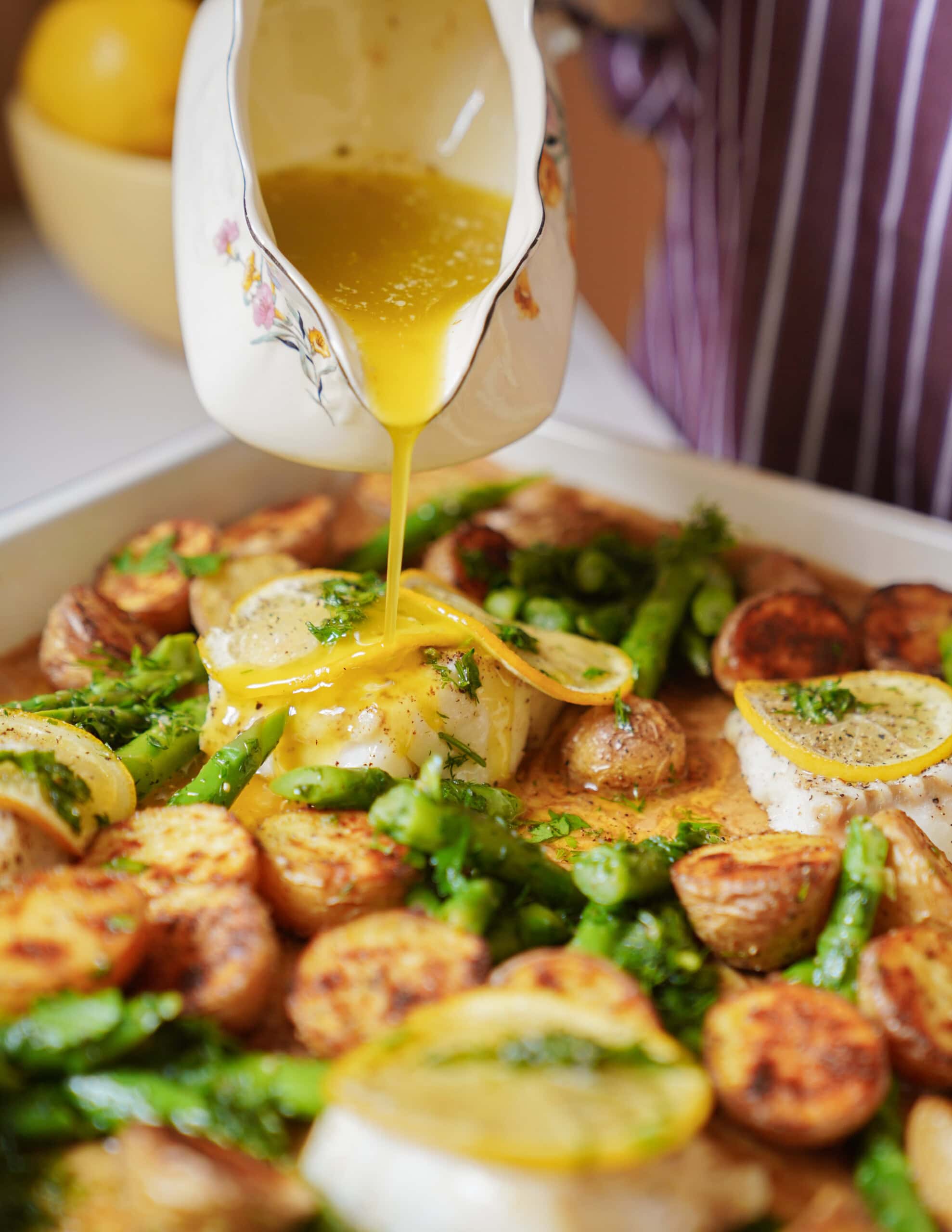
But in Greece, ladolemono is more than just a sauce, it’s a foundation. You’ll find it drizzled over grilled fish on the islands, spooned onto roasted potatoes, and served alongside just about everything.
In Crete, you might hear it called lemonolado (the same ingredients, just reversed). Either way, it’s a staple.
It’s also important to know what ladolemono isn’t. It’s not the dressing used on an authentic Greek salad (that one uses red wine vinegar, not lemon juice). If you’re looking for that, check out this authentic Greek salad.
The Cooking Science (Why It Works)
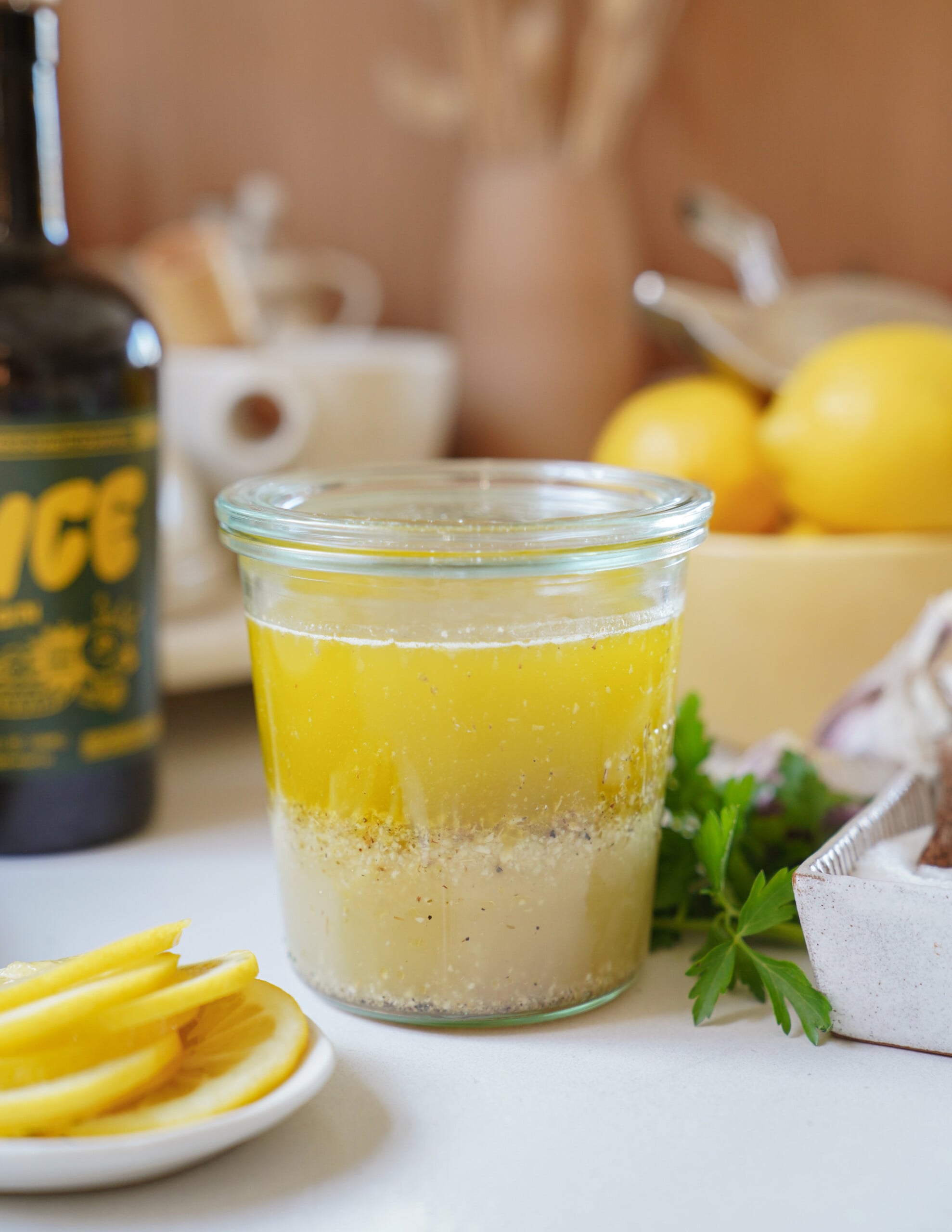
Ladolemono gets its signature silky, golden texture from emulsification. When the lemon juice (water-based) is temporarily suspended in the olive oil (fat-based).
Because traditional ladolemono doesn’t use stabilizers like mustard, this emulsion is created purely by whisking or shaking. That’s why it naturally separates over time (and why a quick shake brings it right back together).
Ingredients You’ll Need
This is a sauce where every ingredient matters, because it’s so simple that you’ll taste every single one.
- Extra virgin olive oil: The heart of ladolemono. Go for a high-quality, cold-pressed EVOO. Greek varieties (like Koroneiki) are ideal because they fruity, slightly peppery, and bold.
- Fresh lemon juice: Always freshly squeezed. Roll your lemons on the counter first to get the most juice.
- Dried Greek oregano: Earthy, aromatic, and traditional. It’s stronger than other oregano varieties, so it really stands out.
- Salt and pepper: Simple but essential for balance.
Optional (Non-Traditional Additions)
- Garlic (adds depth, but not traditional)
- Lemon zest (boosts citrus flavour)
- Dijon mustard (helps stabilize the emulsion)
- Capers (perfect with fish)
- Fresh herbs (dill, parsley, mint depending on the dish)
This ladolemono recipe stays true to the classic, but feel free to adapt based on what you’re serving.
The Classic Ratio
At its core, ladolemono isn’t about strict measurements, it’s about balance.
The traditional ratio is:
- 2:1 or 3:1 olive oil to lemon juice
Every Greek cook adjusts this by taste:
- More lemon for brightness (especially with fish)
- More oil for a mellow, richer finish (great for potatoes)
Why This Ratio Works
Lemon juice is highly acidic, which cuts through rich or fatty foods. Olive oil softens that acidity and carries the flavor of the oregano. Together, they create something balanced, bold, and incredibly versatile.
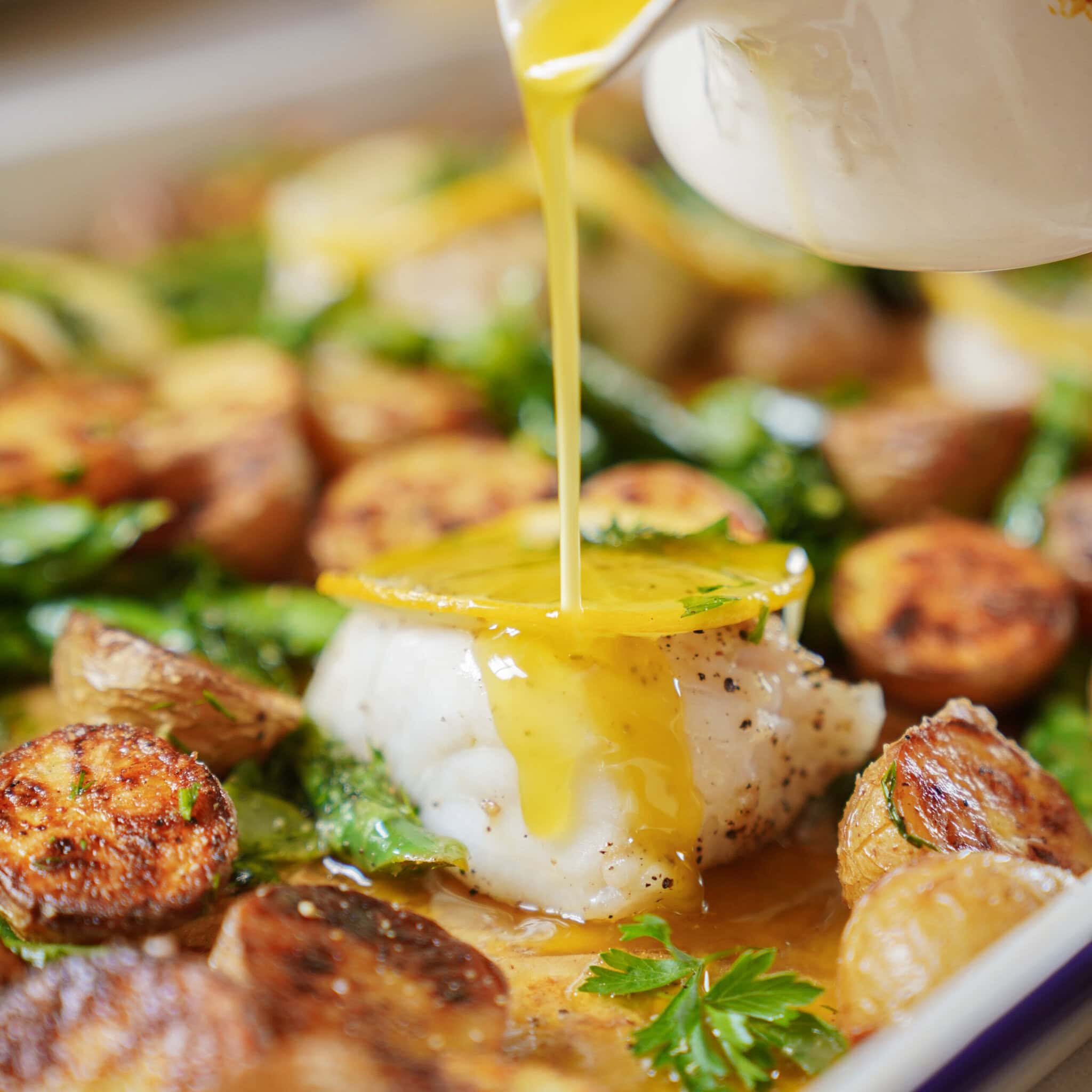
How to Use Ladolemono
This is where ladolemono really shines — it’s not just a sauce, it’s the finishing touch that ties a dish together.
On grilled and roasted meats
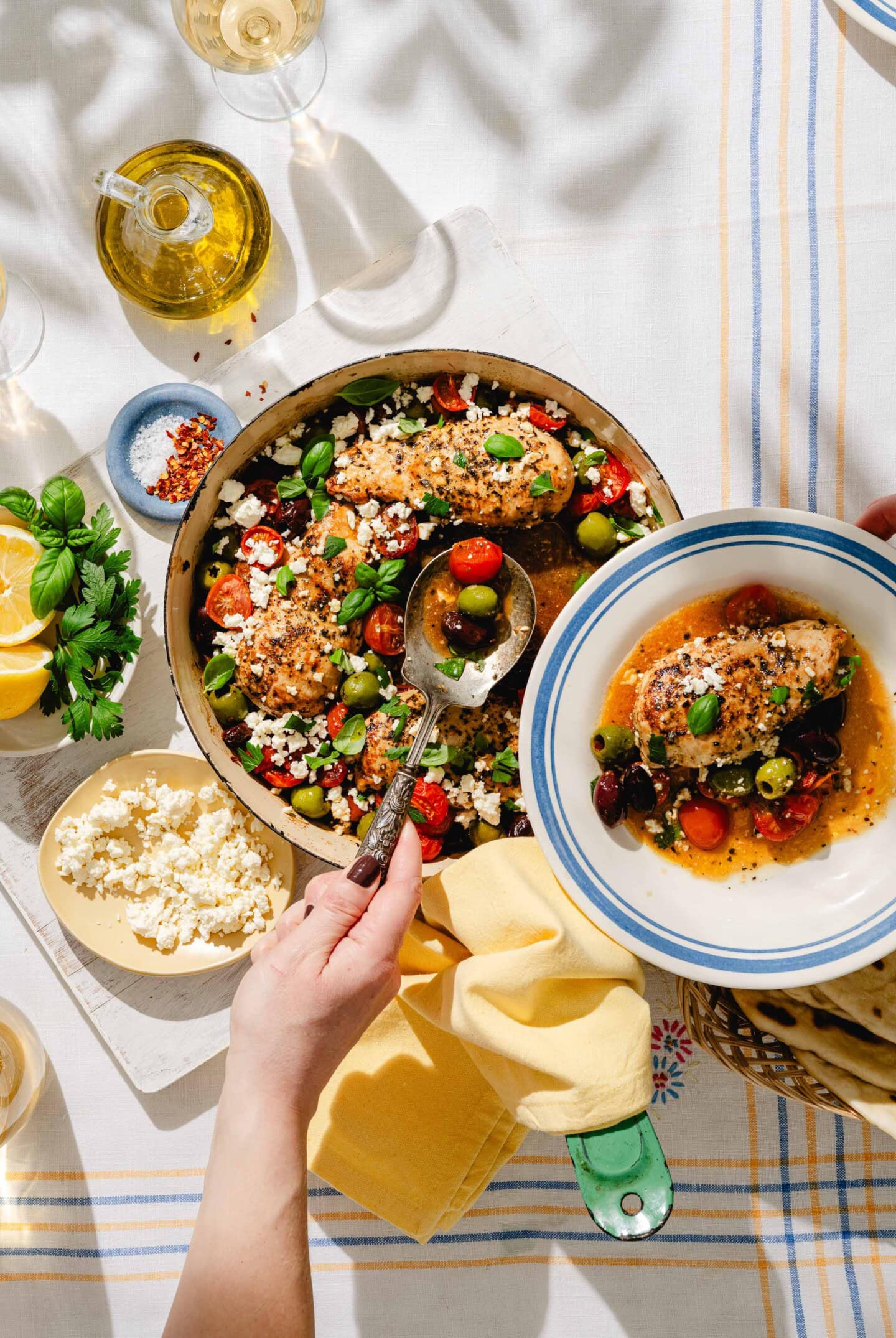
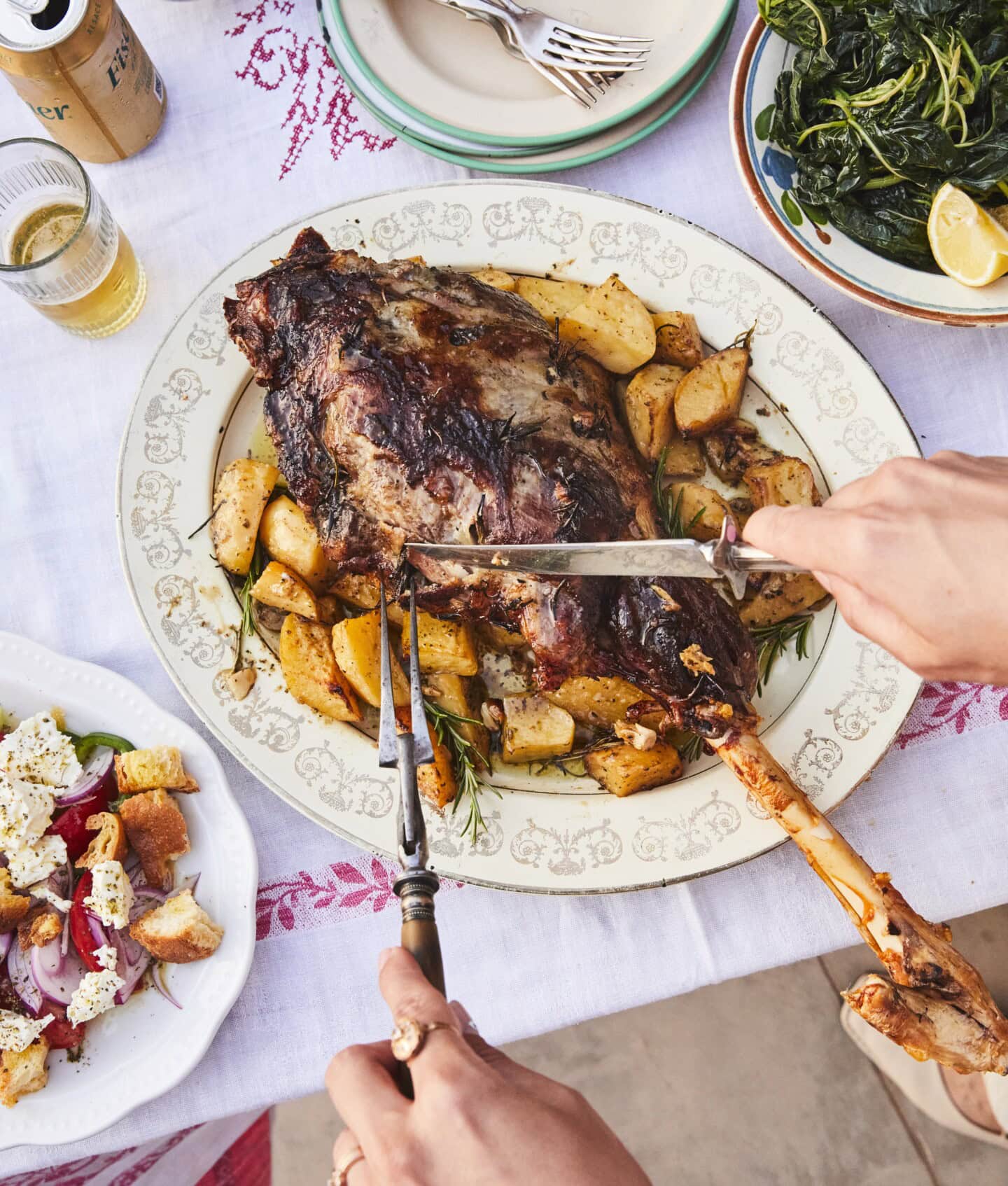
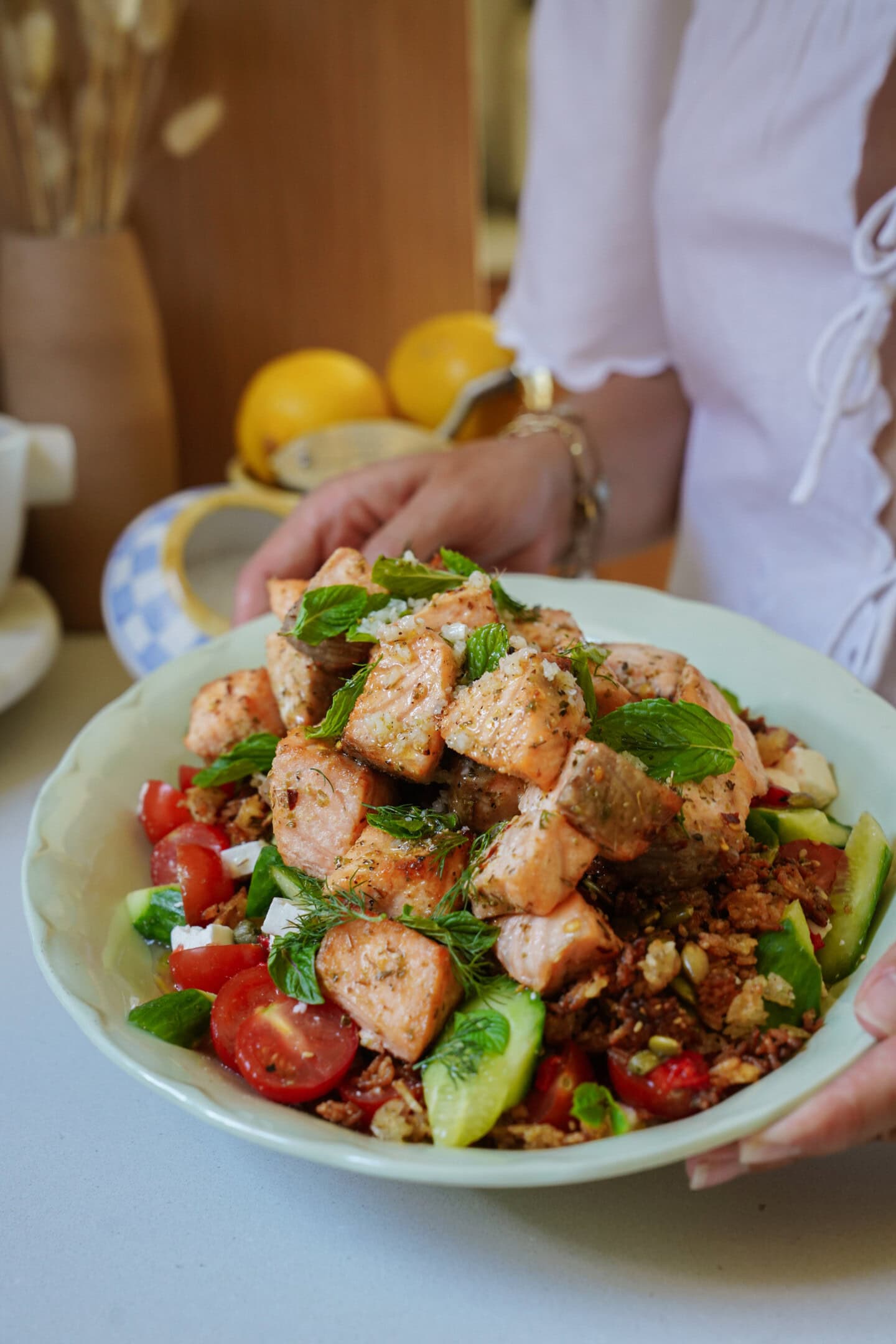
Drizzle it over souvlaki, lamb chops, or roasted chicken right after cooking so it soaks in beautifully.
On potatoes
The secret to incredible Greek potatoes. Toss before roasting or drizzle after — either way, it transforms them.
On roasted vegetables
Add brightness to dishes like briam with a generous pour just before serving.
On salads and grain bowls
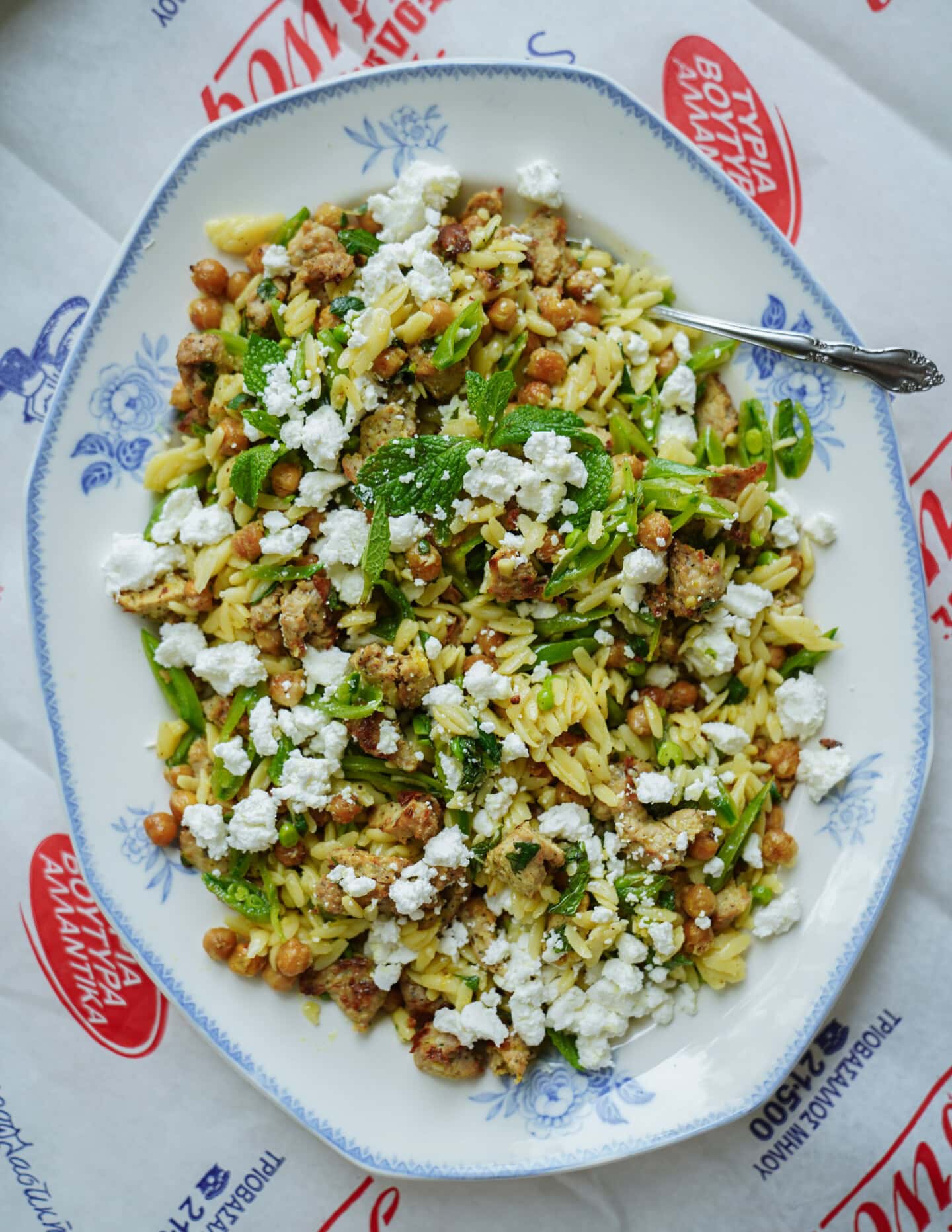
Perfect for hearty grain salads like barley or orzo bowls.
On grilled fish and seafood
This is the most traditional use. Simple, fresh fish with ladolemono is peak Greek cooking.
As a bread dip
Serve with warm pita and let everyone dip away.
Tips for the Best Ladolemono
- Use room temperature lemons for more juice
- Roll lemons before cutting to release more liquid
- Whisk vigorously or shake in a jar to emulsify
- Skip the blender (it can make olive oil bitter)
- Taste and adjust (more lemon or more oil depending on your preference
- Make it fresh when possible for the best flavor
Variations
- Herb swaps: Dill (great with fish), parsley (fresh), mint (perfect with lamb)
- Garlic version: Adds depth, though not traditional
- Mustard-stabilized: Helps it stay emulsified longer
- Caper version: Salty, briny, and perfect with seafood
- Citrus twist: Try Meyer lemon or a splash of orange juice
- Oil swap: Avocado oil works if needed, though flavor will differ
How to Store Ladolemono
- Fridge: Store in an airtight jar for up to 5 days (shorter if using fresh herbs)
- Room temperature: Fine for same-day use
- Freezing: Not recommended
- To re-emulsify: Let sit at room temp, then shake or whisk
If the olive oil solidifies in the fridge, just place the jar in warm water for a few minutes.
FAQs
Ladolemono translates to “oil-lemon” in Greek. A simple combination of olive oil and fresh lemon juice.
Greek salad uses olive oil and red wine vinegar, while ladolemono uses lemon juice, making it brighter and more citrus-forward.
Yes! It works great for chicken, fish, shrimp, and vegetables. Just don’t marinate seafood too long (about 30 minutes max).
No. The classic version is just olive oil, lemon juice, oregano, and salt. Garlic is a popular modern addition.
Because it’s a temporary emulsion. Just shake or whisk it again before serving
A high-quality extra virgin olive oil, ideally Greek, like my JUICE.
Save this recipe for later
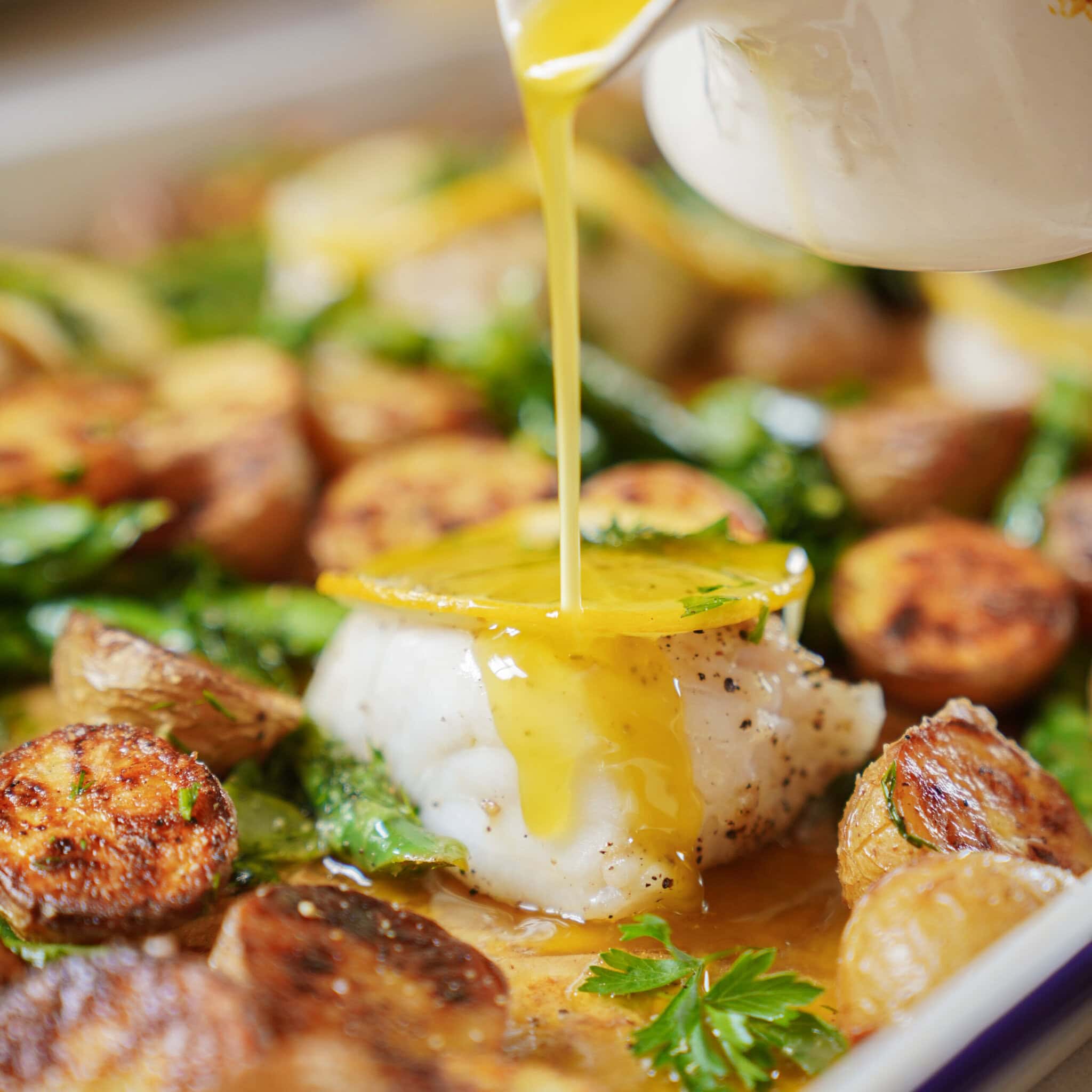
Watch the Video
Ingredients
- 1 cup fresh-squeezed lemon juice, (about 4 large lemons)
- 1 ¼ cups extra-virgin olive oil
- 2 tsp dried oregano
- 2 small garlic cloves
- 1 ½ tsp kosher salt
- ½ tsp ground pepper
Instructions
Start Cooking- Add the lemon juice, extra-virgin olive oil, dried oregano, small garlic cloves, kosher salt and ground pepper to a large jar or a safe container for blending using an immersion blender.
- Then, use the immersion blender to blend the ingredients until fully combined and emulsified (smooth). Taste and adjust seasoning if desired.
Notes
- Store this sauce in an airtight glass container or jar in the fridge for up to 2 weeks.
- After being stored in the fridge the sauce is likely to separate so remember to shake well before using.
- Some of our favourite uses of this sauce:
- Dunk a large rosemary sprig in this sauce and then brush on lamb chops
- Use as a sauce on cooked fish
- Add dijon mustard and/or honey and use as a sauce on cooked chicken wings


13 people are discussing this recipe. Join in
I love Greek food. my Papou cooked different foods that were yummy
I love this for you so much! Please let me know if you try this recipe.
Okay, this was SO good that I made it two days in a row! My son, who is a bit of a chef in his own right, insisted I make it again.
YES!! this makes me so happy!!!!
can this be used as salad dressing in any way?
Oh my gosh!! YES!!! and it’s perfect in things like potato salad, egg salad, tuna salad etc!!!!
Can you store it in the fridge for five days or two weeks? It says both…
Delicious by the way!
I had mine in the fridge for 1 week, but I’ve had it for 2 weeks before or 2 days! It really just depends.
I thought in the ad for this sauce it me too Ed lemon oil ? None in this recipe?
Hey Suzanne, I’m sorry, but I think you may have misread the recipe. There is certainly lemon in the recipe card. Please let me know if you see the 1 cup.
looks easy and tasty
it’s very delicious.
Yummy!