This post may contain affiliate links. Please read our disclosure policy.
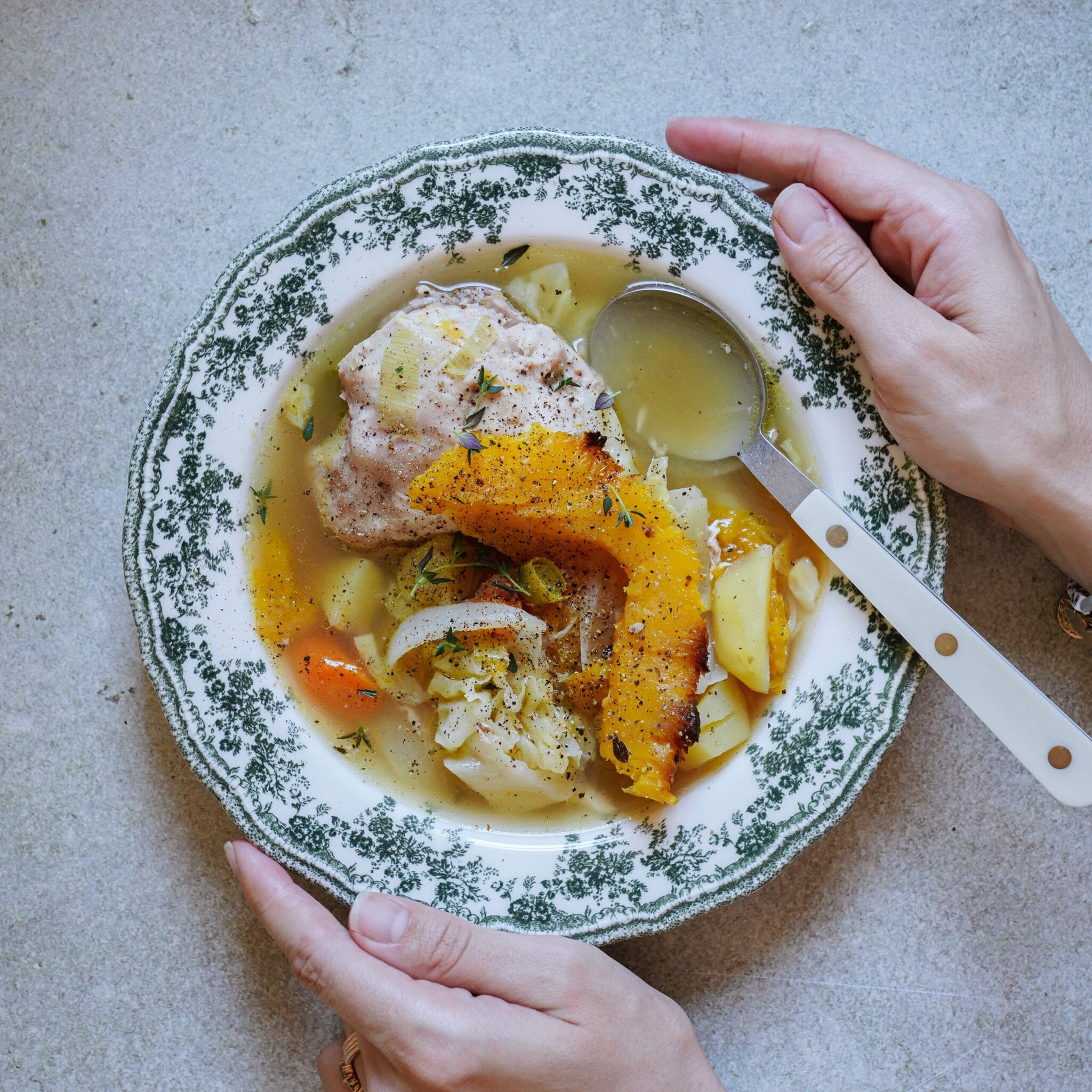
You’ve probably seen soup cooked in a pumpkin all over your feed this fall, but this variation cooks the soup in the actual pumpkin; it doesn’t just use the pumpkin for serving. This soup in a pumpkin has bone-in chicken thighs, cabbage, potatoes, carrots, leek, and garlic packed raw into a whole pumpkin, lidded, and baked until the pumpkin makes its own broth. After 2½ to 3 hours at 360°F, the skin turns deep and dark, the flesh goes spoon-tender, and every bowl gets chicken, vegetables, and a scoop of sweet pumpkin. This is not just the coziest recipe for fall, but it looks beautiful and tastes delicious!
Why You’ll Love This Soup in a Pumpkin
- The pumpkin is the pot. Everything goes in raw. There’s no stock to simmer and no Dutch oven to wash. The pumpkin, vegetables, and chicken make the broth together. Zero waste here!
- Ten minutes of prep. Cut the lid, scoop, fill, and the oven handles the next few hours. So easy, and so yummy!
- Bone-in chicken flavor. Skin-on thighs give the broth body and richness you don’t get from boneless.
- It’s a fall centerpiece. It goes to the table whole, which makes it a great fit for a dinner party, Friendsgiving, or anyone who wants to try the viral one.
What You’ll Need
- Pumpkin: One large pumpkin that’s shorter and rounder rather than tall, so it fits in your oven with the lid on (more on choosing one below).
- Chicken: Six skin-on, bone-in chicken thighs, or a mix of drumsticks and thighs. Since this recipe doesn’t use any stock, the bones and skin do a lot of the work, adding body and flavor to the broth as it forms. Boneless chicken will work, but the soup will taste lighter.
- Better Than Bouillon chicken base: This concentrated base is what makes the pumpkin’s liquid taste like real chicken soup. Two tablespoons get stirred right in with the vegetables.
- Cabbage, leek, shallots, and onion: These release a lot of water as they bake, which is a big part of how the broth builds. Use only the white and light green parts of the leek. The dark green tops stay tough.
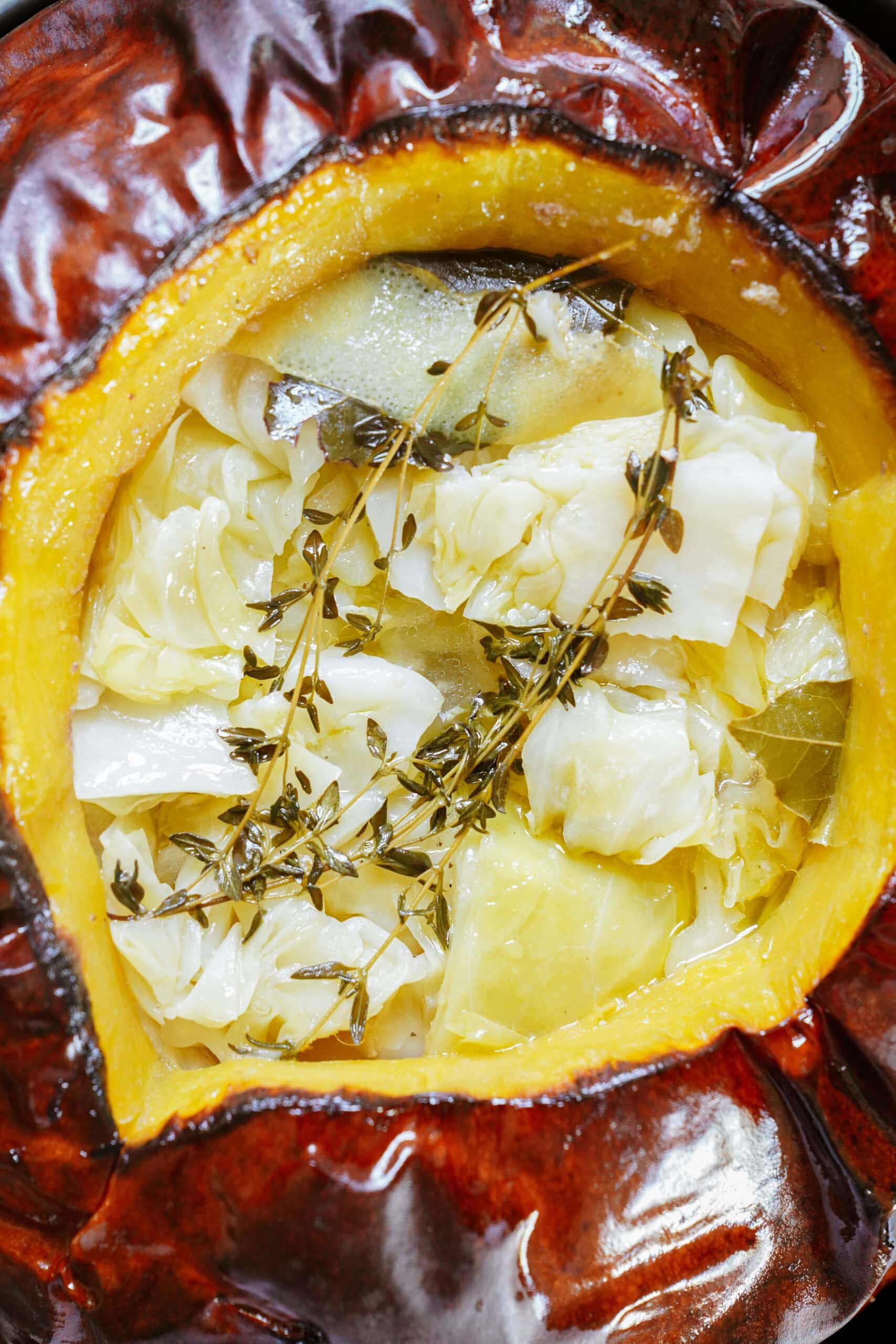
- Lemon peel, thyme, and bay leaves: These are aromatics that flavor the broth and come out before serving. Use a vegetable peeler to take a clean 2-inch strip of lemon peel with as little white pith as possible (since pith can turn bitter over a long bake).
- Extra-virgin olive oil: Drizzled over the filling and rubbed on the outside of the pumpkin.
How to Choose the Right Pumpkin
The pumpkin makes or breaks this recipe, so it’s worth a minute of thought at the store.

Maria Koutsogiannia
Maria is the creator of FoodByMaria and your go-to Greek food expert for cozy, flavor-packed recipes. Inspired by her Mediterranean roots, she brings traditional Greek flavors, feel-good ingredients, and a whole lot of joy to everyday cooking.
Look for a cooking pumpkin with thick walls, a flat bottom that sits steady without rocking, and a squat shape. Sugar pumpkins work for a smaller batch. For a larger soup in a pumpkin like this one, look for Cinderella (Rouge Vif d’Étampes), Long Island Cheese, or Jarrahdale-style pumpkins. Skip jack-o’-lantern carving pumpkins. They’re bred for carving, not eating, so they tend to be watery, stringy, and thin-walled, and they’re more likely to split during a long bake.
Check the fit before you buy. Measure the inside of your oven with the rack in the lowest position, then make sure the pumpkin, sitting in a baking dish with its lid on, will clear the top.
Cut the lid at an angle. When you cut around the stem, angle your knife toward the center of the pumpkin. That creates a ledge, so the lid rests on top instead of falling in. Then scrape out every bit of stringy pulp, since it makes the broth cloudy and fibrous.
How the Pumpkin Makes Its Own Broth
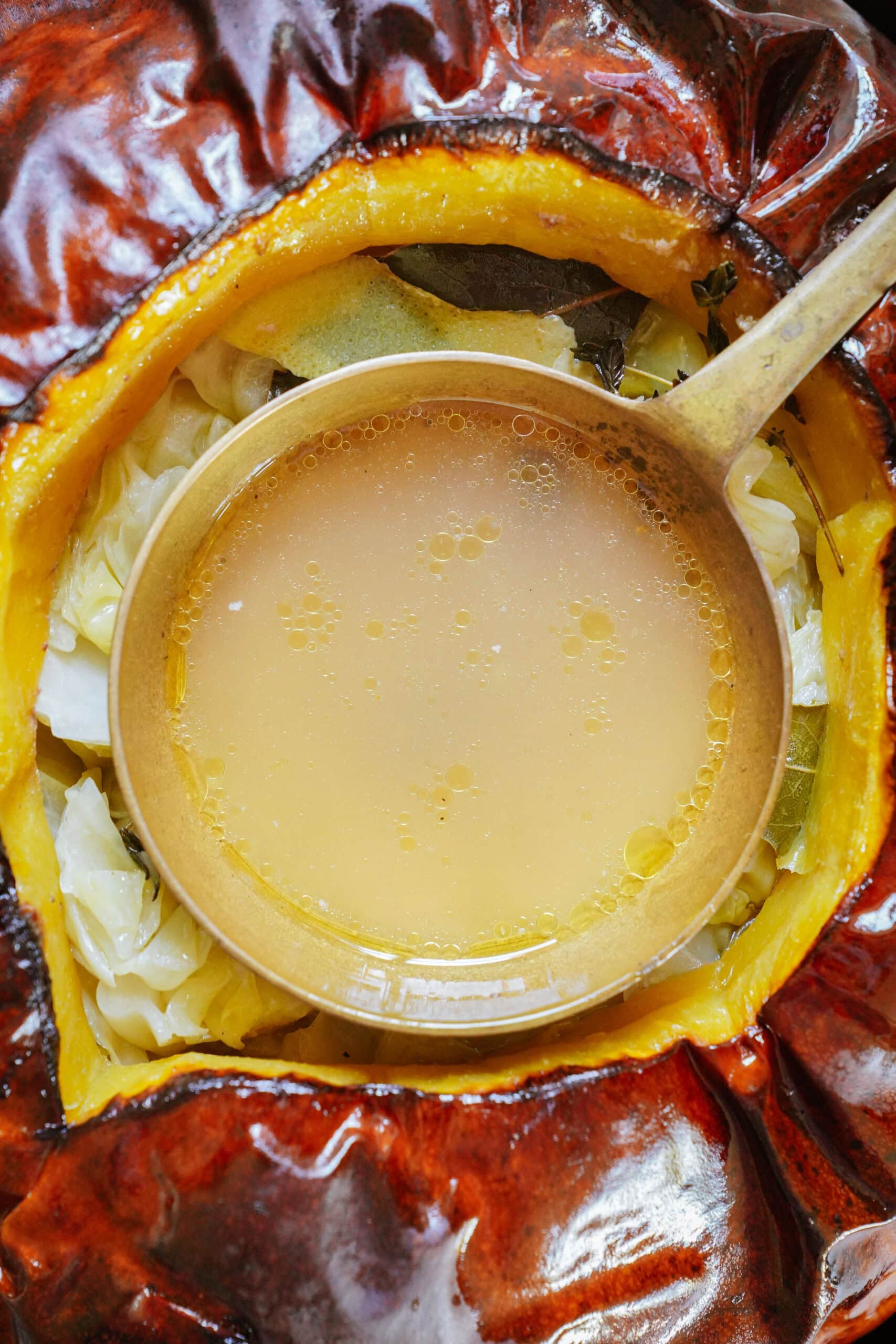
If you’re wondering how a soup baked in a pumpkin ends up with broth when you never add a drop of liquid, it comes down to water and time. Raw pumpkin flesh is mostly water, and so are cabbage, leeks, and onions. The salt and bouillon base draw that moisture out of the vegetables and chicken, while the pumpkin walls slowly soften and release their own liquid into the cavity.
With the lid on, the pumpkin works like a sealed braising pot: steam rises, hits the lid, and drips back down. That’s why you won’t see much broth for the first 2 hours. Don’t open it early and add water. By the end, the liquid rises to the top of the pumpkin, the chicken skin and fat have melted into the broth, and the bone-in thighs are tender without drying out.
Tips for Success
- Use a high-sided baking dish or cast-iron skillet. It catches any juices if the pumpkin weeps or splits, and it gives you something sturdy to hold when moving a heavy, hot pumpkin.
- Oil the outside. A coat of olive oil helps the skin darken evenly instead of drying out in patches.
- Pack it full, but leave room for the lid. Fill the pumpkin close to the top so everything cooks in the rising broth, but make sure the lid still sits flat.
- Know when it’s done. The skin should be very dark, a knife should slide easily into the side wall, and the broth should have risen to the top of the cavity. The chicken thighs should read 175°F in the thickest part.
- Move it carefully. Use oven mitts and slide out the whole baking dish. Never try to lift a full pumpkin by its sides or stem in case it collapses.
Troubleshooting
There’s no broth after 2 hours. That’s normal. Give it the full 2½ to 3 hours. If it still looks dry at the end, your pumpkin was probably on the small or thin-walled side. Stir in a splash of hot water with a little extra bouillon base before serving.
The pumpkin cracked or is leaking. This is why the baking dish matters. Spoon any juices from the dish back into the bowls when you serve. If the walls start to collapse, scoop everything into a pot and serve it as a regular soup. It’ll taste just as good.
The broth tastes flat. Season with salt at the table, and add a squeeze of fresh lemon juice to brighten it.
There’s a bitter note. This usually comes from lemon pith or bay leaves left in too long. Use a peeler for a thin strip of peel, and pull the peel, thyme, and bay out before serving.
Variations
- Boneless chicken: Works in a pinch, though the broth will be lighter.
- Add greens: Stir a handful of baby spinach or chopped kale into each bowl right before serving. The hot broth wilts it in seconds.
- Fresh herb finish: Top each bowl with chopped dill or parsley, a drizzle of good olive oil, and a squeeze of lemon.
- A little feta: Crumble some over the top for a salty finish.
What to Serve with Soup in a Pumpkin
You’ll want something to dunk in all that broth. A loaf of crusty no-knead bread or a pan of easy focaccia is perfect for soaking it up, and a bowl of whipped feta dip on the side makes the bread even better.
For something fresh and crisp to balance the soup, try this butter lettuce salad with apple and cheddar. If you’re building a bigger fall spread, a kale and roasted sweet potato salad fits right in.
How to Store and Reheat
Take leftovers out of the pumpkin before refrigerating. Transfer the soup to an airtight container and refrigerate within 2 hours. It will keep for 3 to 4 days.
Before you toss the shell, scrape out any remaining soft pumpkin flesh and store it with the soup. It thickens the broth as it reheats. Warm leftovers in a pot over medium heat until steaming hot, adding a splash of water if needed.
More Pumpkin and Soup Recipes
If you love this one, try my pumpkin curry soup for a creamy, blended pumpkin soup, or my easy chicken and vegetable soup for a classic stovetop version. For even more ideas, check out these 30 must-make soup recipes.
FAQs
No. There’s no added liquid in this recipe. The pumpkin, cabbage, leek, onion, and chicken release their juices as they bake, and the chicken bouillon base seasons everything into a real broth. You’ll see very little liquid for the first 2 hours, then the broth rises to the top of the pumpkin by the end.
Look for three things: the skin is very dark, a knife slides easily into the side of the pumpkin, and the broth has risen to the top of the cavity. That usually takes 2½ to 3 hours at 360°F. Bone-in chicken thighs should read 175°F in the thickest part.
Yes, and you should. As you serve, scrape some of the soft flesh from the inside walls into each bowl. It’s sweet and tender, and it thickens the broth. However, the skin is not good to eat!
Not quite. Dinner in a pumpkin usually means a rice and sausage or ground meat bake stuffed into a pumpkin. This is a brothy chicken and vegetable soup that cooks entirely inside the pumpkin, so you get a bowl of soup instead of a casserole.
Save this recipe for later
Watch the Video
Ingredients
- 1 large (shorter, rounder) pumpkin, washed, cut a lid in the top, clean out the seeds and the stringy pulp
- 6 skin-on, bone-in chicken thighs, (or mix of drumsticks and thighs)
- 2 tsp kosher salt
- 1 tsp ground pepper
- 4 large garlic cloves, smashed
- 2 cups roughly chopped green cabbage
- 2 tbsp Better than Bouillon chicken base
- 2 large carrots, chopped
- 2 medium potatoes, peeled and chopped
- 1 large leek, trimmed, light green and white parts chopped
- 2 shallots, quartered
- 1 medium yellow onion, cut into 1/6th or 1/8th’s
- 2 bay leaves
- 2- inch piece of lemon peel
- 6 sprigs of fresh thyme
- Extra-virgin olive oil
Instructions
Start Cooking- Preheat the oven to 360F.
- Prepare the pumpkin – wash, cut a lid in the top, clean out the seeds and the stringy pulp.
- Place the chicken pieces at the bottom of the pumpkin. Layer on top of the chicken the kosher salt, ground pepper, smashed garlic cloves, chicken base, chopped carrots, chopped potatoes, chopped leek, chopped shallots, chopped onion, bay leaves, lemon peel and sprigs of fresh thyme. Drizzle everything inside liberally with olive oil.
- Place the top back on the pumpkin. Coat the outside of the pumpkin with olive oil and then place the pumpkin in a large high-sided baking dish or cast-iron skillet.
- Bake for 2 ½ – 3 hours, until the pumpkin is very tender; the pumpkin skin is very dark; and, the broth is at the top of the pumpkin cavity.
- Remove lemon peel, thyme sprigs and bay leaf before serving.
- Scoop out soup, chicken and some of the pumpkin from the inside into a bowl and serve. Season with salt to taste.
Notes
- A shorter, rounder large pumpkin works best so that it fits well in the oven.
- The broth doesn’t start to produce in the pumpkin until the pumpkin has been in the oven for at least 2 hours.
- You can use boneless chicken BUT keep in mind the bone-in, skin-on chicken provides much more flavor.
Related Recipes

Be the first to discuss this recipe.