This post may contain affiliate links. Please read our disclosure policy.
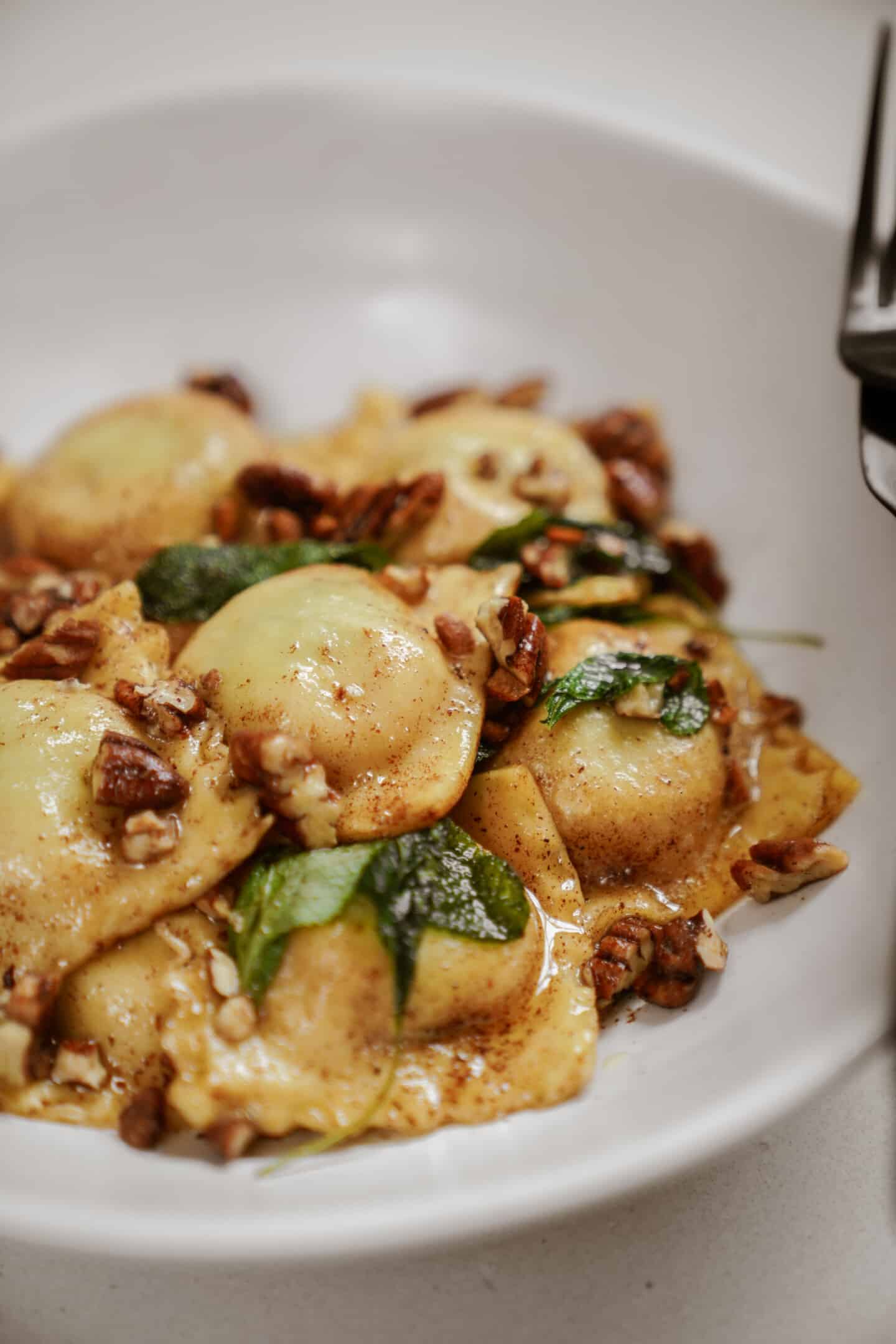
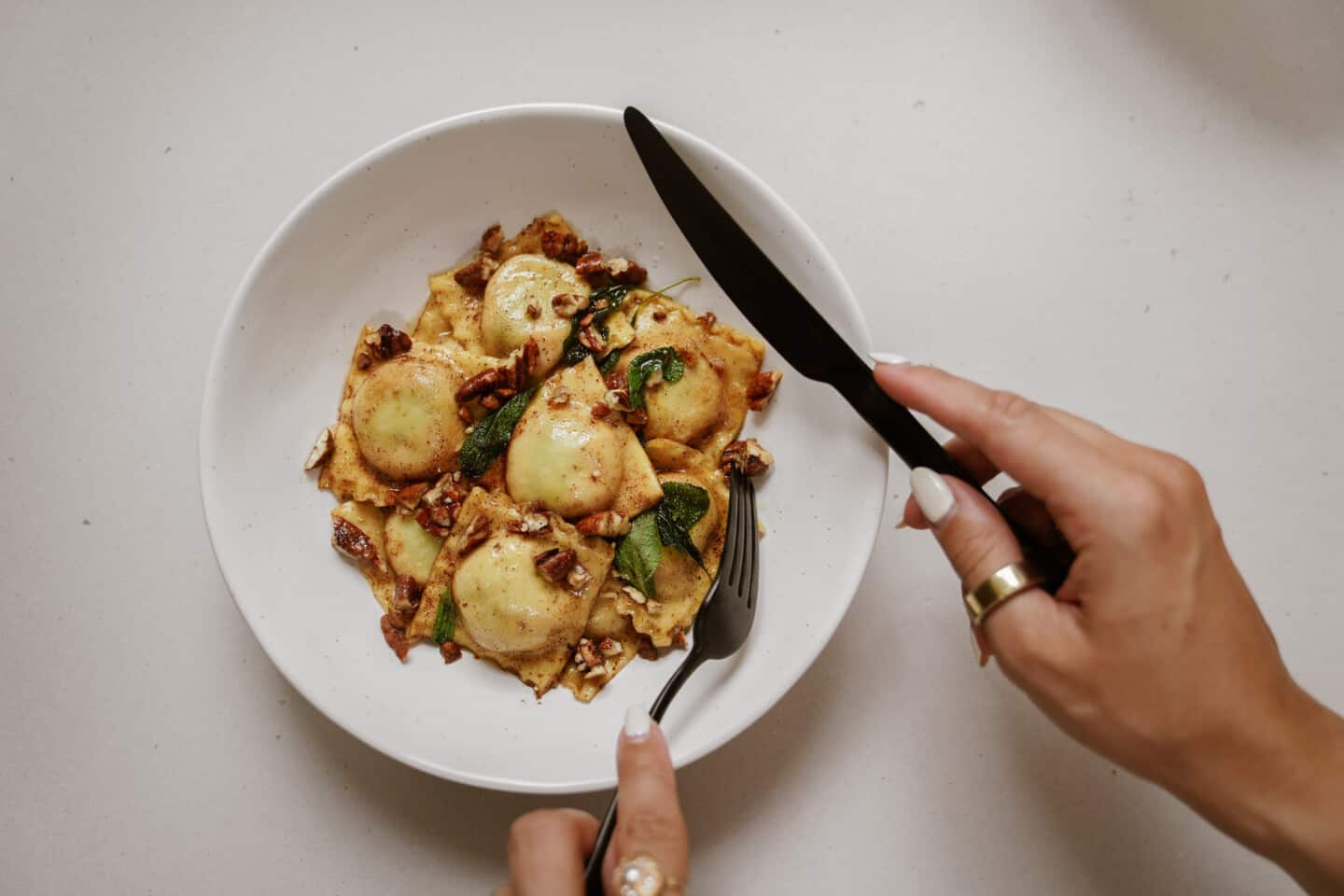
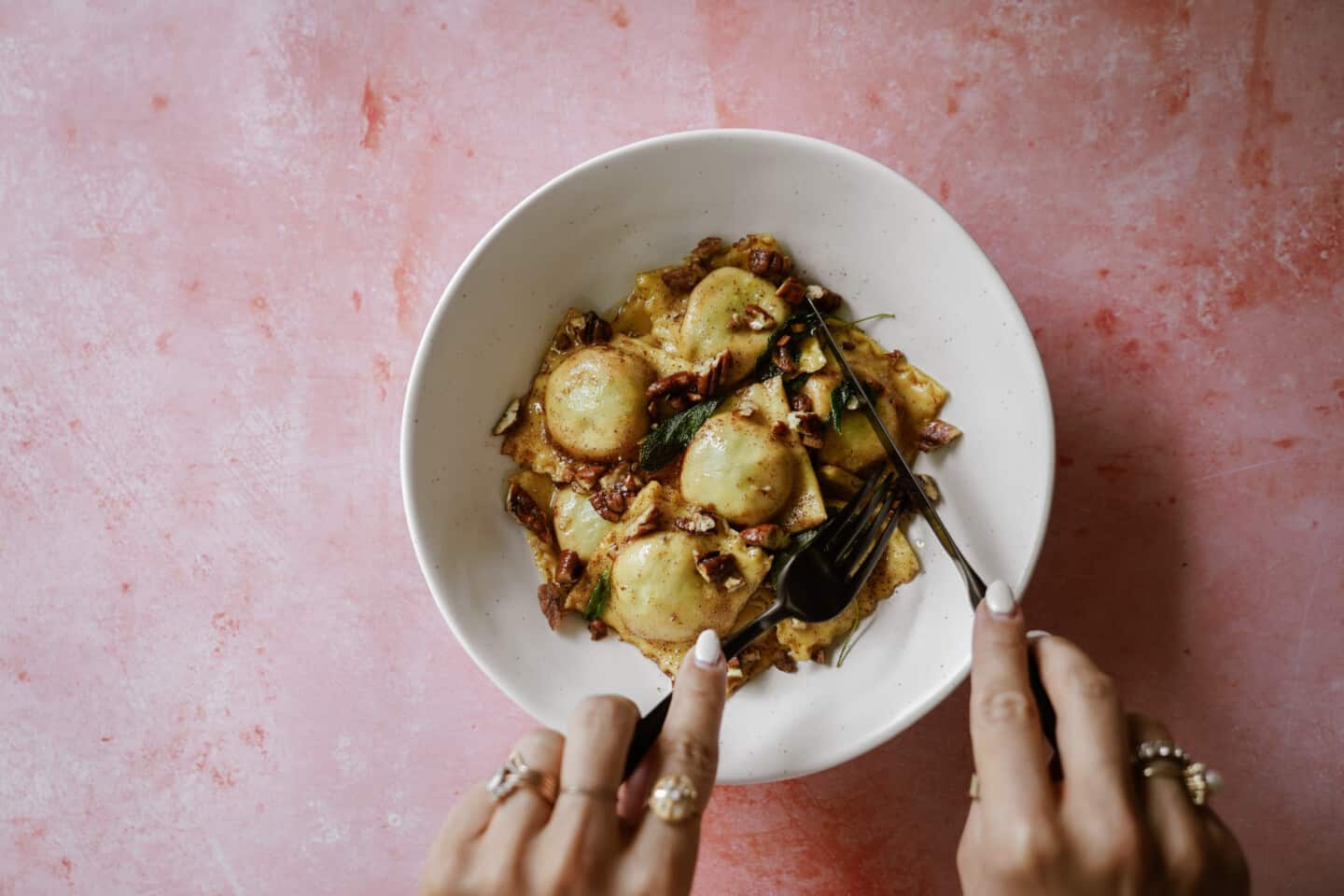
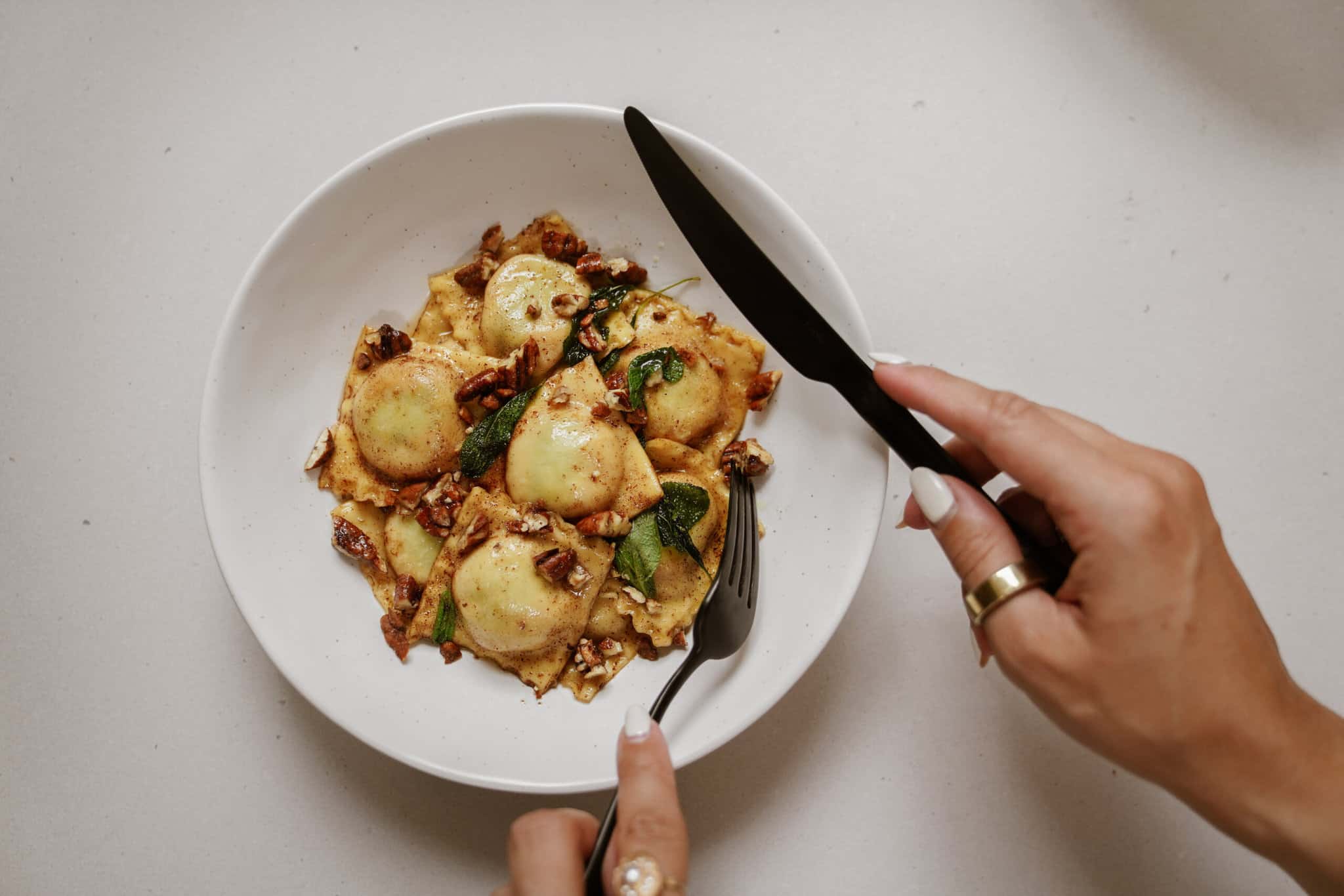
I love ravioli – especially homemade ravioli. And now that fall is here, everyone knows this is the season for everything pumpkin flavoured! So what happens when you stuff homemade ravioli with pumpkin puree, and ricotta cheese and top it off with a pumpkin spice pecan brown butter sage sauce? You get my delicious homemade pumpkin ravioli dish that is guaranteed to be your new favourite fall recipe.

Maria Koutsogiannia
Maria is the creator of FoodByMaria and your go-to Greek food expert for cozy, flavor-packed recipes. Inspired by her Mediterranean roots, she brings traditional Greek flavors, feel-good ingredients, and a whole lot of joy to everyday cooking.
Why You’ll Love My Homemade Ravioli Recipe
Comfort Food – Nothing says comfort food like homemade ravioli. And nothing says fall like pumpkin flavour!
Yummy – I LOVE pumpkin! And this homemade ravioli recipe is perfect to satisfy all your fall cravings.
Flavourful – It’s not just the pumpkin flavour of this dish, but ingredients like ricotta, nutmeg and pecans really help elevate and bring out so many flavours in this recipe.
Ingredient Notes
Pumpkin Puree: Please don’t make this common mistake when adding pumpkin puree to your cart. Do not buy pumpkin pie filling instead of pumpkin puree – they are not the same! Make sure you are getting the pumpkin puree which is healthy and rich in vitamins, minerals, and antioxidants.
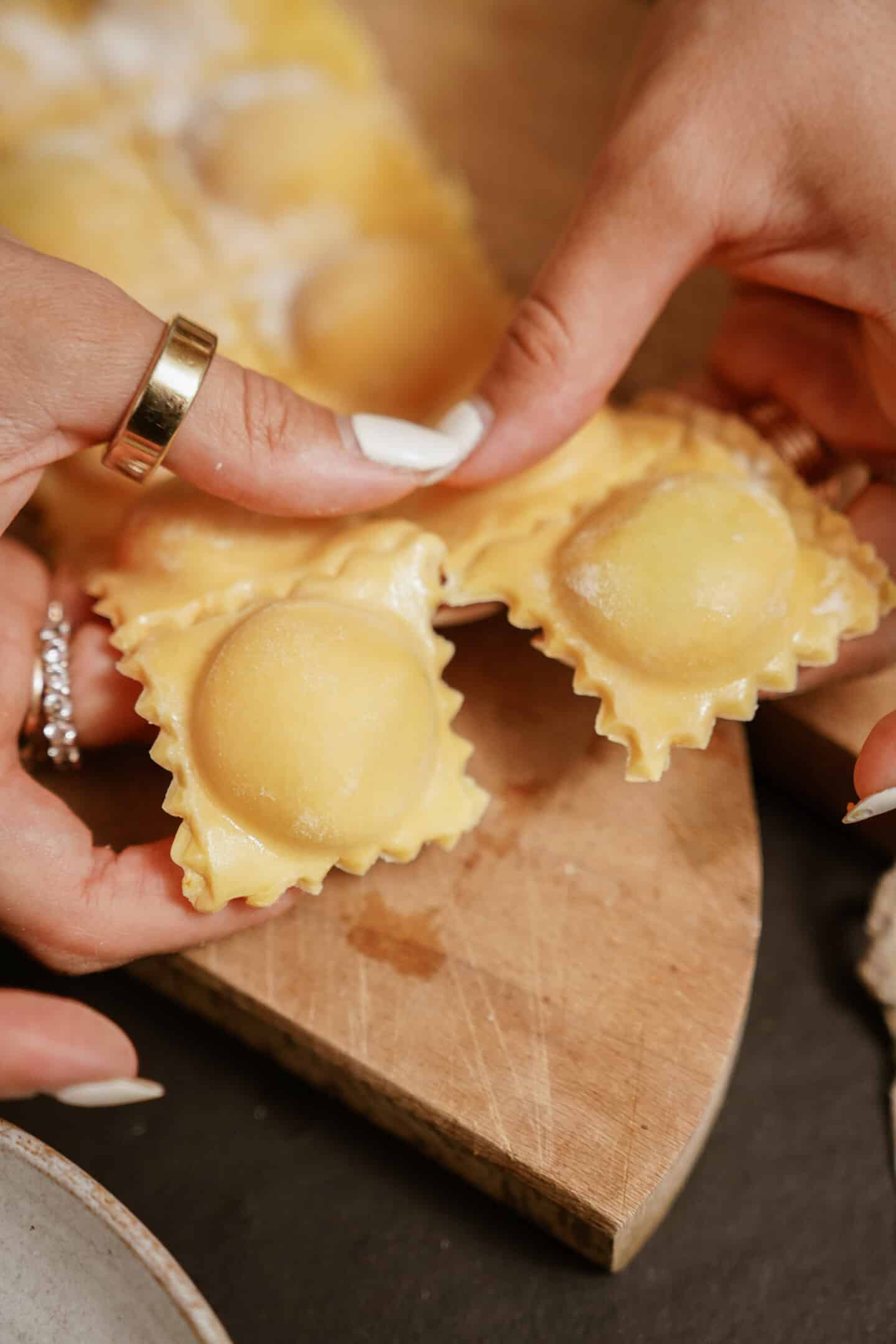
Fresh Pasta: A lot of people think that making fresh pasta means a lot of work and effort. I am here to tell you that it’s worth any extra effort, especially for homemade ravioli. Fresh pasta is light but also has a sturdy texture that holds its own under the weight of fillings and sauces – just like the pumpkin in this recipe.
How To Make This Homemade Ravioli
Pumpkin Ravioli:
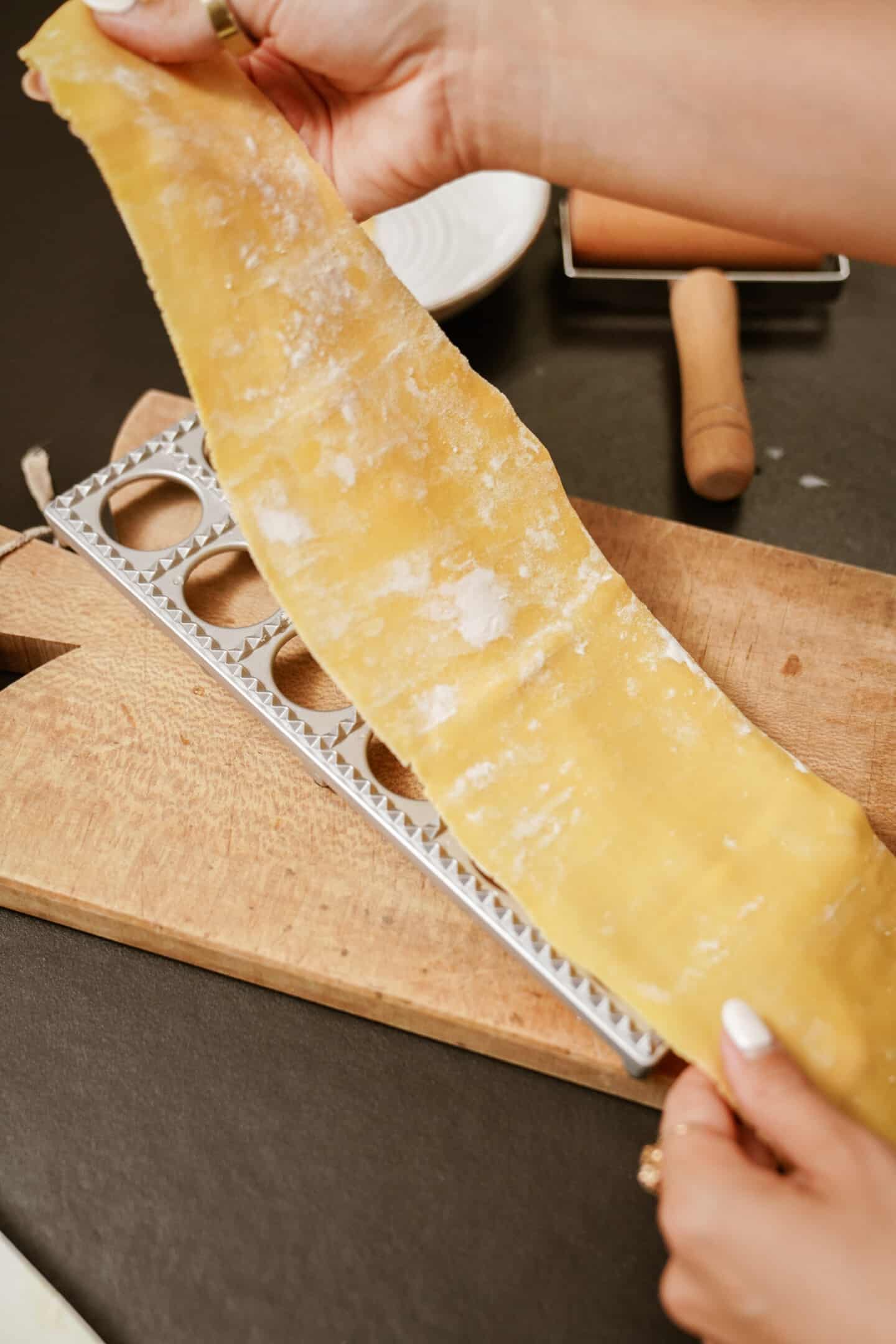
- Make a batch of pasta dough (see notes below for a link to our pasta dough recipe) or use premade dough. You’ll need 4 sheets of dough, each piece of dough at least 4.5 inches wide and 14 inches long and about ⅛ inch thick.
- In a bowl combine pumpkin puree, ricotta, salt, onion powder, nutmeg, ground pepper and shredded parmesan cheese. Set aside.
- If using a 12-piece ravioli maker follow the instructions below. If you do not have a 12-piece ravioli maker see the notes below.
- Dust the top of the rolled-out dough with more flour and your ravioli maker/press.
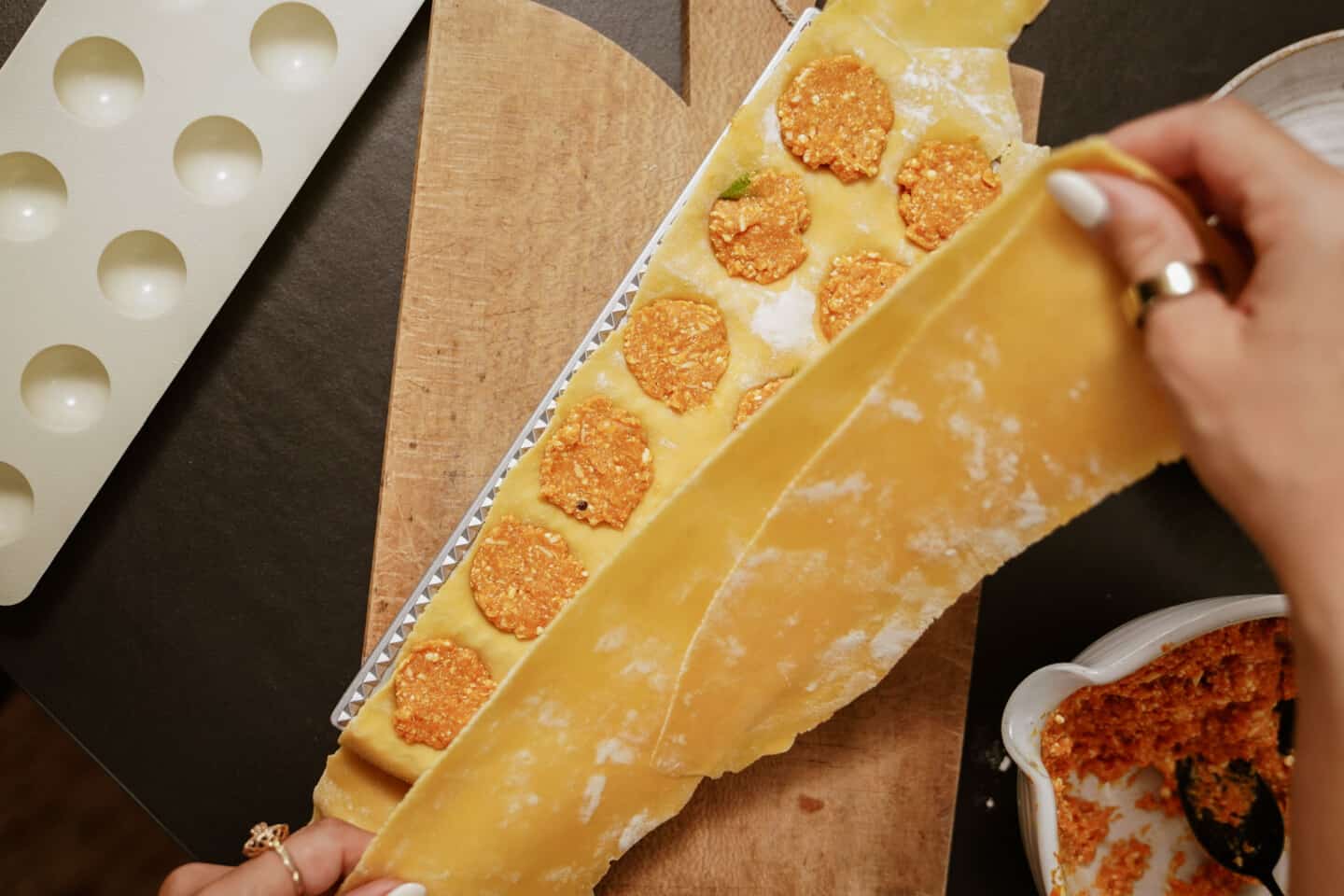
- Flip the dough over and place it in the ravioli maker. Gently press the plastic ravioli piece into the top of the dough, making small pouches. Fill the pouches with 1 tablespoon of pumpkin filling each.
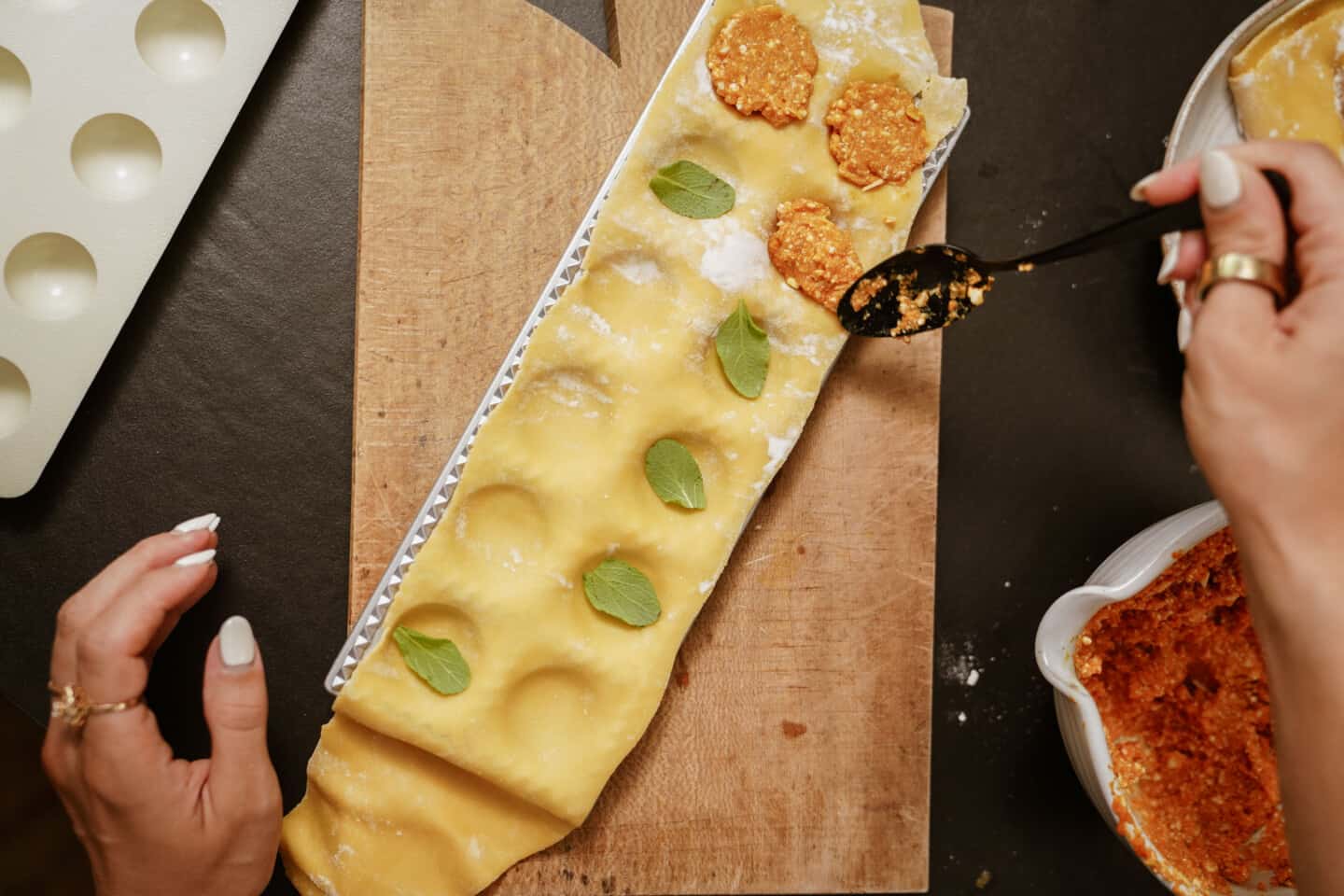
- Using water, lightly brush all of the edges of the ravioli maker, around the filling. With a rolling pin or pasta maker roll out another piece of dough very thin, approximately 1/8-inch-thick- making it large enough to cover the area of the entire ravioli press.
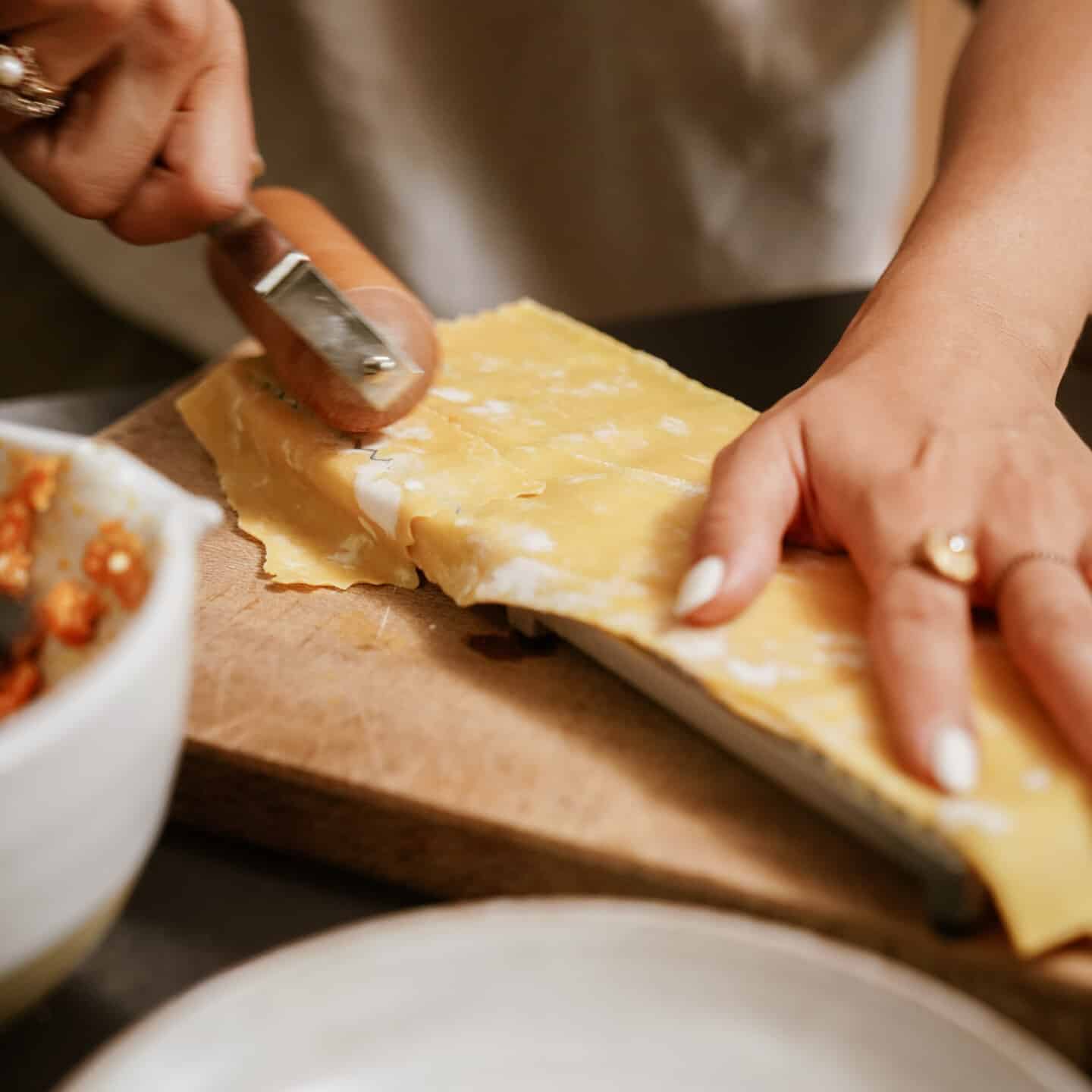
- Transfer the pasta sheet to cover the ravioli maker, removing air pockets.
- Seal all edges by running a rolling pin over the top. Roll across the dough in all directions until the frame is visible through the pasta.
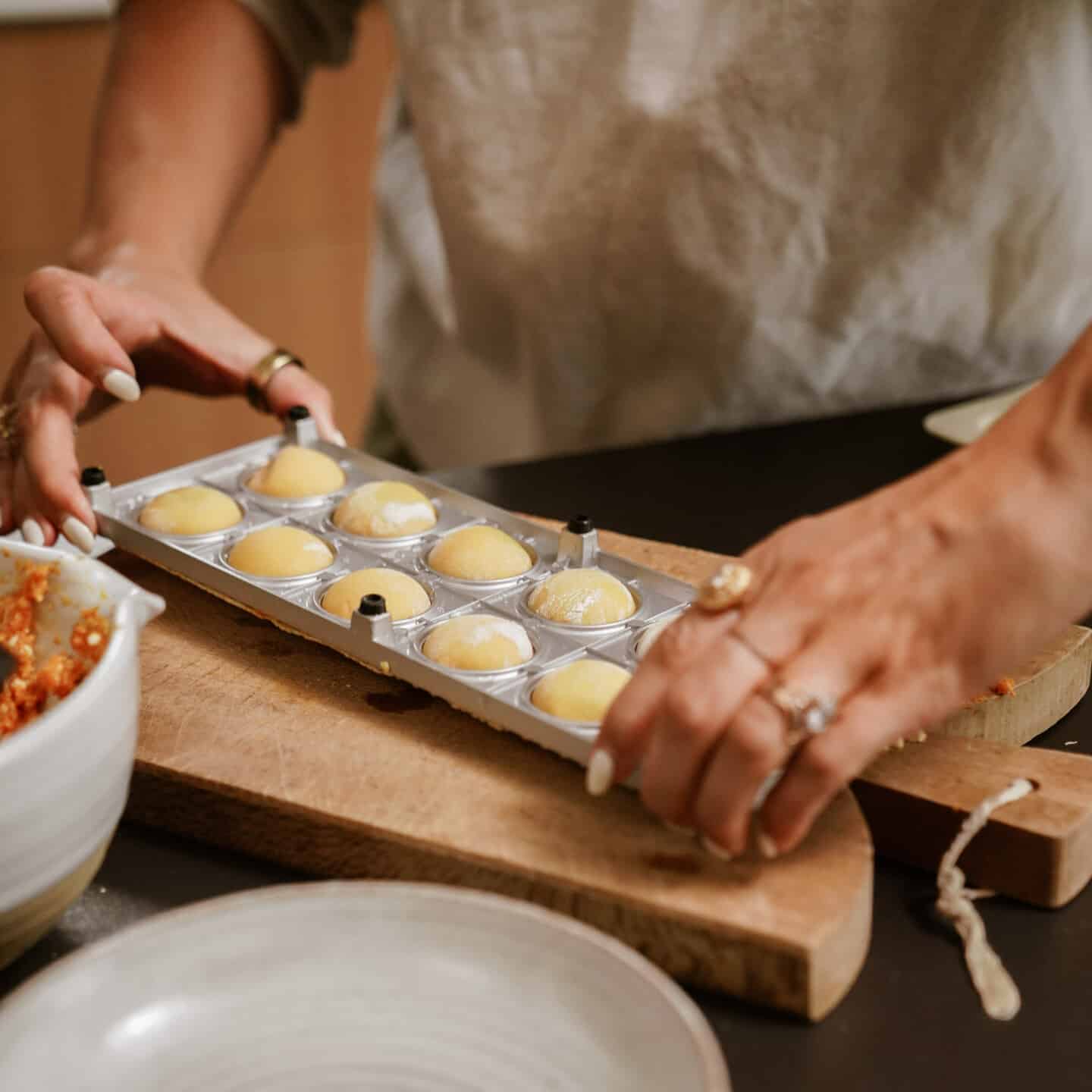
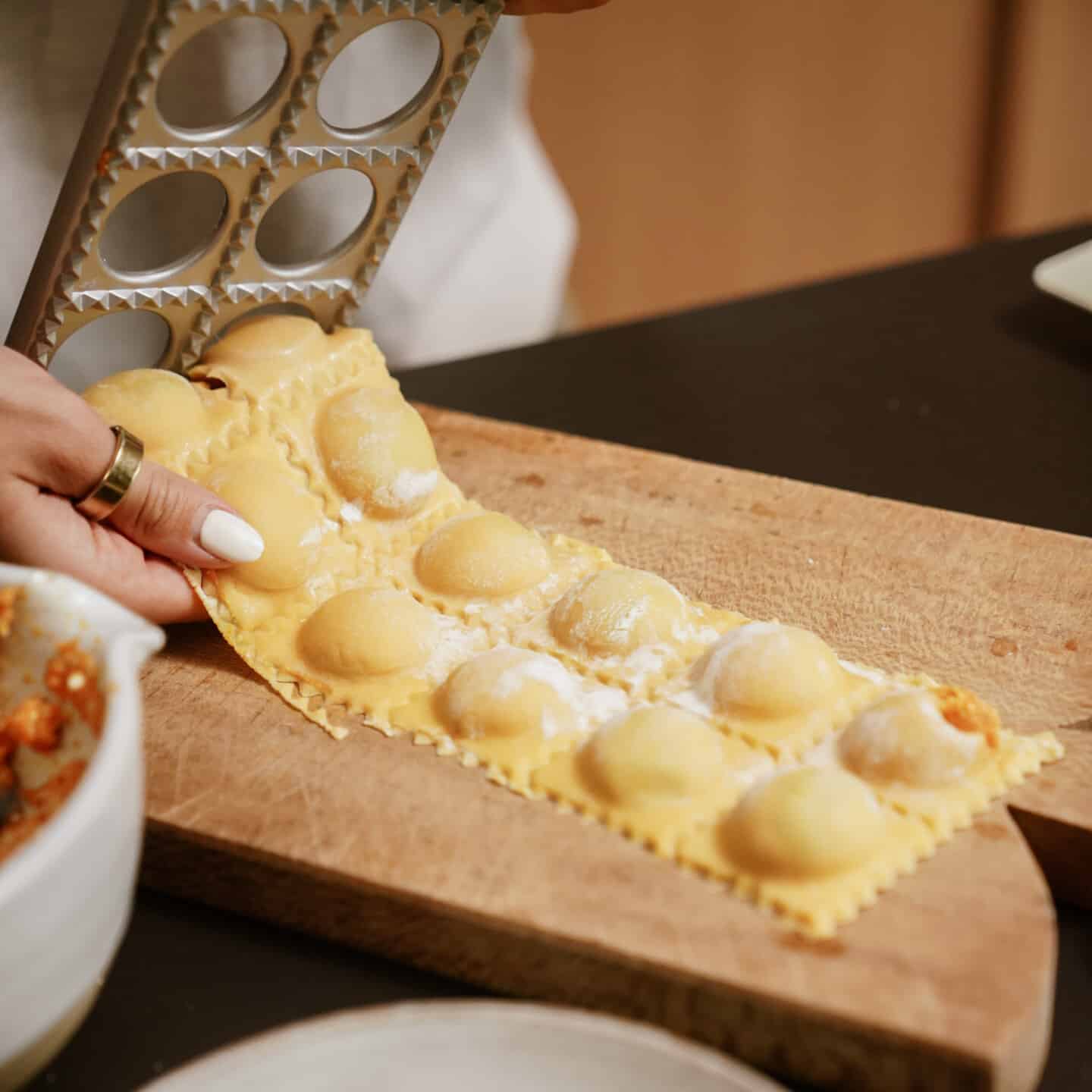
- On a lightly floured surface, flip the ravioli maker upside down and gently tap the edges on the surface to release the ravioli.
- Transfer all of the ravioli to a baking sheet covered in parchment paper, until ready to cook. Repeat the process to make another batch.
Pumpkin Spice Pecans Brown Butter Sage Sauce:
- To make the brown butter sauce, in a large skillet melt the butter over medium heat until starting to foam. Then turn to medium-low heat and continue cooking until butter starts to smell nutty and turns a golden brown colour, about 4 minutes.
- Add the grated garlic and sage and cook for 1-2 minutes until fragrant and sage leaves are crispy. Add the pecans and then remove the pan from the heat.
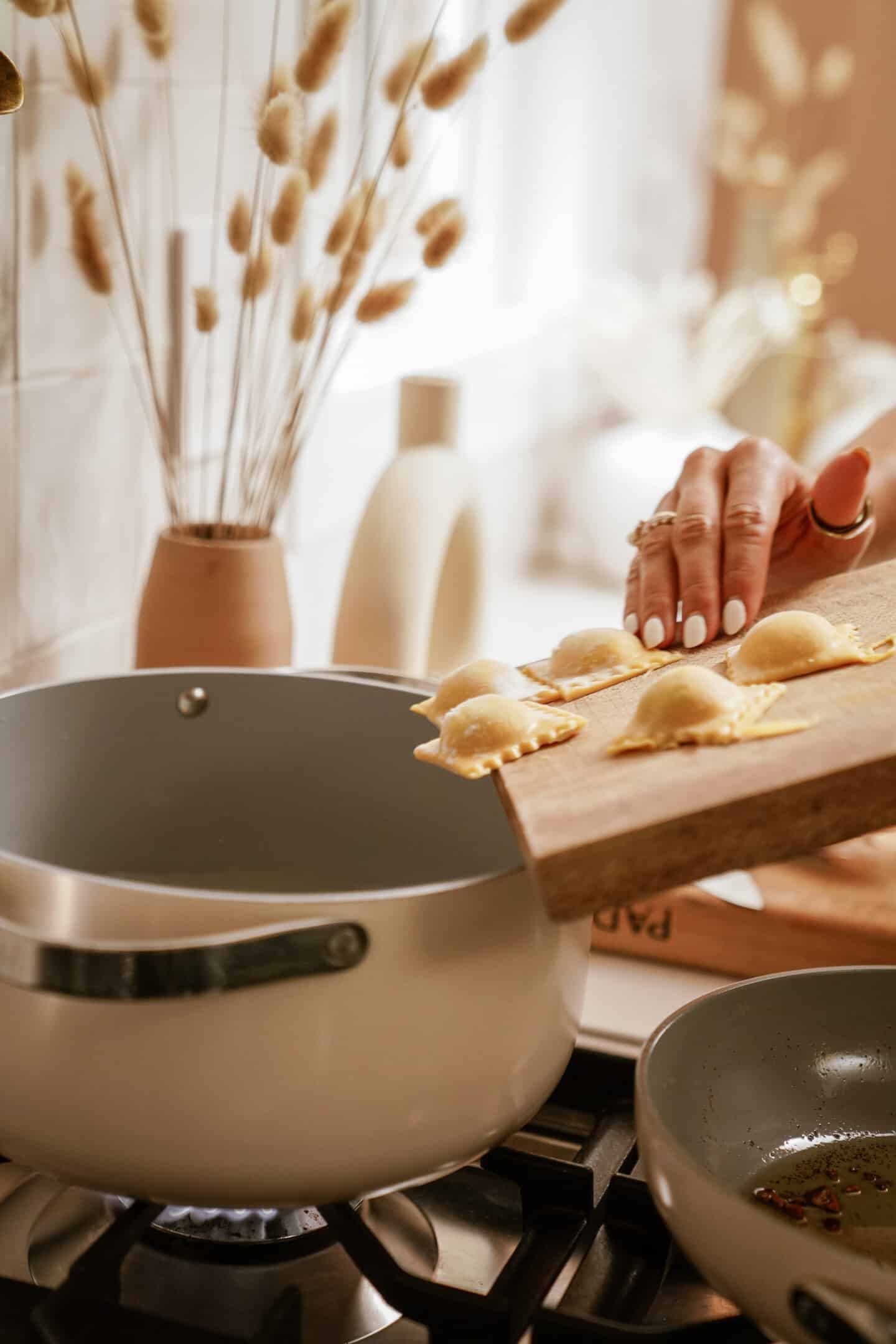
- Bring a large pot of salted water to a boil. Then working in batches, cook ravioli until tender, about 2-3 minutes. Ravioli will start to float to the surface when done cooking. Use a slotted spoon to remove the cooked ravioli and place them right in the brown butter sauce. Turn back to medium-low heat and toss gently with the sauce, ensuring each ravioli is covered for about 2-3 minutes.
- Serve topped with more pecans, parmesan cheese and a pinch of salt.
Expert Tips & FAQ
Homemade Pasta Dough Recipe: https://www.foodbymaria.com/homemade-pasta-recipe/
If you do not have a 12-piece ravioli maker, use a pizza cutter or knife to cut out 1 – 1 ½ inch squares.
Place 2 tsp of filling on top, brush with water, place the second piece of dough, and pinch the edges to seal.
Substitute regular ricotta with this whipped cashew ricotta: https://www.foodbymaria.com/cashew-ricotta/
Use this pumpkin filling in different ways! Try it as a filling for cannelloni or in large pasta shells.
Storage: Store cooked ravioli in an airtight container for 3-5 days or in the freezer for 1 month. Freeze your fresh ravioli, lightly flouring a baking tray, freezing until solid, and then storing in an airtight container for up to 6 months.
Other Recipes You’ll Love
For more eBooks:
If you want more deliciousness at the click of your finger, be sure to check out FoodByMaria’s Newest Mini Cookbooks. Limited time offer of 3 for $20USD.
Save this recipe for later
Watch the Video
Ingredients
Pumpkin Ravioli
- 4 fresh pasta sheets
- 1 ¼ cup pumpkin puree
- ½ cup ricotta
- ¼ tsp salt
- ¼ tsp onion powder
- ¼ tsp ground nutmeg
- pinch ground pepper
- ¾ cup parmesan cheese
Pumpkin Spice Pecans Brown Butter Sage Sauce
- ½ cup butter
- 1 tbsp grated garlic (from about 3 garlic cloves)
- ½ cup Sante Nuts Pumpkin Spice Pecans, chopped plus more for garnish
- 1x bunch Fresh sage (20 fresh sage leaves)
- salt to taste
Instructions
Start CookingPumpkin Ravioli
- Make a batch of pasta dough (see notes below for a link to our pasta dough recipe) or use premade dough. You’ll need 4 sheets of dough, each piece of dough at least 4.5 inches wide and 14 inches long and about ⅛ inch thick.
- In a bowl combine pumpkin puree, ricotta, salt, onion powder, nutmeg, ground pepper and shredded parmesan cheese. Set aside.
- If using a 12 piece ravioli maker follow the instructions below. If you do not have a 12-piece ravioli maker see notes below.
- Dust the top of the rolled-out dough with more flour and your ravioli maker/press.
- Flip the dough over and place it onto the ravioli maker. Gently press the plastic ravioli piece into the top of the dough, making small pouches. Fill the pouches with 1 tablespoon of pumpking filling each.
- Using water, lightly brush all of the edges of the ravioli maker, around the filling. With a rolling pin or pasta maker roll out another piece of dough very thin, approximately 1/8-inch-thick- making it large enough to cover the area of the entire ravioli press.
- Transfer the pasta sheet to cover the ravioli maker, removing air pockets.
- Seal all edges by running a rolling pin over the top. Roll across the dough in all directions until the frame is visible through the pasta.
- On a lightly floured surface, flip the ravioli maker upside down and gently tap the edges on the surface to release the ravioli.
- Transfer all of the ravioli to a baking sheet covered in parchment paper, until ready to cook. Repeat the process to make another batch.
Pumpkin Spice Pecans Brown Butter Sage Sauce
- To make the brown butter sauce, in a large skillet melt the butter over medium heat until starting to foam. Then turn to medium-low heat and continue cooking until butter starts to smell nutty and turns a golden brown colour, about 4 minutes.
- Add the grated garlic and sage and cook for 1-2 minutes until fragrant and sage leaves are crispy. Add the pecans and then remove the pan from the heat.
- Bring a large pot of salted water to a boil. Then working in batches, cook ravioli until tender, about 2-3 minutes. Ravioli will start to float to the surface when done cooking. Use a slotted spoon to remove the cooked ravioli and place right in the brown butter sauce. Turn back to medium-low heat and toss gently with the sauce, ensuring each ravioli is covered, about 2-3 minutes.
- Serve topped with more pecans, parmesan cheese and pinch of salt.

1 person is discussing this recipe. Join in
So good!