

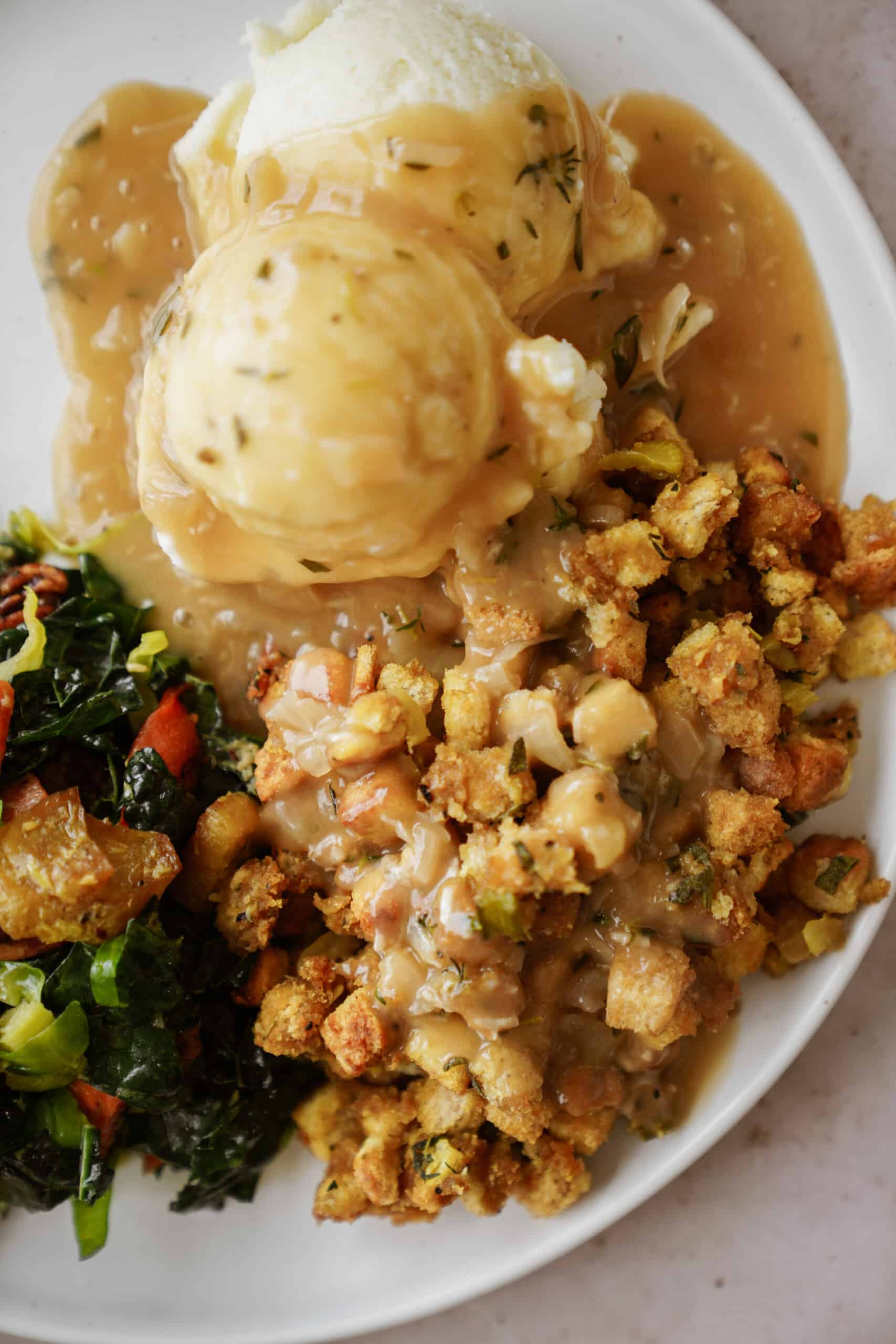
Stuffing is hands down one of the side dishes I look forward to most during the holidays. It’s one of those foods that instantly reminds me of holiday gatherings growing up! The smell of the herbs, the crispy bits on top, and everyone loading their plates with all the cozy sides.
One thing I want to make super clear: this is a homemade bread stuffing made with boxed croutons or completely dried white bread, not Stove Top boxed stuffing mix. We build that buttery, herby flavor base on the stovetop, toss it with the dried bread, and then let the oven do its thing. That stove-to-oven method gives you the best of both worlds… a tender centre with that crispy, golden top we all fight over!

Maria Koutsogiannia
Maria is the creator of FoodByMaria and your go-to Greek food expert for cozy, flavor-packed recipes. Inspired by her Mediterranean roots, she brings traditional Greek flavors, feel-good ingredients, and a whole lot of joy to everyday cooking.

Why You’ll Love This Stuffing
- Classic holiday flavor: Butter, celery, onion, garlic, poultry seasoning, sage, and thyme give this stuffing that cozy, savory holiday flavor you know and love.
- Flexible bread base: You can use boxed croutons or white bread that you’ve completely dried in the oven.
- Make-ahead friendly: Assemble everything the night before, pop it in the fridge, and bake it the next day.
- The BEST texture: Baking the stuffing covered first keeps the centre tender, while uncovering it for the final stretch gives you those crisp, golden pieces on top.
What Kind of Stuffing Is This?
This is a homemade stuffing made with dried bread and baked separately in a casserole dish. The ingredients all come together on the stovetop to create the flavor-packed base, but the actual stuffing finishes in the oven.
You’ll sometimes hear the term “stovetop stuffing” used for stuffing that is cooked entirely on the stove or for the branded boxed product. This recipe is neither. Think of it as a homemade stove-to-oven bread stuffing.
The Ingredients That Build the Flavor
The stuffing ingredients here are simple, but every single one has a job to do! The biggest secret? Starting with bread that is actually dry.
Dried bread cubes or croutons: You’ll need 7 cups of boxed croutons or cubed white bread that has been completely dried in the oven. Dry bread can soak up all that seasoned liquid without immediately turning to mush.
Butter: We use 6 tablespoons of unsalted butter to cook the aromatics, plus another 2 tablespoons cut into pieces and scattered over the stuffing before baking. Those final little pieces help create that rich, golden finish.
Celery, onion, and garlic: Use 1 cup of celery, ½ large yellow onion, and 2 pressed garlic cloves. This is the savory base that starts building flavor before we even get to the herbs.
Poultry seasoning, sage, and thyme: Poultry seasoning brings that familiar holiday flavor, while 2 tablespoons each of fresh sage and fresh thyme give the stuffing a herbaceous punch.
Vegetable stock paste and water: The recipe uses 1 tablespoon of vegetable stock paste with 2½–3 cups of water. That range matters because different croutons and dried breads absorb liquid differently.
Here’s the little bit of cooking science you need to know: completely dried bread has lost moisture, which leaves it ready to soak up your seasoned liquid. If you start with soft bread that already contains a lot of moisture, you have a much better chance of ending up with dense, soggy stuffing. So don’t skip this step!
Fresh Herbs Versus Dried Herbs
Fresh sage and thyme add so much flavor here, but if you can’t get your hands on fresh herbs, you can use dried. The general rule for this recipe is to use roughly one-third as much dried herb because dried herbs are more concentrated by volume.
For the fresh herbs in this recipe, that works out to:
- 2 tablespoons fresh sage → approximately 2 teaspoons dried sage
- 2 tablespoons fresh thyme → approximately 2 teaspoons dried thyme
These conversions are based on the recipe’s existing one-third rule rather than a separately tested variation. And keep that poultry seasoning in there! Dried sage or thyme only replaces its corresponding fresh herb.
How to Keep Stuffing from Getting Soggy or Dry
The difference between perfect stuffing and sad, soggy stuffing really comes down to the bread and how much liquid you add.
Start with dried bread cubes! The recipe gives you a range of 2½–3 cups of water for a reason: boxed croutons and homemade dried bread can absorb very different amounts of liquid. Start with 2½ cups and only add more if your bread needs it.
You want every cube evenly coated and moist before it goes into the casserole dish, but you shouldn’t have loose liquid hanging out at the bottom of the pan. Think moist, not swimming.
The baking method matters too. Covering the casserole for the first 15 minutes helps limit moisture loss so the centre stays tender. Removing the foil for the final 10–15 minutes allows the surface to crisp and turn golden. If you notice the top getting too dark before the stuffing is finished, you can loosely place the foil back over it.
Can You Make Stuffing Ahead of Time?
Yes! Make-ahead stuffing is one of my favorite little holiday sanity-savers because nobody needs another dish to assemble while there are approximately 47 other things happening in the kitchen.
You can completely assemble the stuffing, transfer it to the casserole dish, place the final pieces of butter over the top, cover it with foil, and refrigerate it overnight. When you’re ready to cook, take the casserole out of the fridge while your oven preheats, then bake according to the recipe instructions.
If you’re trying to get organized for a big holiday meal, check out my holiday recipe collection to help plan the rest of your menu.
What to Serve with Stuffing
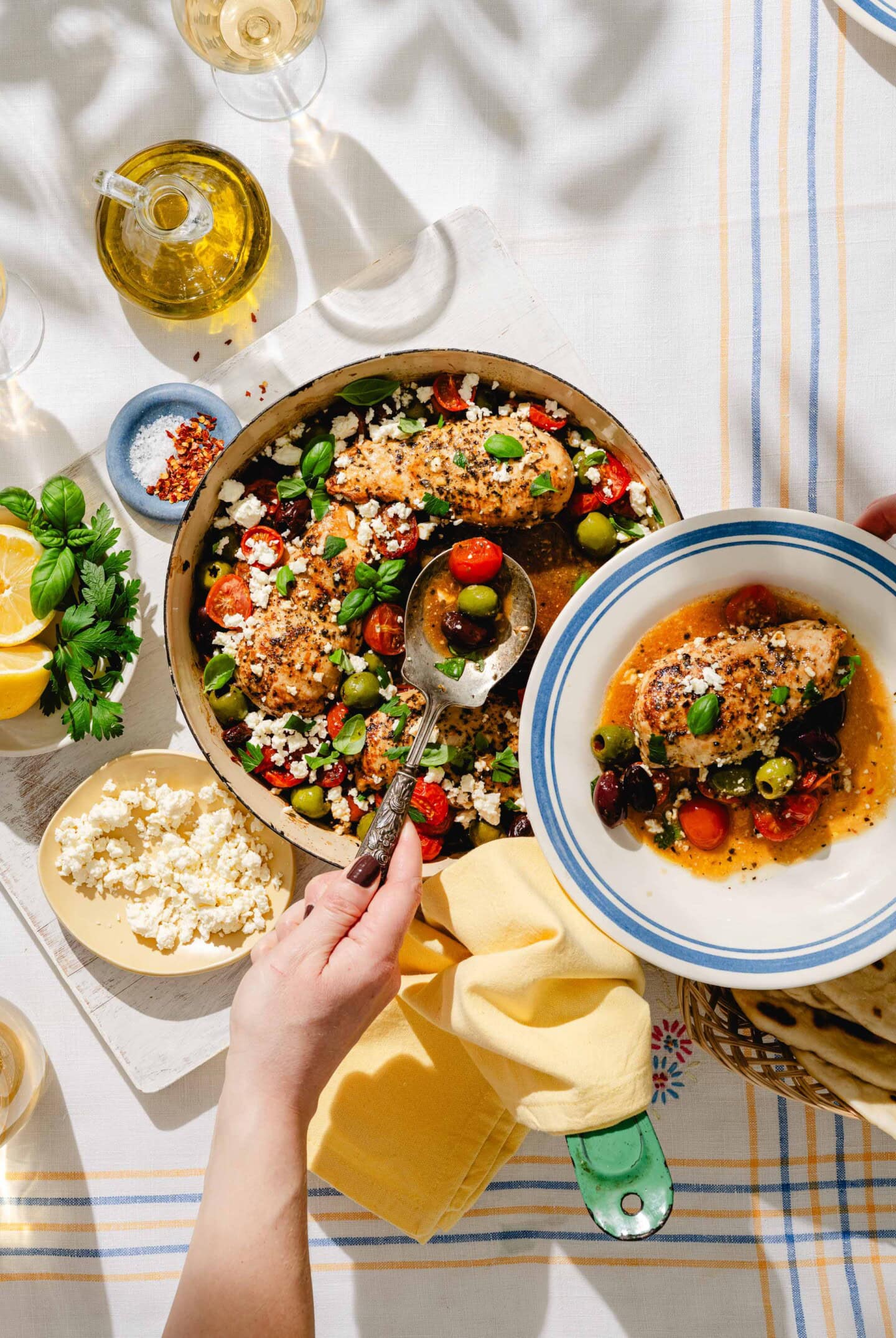
This stuffing belongs on a holiday table surrounded by all your favorite cozy dishes. Serve it alongside my roasted chicken and potatoes with Champagne gravy for a seriously comforting main dish.
For something fresh and vegetable-forward on the side, my kale and roasted sweet potato salad is a great addition to the table.
If you’re looking for something completely different from this bread-based recipe, try my vegetarian stuffing with wild rice and mushrooms. It’s a gluten-free, rice-based alternative made with mushrooms and walnuts rather than a variation of this bread stuffing.
How to Store Leftover Stuffing
I know we all like to believe there won’t be leftovers, but holiday portions have a mind of their own. Store cooked stuffing in a covered airtight container in the refrigerator for up to 3 days, making sure to refrigerate it promptly after your meal.
And if you have cooked stuffing hanging out in your fridge and want to turn it into something completely different, try my chicken casserole with stuffing.
FAQs
No. This is a homemade bread stuffing made with boxed croutons or white bread that has been completely dried in the oven. The celery, onion, garlic, herbs, and liquid are prepared on the stovetop, but the assembled stuffing is baked in a casserole dish. It does not use Stove Top boxed stuffing mix.
Yes. Assemble the stuffing completely, place the butter pieces on top, cover the dish with foil, and refrigerate it overnight. When you are ready to bake, take the casserole out while the oven preheats, then bake it according to the recipe card instructions.
Yes. This recipe uses 7 cups of boxed croutons or cubed white bread that has been completely dried in the oven. The bread needs to be dry enough to absorb the seasoned liquid while retaining some structure as the stuffing bakes.
Save this recipe for later
Watch the Video
Ingredients
- 7 cups cubed croutons (boxed) or cubed white bread completely dried out in the oven
- 6 tbsp unsalted butter
- 1 cup finely diced celery
- ½ large yellow onion, finely diced
- 2 garlic cloves, pressed
- 1 tbsp poultry seasoning
- ½ tsp salt
- ¼ tsp ground pepper
- 2 tbsp minced fresh sage
- 2 tbsp minced fresh thyme
- 1 tbsp vegetable stock paste
- 2 ½ -3 cups water
- 2 tbsp unsalted butter, cut into small pieces
Instructions
Start Cooking- Preheat the oven to 375F and butter a medium-sized casserole dish.
- Add the butter to a high sided frying pan and turn to medium heat. Add celery, onion and garlic and saute until softened, 5-8 minutes. Stir in the poultry seasoning, salt and pepper and cook a few more minutes.
- Sprinkle in the herbs and saute 1 minute to meld flavours. Then stir in the vegetable paste and whisk in water. Cook for 5 minutes, stirring often.
- Turn off the heat and add in the bread cubes, tossing the bread cubes with the mixture, until evenly coated.
- Transfer to a buttered baking dish, spread evenly. Cover loosely with foil and bake 15 minutes. Uncover and bake 10-15 more minutes to crisp the top. Serve warm

1 person is discussing this recipe. Join in
Tasted great!