This post may contain affiliate links. Please read our disclosure policy.
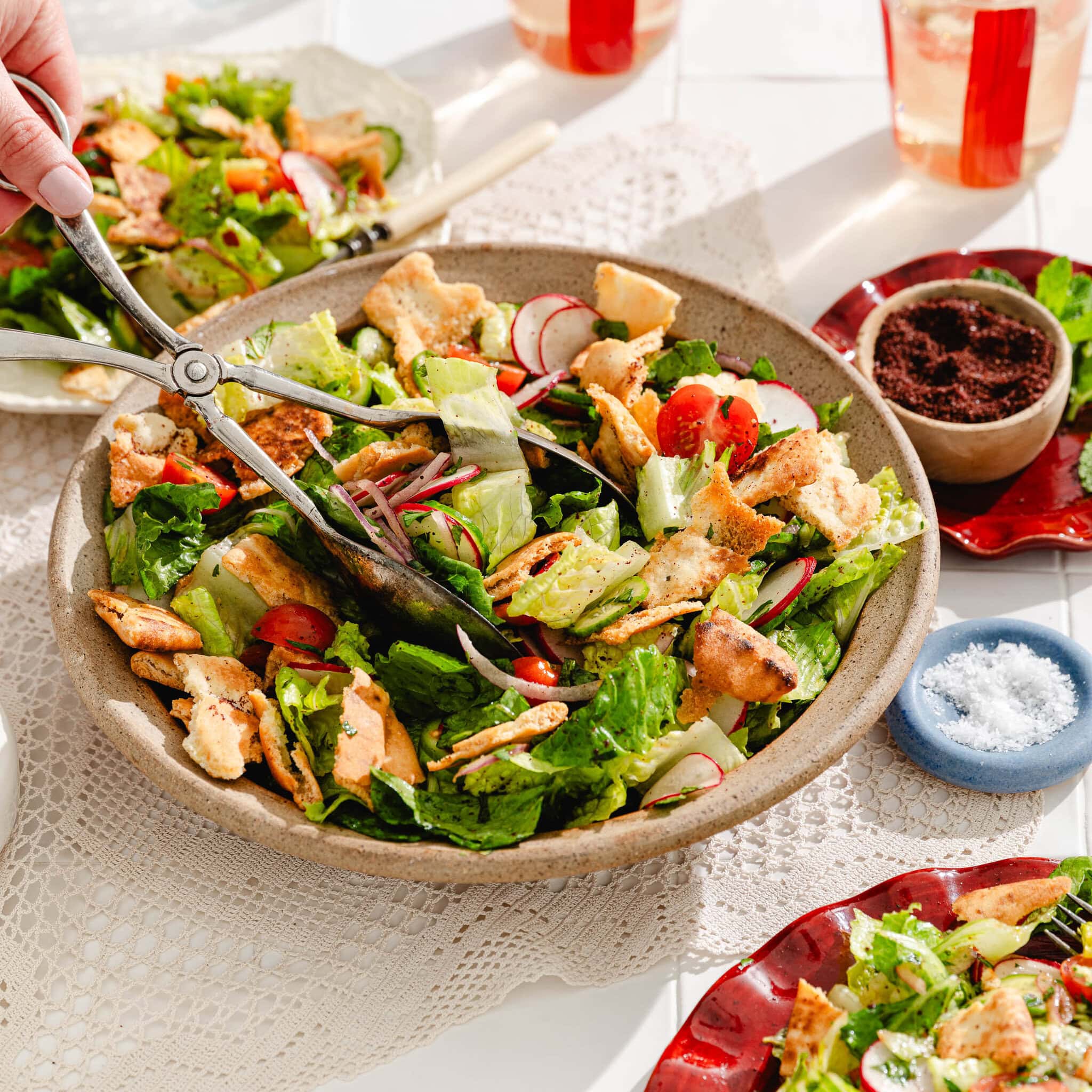
This Fattoush Salad Recipe is a Levantine bread salad built on crispy pita, fresh seasonal vegetables, and a bright, tangy sumac-lemon dressing, a dish rooted in the tradition of repurposing day-old bread into something vibrant and new. This version takes it up a notch with pan-fried pita tossed in sumac while still hot, plus a honey-brightened dressing with a subtle hint of cinnamon. It’s the kind of fattoush salad that belongs at the center of a meze table or enjoyed on its own as a light meal, perfect for the warmer summer months.
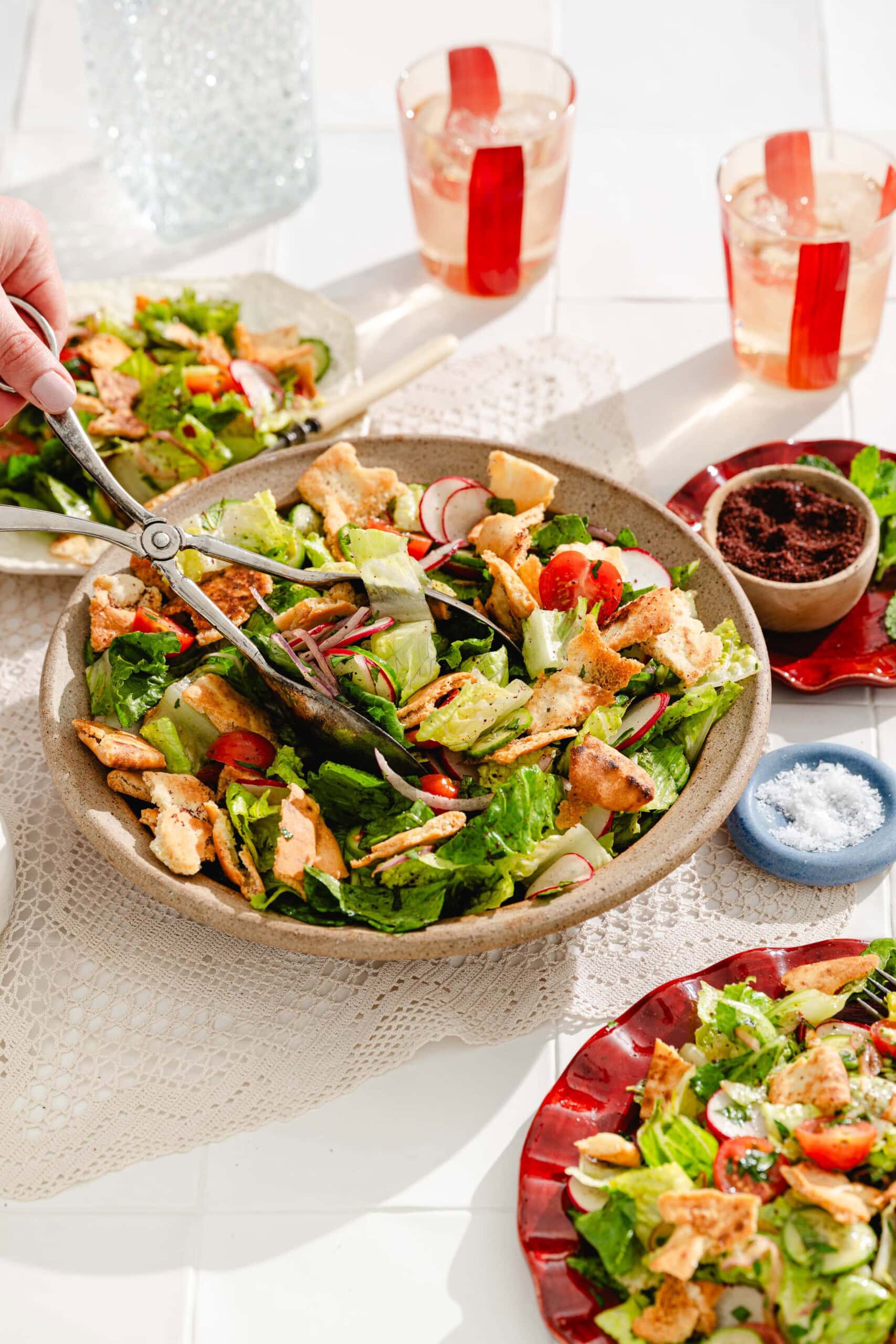
Why You’ll Love This Fattoush Salad
- Crispy sumac pita that stays crunchy: Pan-fried in olive oil and seasoned while hot, giving you that golden crunch in every bite.
- A dressing you’ll want to drink: Lemon, olive oil, sumac, honey, and just a pinch of cinnamon. Simple ingredients, layered flavor.
- 20 minutes, start to finish: No oven, no complicated steps. Just crisp, chop, whisk, toss.
- The perfect meze side: This fattoush salad pairs well with grilled meats, dips, and warm flatbreads. It’s great for summer BBQ season.
What Is Fattoush?
Fattoush is a traditional Levantine bread salad that originated in Lebanon. The name comes from the Arabic word “fatt”, meaning to crumble, referring to the torn pieces of bread that define the dish.

Maria Koutsogiannia
Maria is the creator of FoodByMaria and your go-to Greek food expert for cozy, flavor-packed recipes. Inspired by her Mediterranean roots, she brings traditional Greek flavors, feel-good ingredients, and a whole lot of joy to everyday cooking.
It belongs to a broader family of dishes known as fatta or fatteh, where day-old bread is repurposed into something fresh and flavorful. This isn’t a modern zero-waste trend; it’s centuries of kitchen wisdom baked into everyday cooking.
What sets fattoush apart from other salads is its texture and bold seasoning. Unlike tabbouleh (which is herb-heavy with bulgur) or even a Greek-style salad, fattoush is defined by crispy pita and a tangy fattoush dressing made with lemon and sumac.
Across the Levant, versions vary. Some include purslane (a lemon-flavored green) or green peppers, and others use pomegranate molasses. This fattoush salad sticks to a classic restaurant-style approach with accessible ingredients and a bold, balanced flavor.
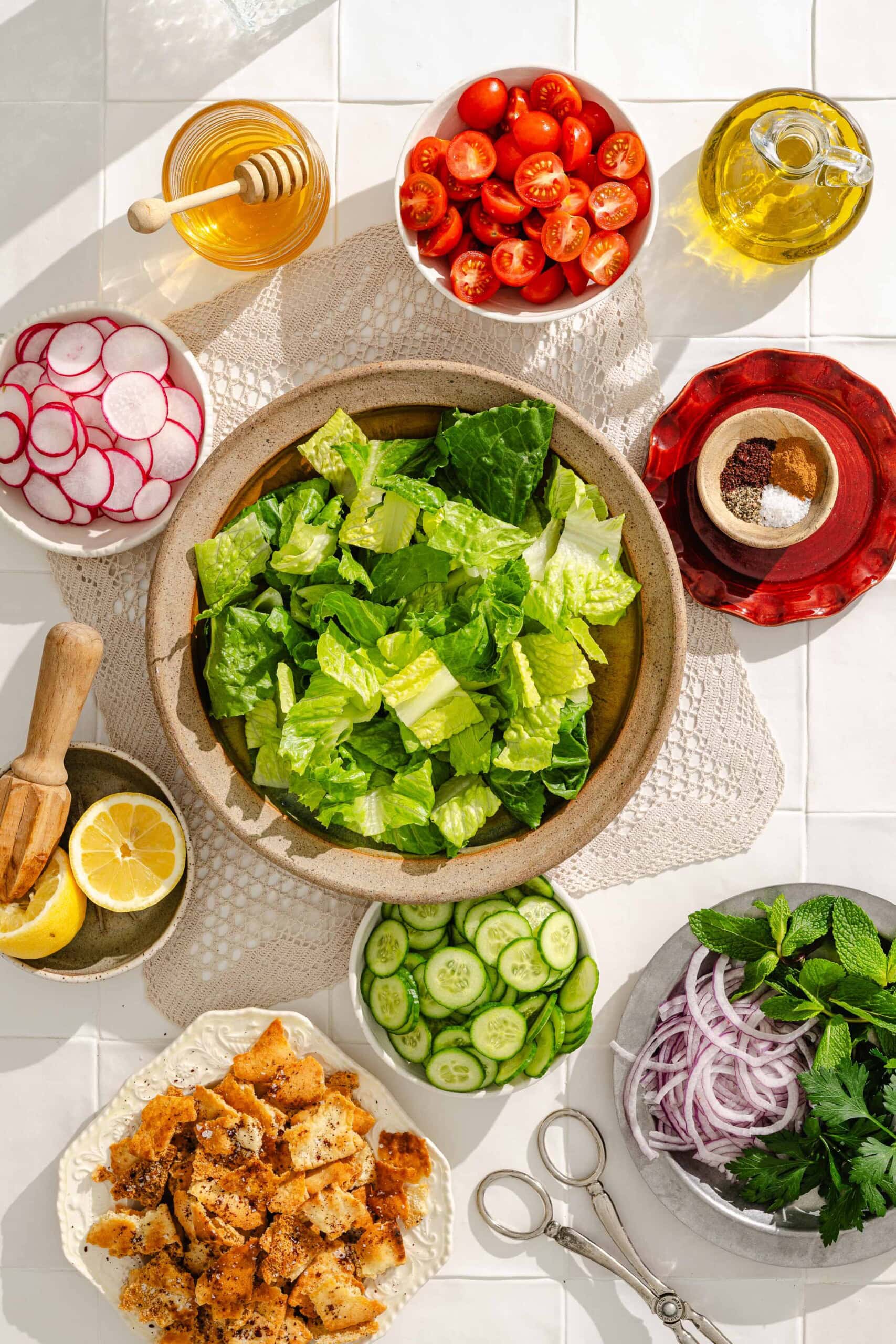
Key Ingredients
This fattoush salad recipe uses simple, fresh ingredients that come together so perfectly. I love this recipe. It’s so easy and great for the summer months, BBQs, or potlucks.
For the Dressing (Fattoush Dressing)
Lemon juice + zest — Fresh is key. The zest adds aromatic citrus oils you can’t get from juice alone.
Extra-virgin olive oil — Use a good-quality oil; it’s the backbone of the dressing.
Sumac — The signature spice. Tangy, citrusy, and deep red, it appears both here and on the pita for layered flavor.
Honey — A subtle sweetness that balances the acidity. This is what makes this version extra approachable.
Cinnamon — Just a pinch adds warmth and depth without being noticeable.
Kosher salt + black pepper — Season generously to carry through the whole salad.
For the Pita
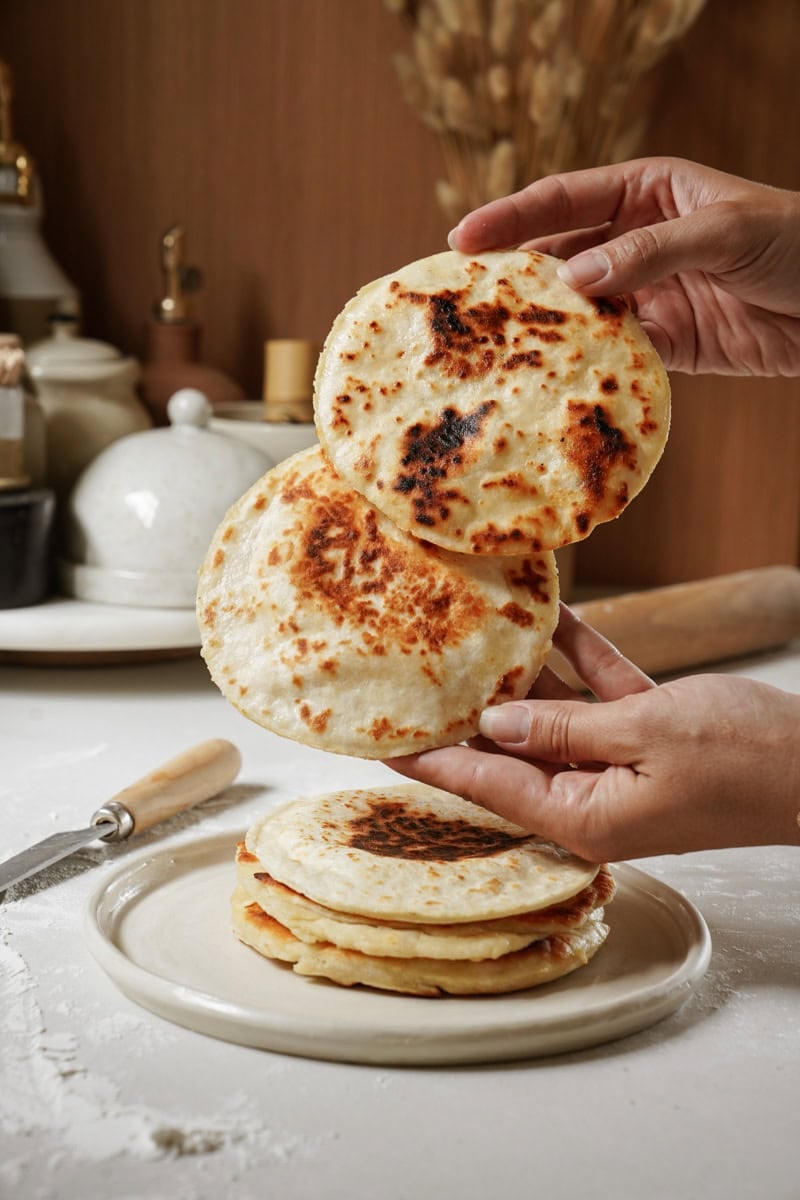
Pita pockets — Use classic pita pockets, torn into rough pieces for maximum crunch. For a homemade touch, try fluffy Greek pita bread.
Olive oil — Helps the pita crisp evenly while adding flavor.
Sumac — Tossed on while hot, so it blooms and sticks.
For the Salad
Romaine lettuce — Crisp, sturdy, and perfect as a base.
Cherry tomatoes — Sweet and juicy, they hold their shape well.
Persian cucumbers — Thinly sliced for crunch and freshness.
Red radishes — Peppery and vibrant.
Red onion — Thinly sliced for bite (soak in water if you prefer it milder).
Fresh mint + parsley — These herbs bring the salad to life—fresh, bright, and essential.
Tips for the Best Fattoush
- Fry the pita, don’t bake it — Oil creates a deeper, more even crunch compared to dry oven heat.
- Season the pita while hot — This helps the sumac and salt stick properly.
- Dress right before serving — Fattoush is all about texture, don’t let it get soggy.
- Add the pita last — Keeps those crispy edges intact for longer.
- Use the best produce you can find — This is a raw salad, freshness makes all the difference.
Substitutions and Variations
- Pomegranate molasses — Add 1 tablespoon to the fattoush dressing for a deeper, traditional flavor.
- Skip the honey — Add a pinch more sumac if you want a sharper, less sweet dressing.
- Iceberg lettuce — Swap for extra crunch and a milder taste.
- Green onions — Use instead of red onions for a softer bite.
- Baked pita option — Toss with olive oil and sumac, then bake at 375°F until crispy.
- Add purslane — If available, it’s a traditional green often used in fattoush.
What to Serve with Fattoush Salad
This fattoush salad shines as part of a bigger spread:
- Grilled kofta — Pair with sheet pan kofta for a classic combo.
- Wraps — Serve alongside or inside a chicken kofta wrap.
- Meze spread — Add to a table with dips and grilled meats like kofta kebab with tzatziki.
- On its own — Light, fresh, and satisfying enough for lunch.
How to Store Fattoush
Fattoush is best enjoyed immediately after assembling. Once dressed, the pita softens quickly, and the lettuce begins to wilt.
For meal prep, store the components separately: vegetables (2–3 days in the fridge), dressing (up to 1 week), and crispy pita (up to 24 hours at room temperature). Assemble just before serving.
FAQs
Fattoush is a traditional Levantine bread salad originating from Lebanon. It’s made with crispy pita, fresh vegetables, herbs, and a lemon-sumac dressing.
Tabbouleh is parsley-heavy with bulgur, while fattoush is a vegetable salad defined by crispy pita and a tangy dressing. No bread in tabbouleh, no bulgur in fattoush.
Tangy, slightly fruity, and lemony, without the sharp acidity of citrus juice.
Prep components ahead, but assemble just before serving to keep the pita crisp.
No, but it’s a traditional addition. This version uses honey and cinnamon for balance.
Save this recipe for later
Ingredients
For the dressing
- 3 tbsp fresh squeezed lemon juice
- ¼ cup extra-virgin olive oil
- 1 tsp kosher salt plus more for sprinkling on top
- ¼ tsp ground pepper
- 1 tsp sumac plus more for sprinkling on top
- 1 tsp liquid honey
- ⅛ tsp ground cinnamon
For the pita
- 2 small-medium pitas (pita pockets), torn into bite-sized pieces
- 3 tbsp extra virgin olive oil
- ¼ tsp kosher salt
- ¼ tsp sumac
For the salad
- 4 cups packed chopped romaine lettuce, from about 2 medium heads of romaine
- 5 red radishes, thinly sliced
- 1 cup cherry tomatoes, halved
- 2 persian cucumbers, thinly sliced into rounds
- ½ cup thinly sliced red onion
- ⅓ cup fresh coarsely chopped mint leaves
- ¼ cup fresh coarsely chopped parsley
Instructions
Start Cooking- Make the dressing: In a small bowl whisk together the dressing ingredients until well combined. Set aside.
- Toast the pita: Tear the 2 pitas into bite-sized pieces and set aside. Add 2 tablespoons of olive oil to a large frying pan over medium heat. When the oil is hot, add the pieces of pita bread and toss to coat the pita evenly. Cook, stirring occasionally, until the pita is golden brown and crispy, about 5-7 minutes. When done, set aside on a paper-towel lined plate and season with ¼ teaspoon kosher salt and ¼ tsp sumac.
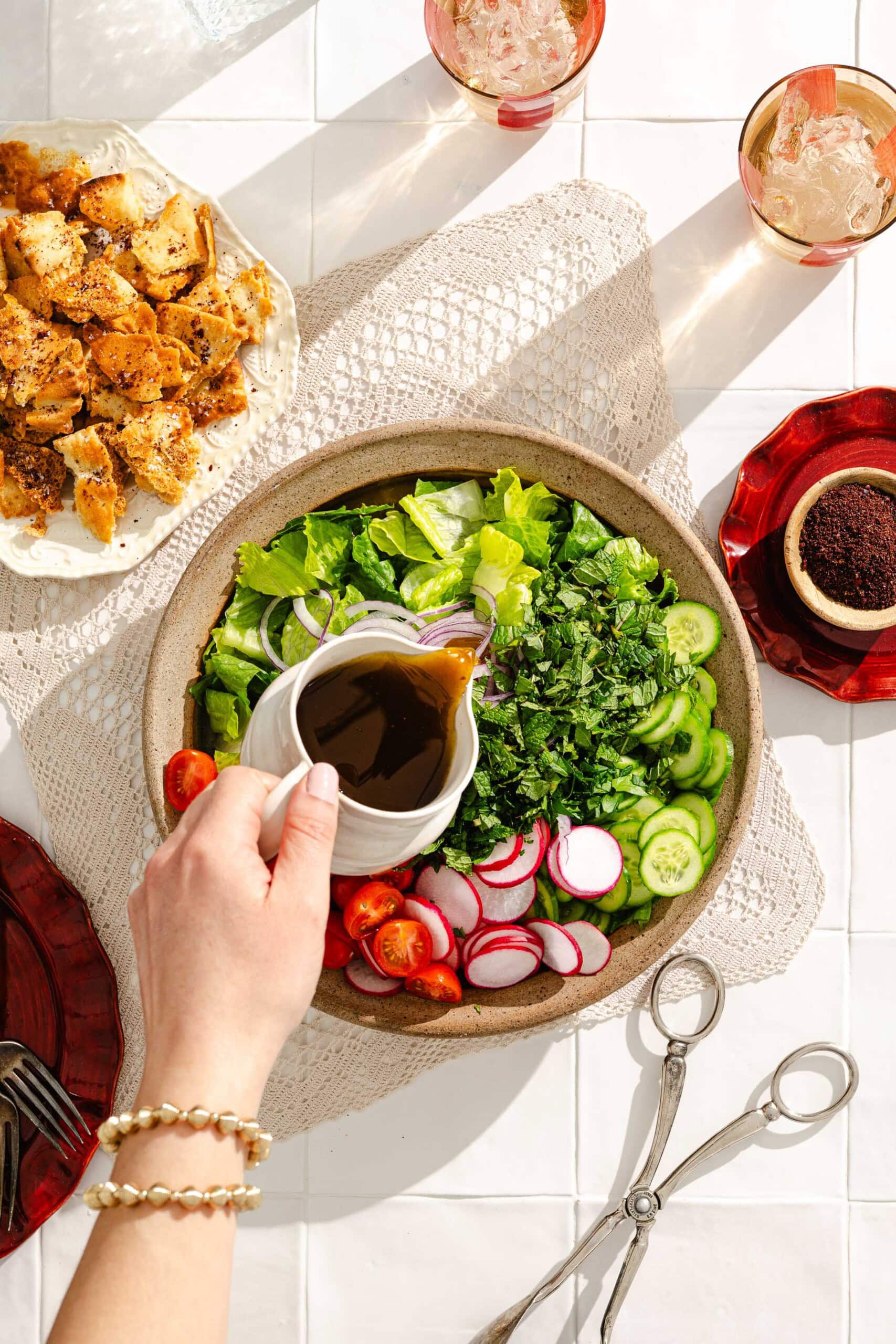
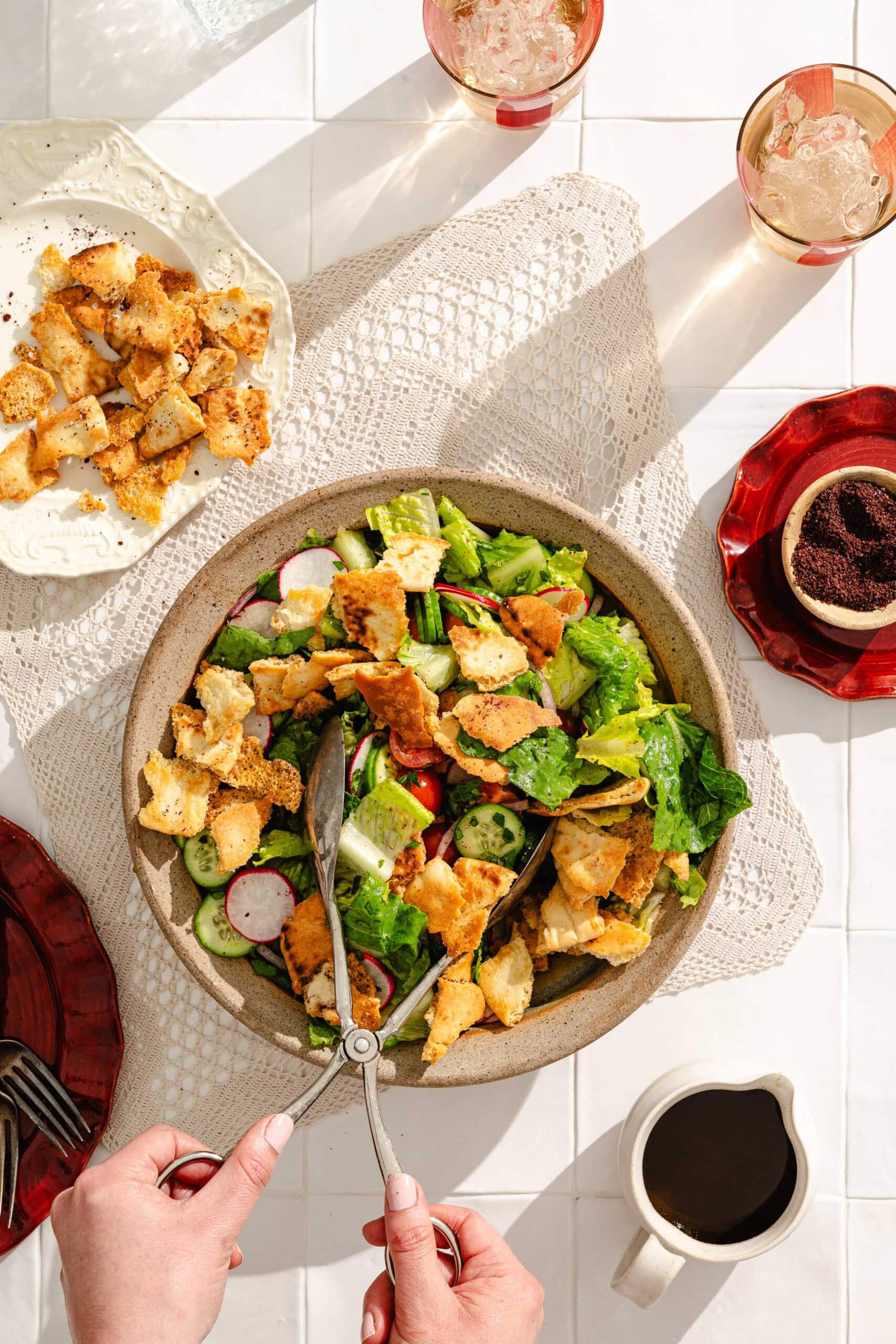
- Assemble the salad: To a large salad bowl, add the chopped romaine lettuce, thinly sliced radishes, halved cherry tomatoes, thinly sliced cucumber, thinly sliced red onion, fresh mint leaves and fresh chopped parsley. Pour the dressing over all of the vegetables and toss to combine. Then, add the crispy pita and toss gently once more. Season the top of the salad with extra sumac if desired. Serve immediately.
Notes
- Traditionally fattoush salad dressing contains pomegranate molasses. If this is easily accessible to you, feel free to add 1 tablespoon of pomegranate molasses to the dressing as well. It adds a delicious flavour!
- We love to serve this salad with our Sheet Pan Kofta Recipe (15-Minute Mediterranean Dinner)

Be the first to discuss this recipe.