
This post may contain affiliate links. Please read our disclosure policy.
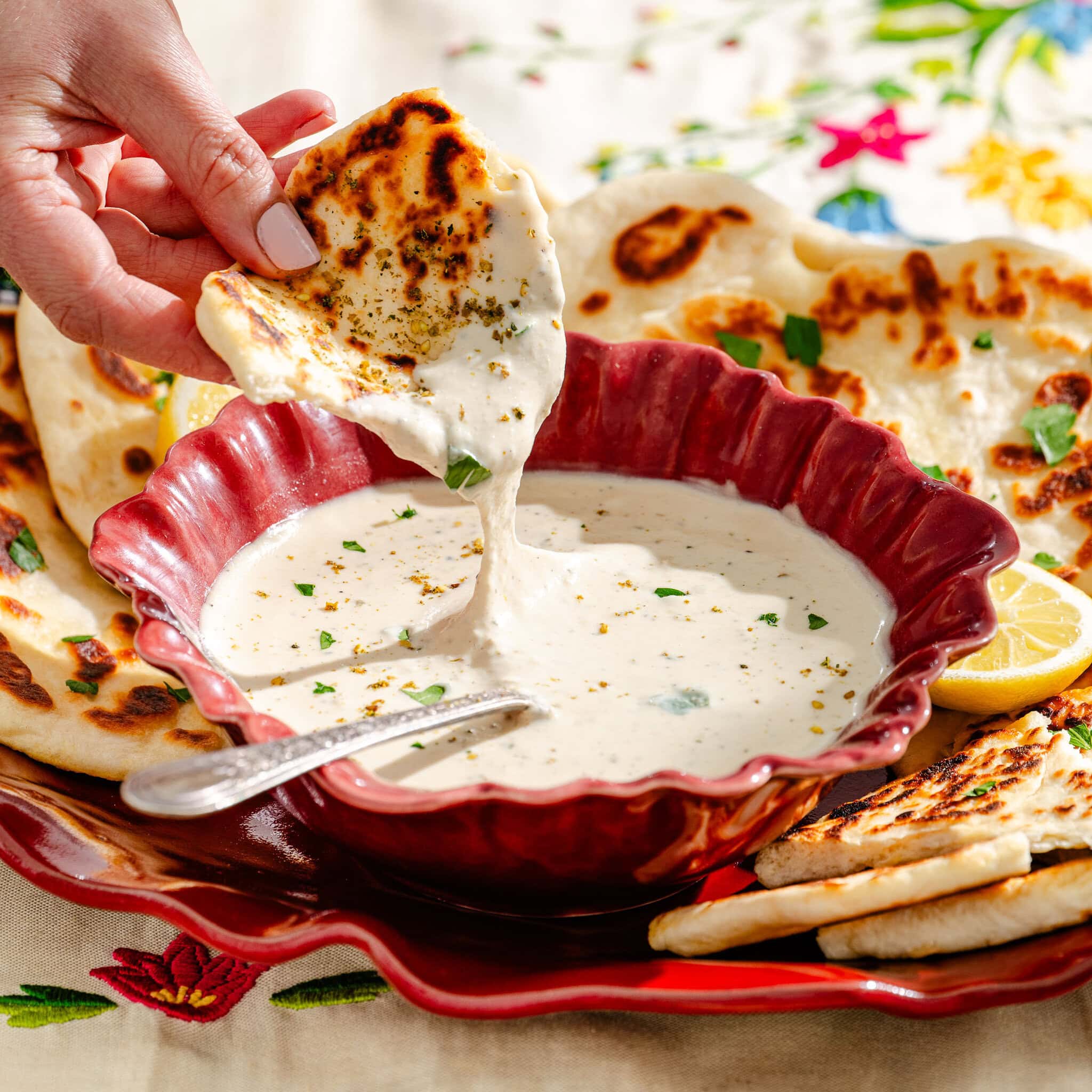
This Tahini Sauce is a creamy, nutty condiment made from sesame seed paste, lemon juice, garlic, and water. It is simple, balanced, and versatile. It’s a staple across Mediterranean and Middle Eastern kitchens, and one I keep on constant rotation for drizzling over everything from falafel to roasted veggies. This tahini sauce recipe comes together in under 5 minutes with just a bowl and a whisk. It’s that easy!

Why You’ll Love This Tahini Sauce
- Ready in 5 minutes: Whisk, don’t blend. One bowl, one whisk, done. No food processor to clean.
- Just 5 core ingredients: Tahini, lemon juice, garlic, salt, and cold water. That’s it. Olive oil and honey are optional finishing touches.
- Versatile: Use this tahini sauce as a dip, drizzle, or sauce for falafel, kofta, roasted vegetables, grain bowls, and more.
- Lighter garlic flavor: Just one small clove keeps the sesame flavor front and center instead of overpowering the sauce.
What Is Tahini Sauce?
Tahini sauce is a smooth, creamy condiment made by thinning tahini paste (ground toasted sesame seeds) with lemon juice, water, garlic, and salt. It’s a staple across the Middle East and Eastern Mediterranean, often served with falafel, shawarma, and grilled meats or as part of a meze spread.

Maria Koutsogiannia
Maria is the creator of FoodByMaria and your go-to Greek food expert for cozy, flavor-packed recipes. Inspired by her Mediterranean roots, she brings traditional Greek flavors, feel-good ingredients, and a whole lot of joy to everyday cooking.
It’s important to know that there is a difference between tahini sauce and tahini paste. The paste is the thick, rich sesame seed paste straight from the jar, and the tahini sauce is the finished, pourable version. Once thinned and seasoned, tahini transforms into a bright, balanced sauce that’s perfect for drizzling and dipping.
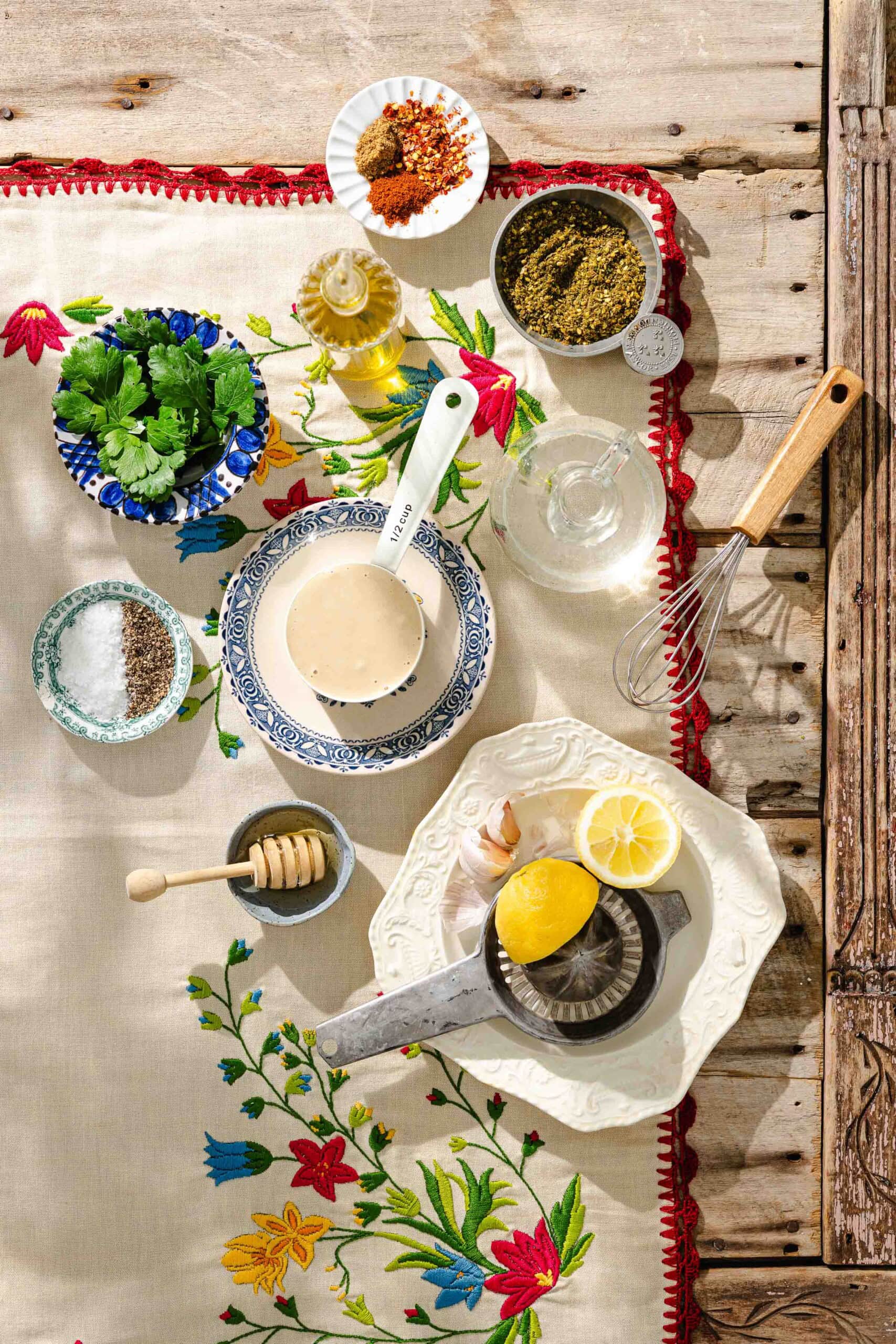
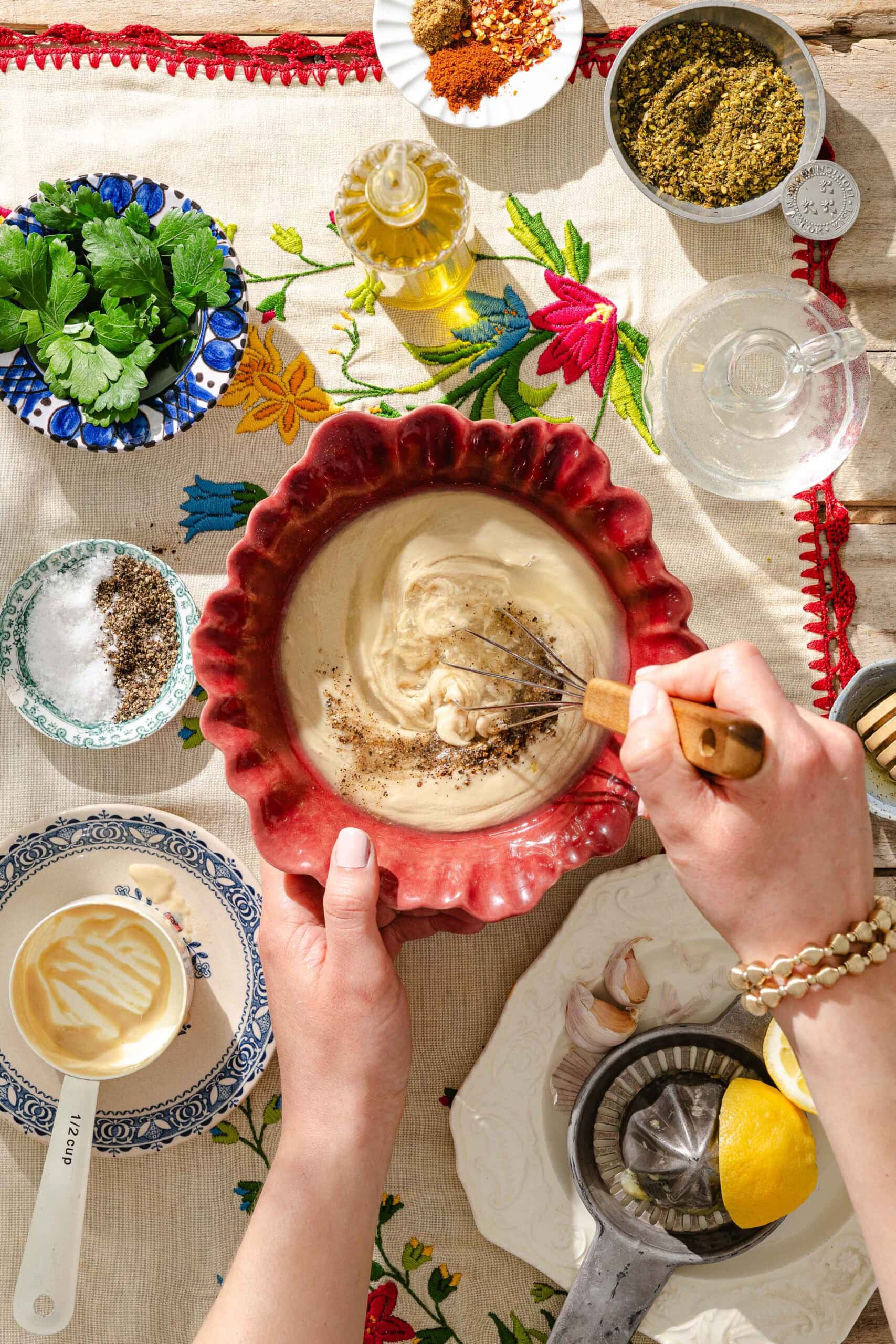
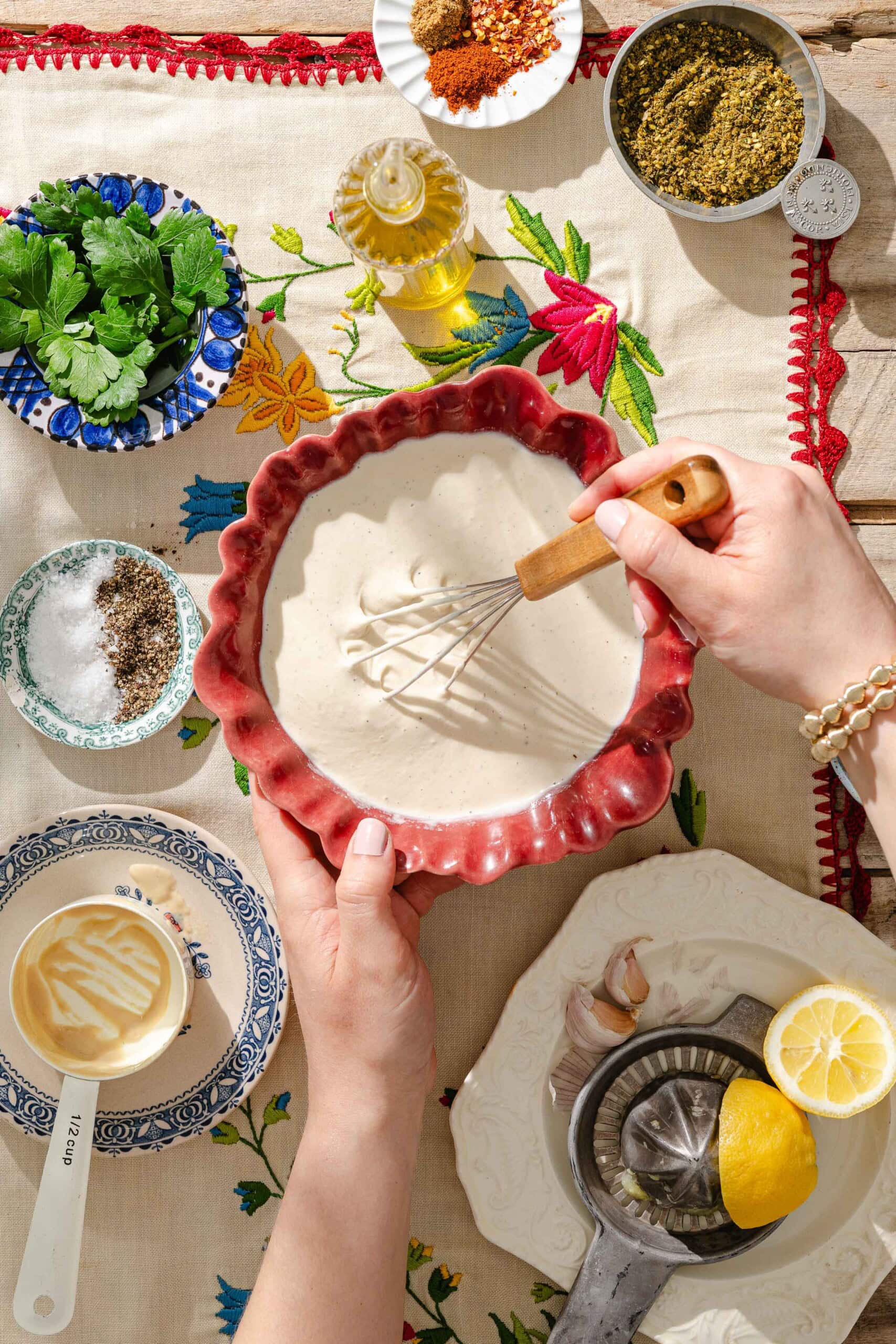
Key Ingredients
This Tahini Sauce keeps things simple, relying on just a handful of pantry staples that work together beautifully.
Tahini paste — The foundation. Look for a smooth, runny tahini (not dry or bitter), and always stir it well before using, since the oil separates. Tahini is also the base of classics like hummus.
Fresh lemon juice — Always freshly squeezed for brightness (don’t use the stuff in the bottle). One large lemon typically gives you the ¼ cup needed.
Garlic — One small clove, pressed or grated so it melts into the sauce. Pressing releases more allicin, giving you a stronger but more evenly distributed flavor.
Kosher salt and ground pepper — Start with ½ tsp salt and ¼ tsp pepper, then adjust to taste.
Cold water — Added gradually (4–6 tablespoons) to thin the sauce. Tahini will thicken at first (this is completely normal). Keep whisking, and it will loosen into a silky consistency.
Optional: olive oil and/or honey — A drizzle of olive oil makes the sauce extra smooth, while a touch of honey balances any bitterness.
Tips for the Best Tahini Sauce
Making great tahini sauce is all about technique:
- Stir your tahini first: The oil separates in the jar. Stir well so you’re not scooping dry paste from the bottom.
- Add water gradually: Start with 4 tablespoons, whisk, then add more as needed. The sauce will seize before it smooths out, so just keep going.
- Taste before serving: Too bitter? Add a little honey. Too sharp? A splash of olive oil helps mellow it out.
- Let it rest: Give it 10 minutes before serving so the flavors can meld and the texture settles.
- Use quality tahini: Fresh, good-quality tahini makes all the difference. It should be pourable and smell nutty, not sour.
How to Use Tahini Sauce
This is where tahini sauce really shines; it goes with everything:
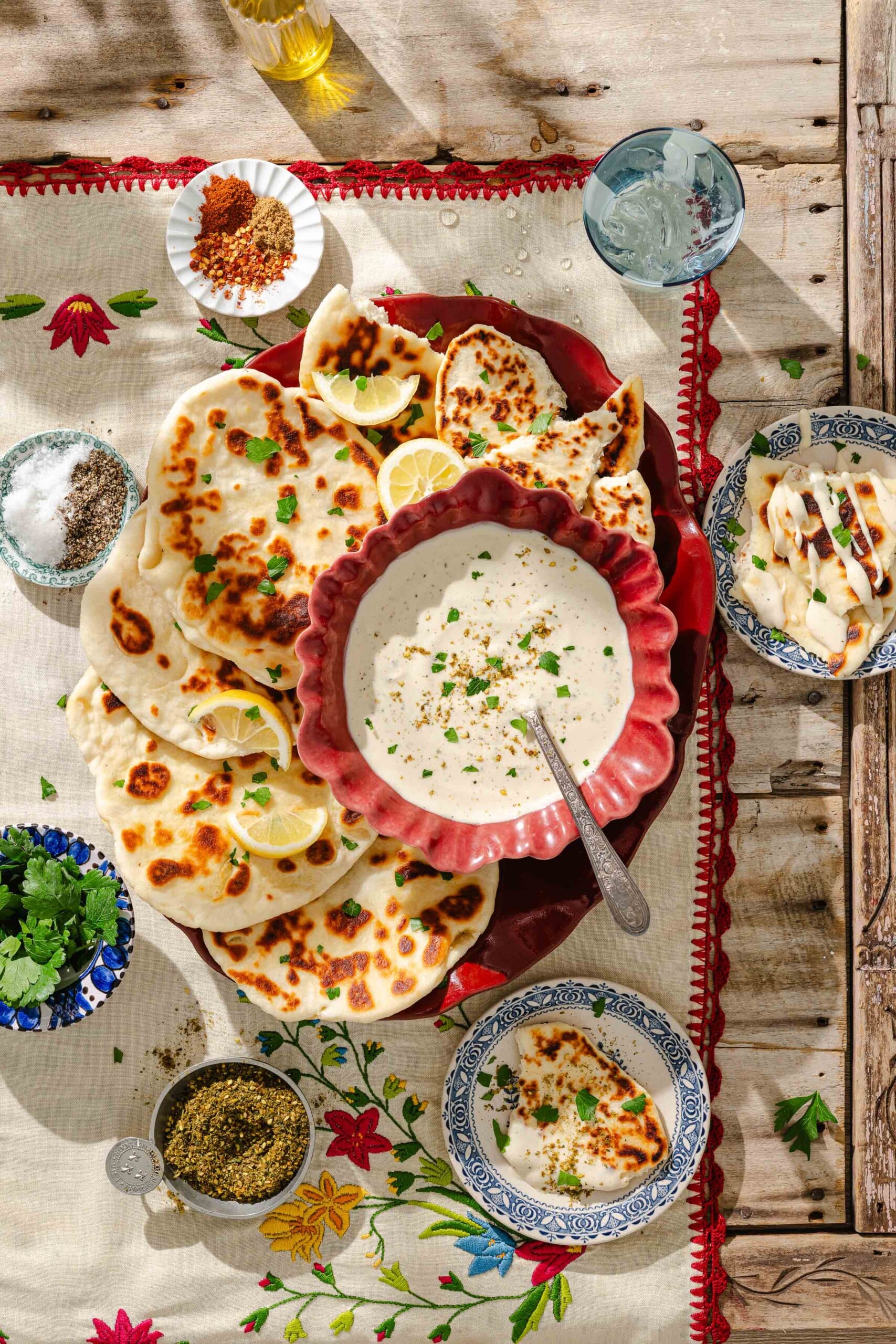
- Falafel and pita: The classic pairing. Drizzle generously over crispy falafel—this is the ultimate tahini sauce for falafel.
- Kofta and kebabs: Spoon over sheet pan kofta or grilled skewers for a creamy contrast.
- Roasted vegetables: Drizzle over briam, cauliflower, or any sheet pan veg.
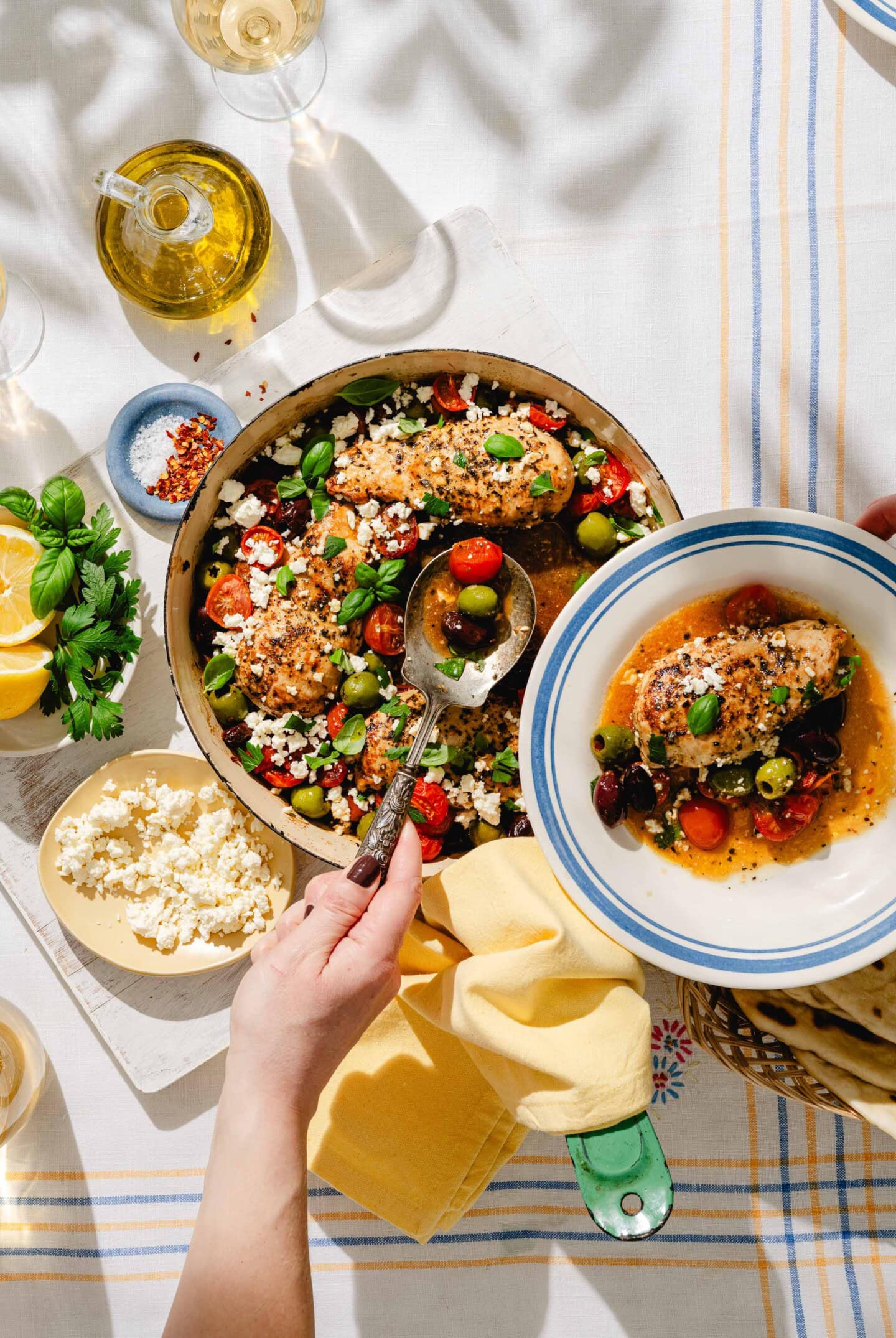
- Grain and rice bowls: Use as a sauce base for Mediterranean bowls (it’s amazing with sheet pan chicken).
- Salads: Thin it out and use as a dressing for fattoush or chopped salads.
- Shawarma wraps and gyros: Spread inside wraps before adding fillings.
- As a dip: Serve with pita, crudités, or alongside dishes like eggplant dip for a tahini-forward spread.
Variations
- Herbed tahini: Add chopped parsley or a sprinkle of za’atar for a fresh, earthy twist.
- Spicy tahini: A pinch of chili flakes or cayenne adds a gentle kick.
- Warm-spiced tahini: Stir in a pinch of cumin for deeper, aromatic flavor.
- Citrus swap: Replace lemon with fresh orange juice for a slightly sweeter, brighter sauce (especially good on roasted root vegetables).
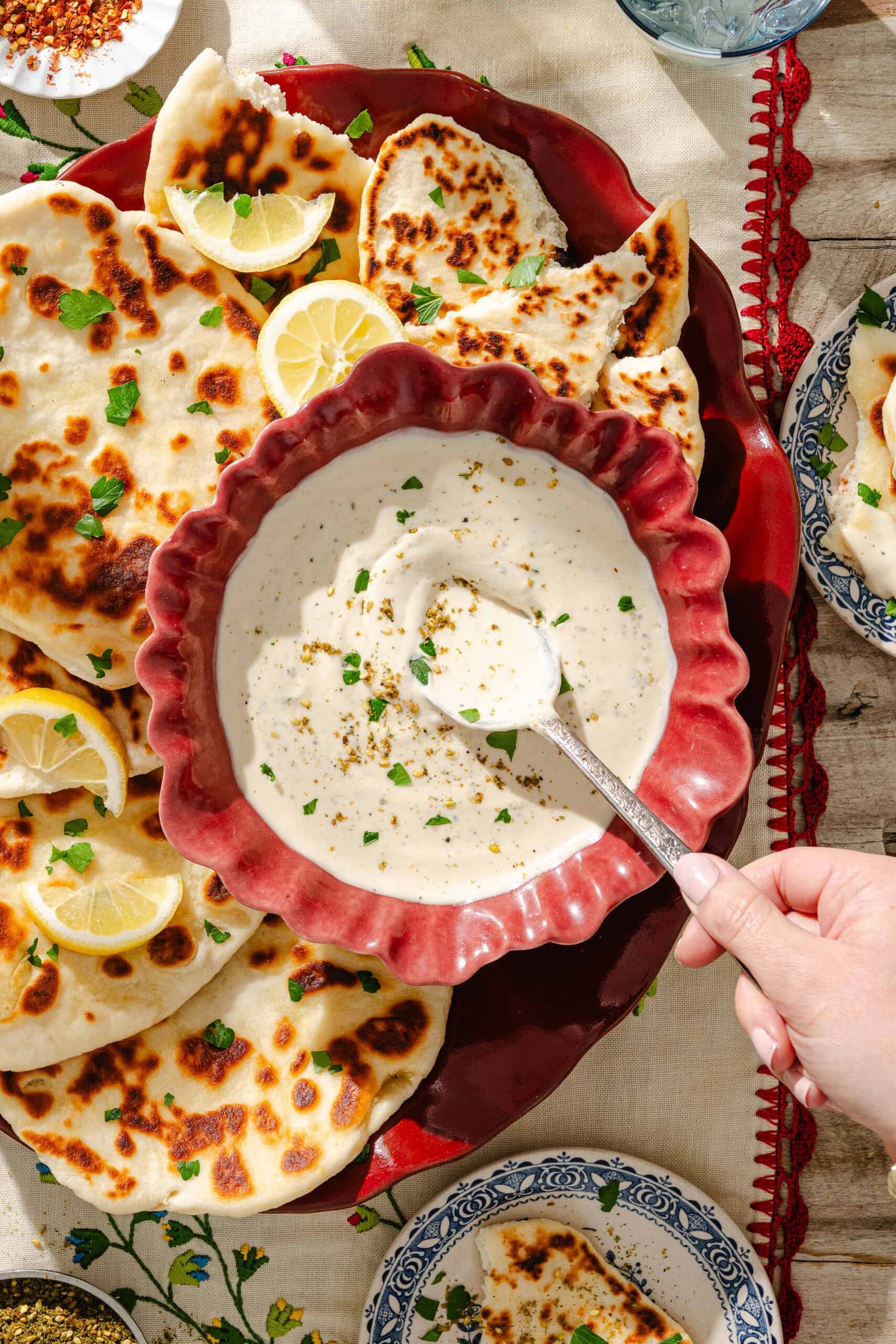
How to Store Tahini Sauce
Store tahini sauce in an airtight container or jar in the fridge for up to 3 days. As it chills, the sauce will naturally thicken.
Before serving, let it come to room temperature so it loosens back into a drizzleable consistency. If needed, whisk in a splash of cold water to bring it back to life.
It’s also a great make-ahead option that’s perfect for meal prep or building quick bowls throughout the week.
FAQs
Tahini sauce is made from tahini paste (ground sesame seeds), fresh lemon juice, garlic, salt, and water. The tahini paste provides the creamy, nutty base, while lemon juice adds brightness, and garlic adds depth. Cold water is whisked in gradually to thin the paste into a smooth, drizzleable sauce. Some recipes include optional additions like olive oil for silkiness or a touch of honey to balance bitterness.
Tahini paste is the raw ingredient, pure ground sesame seeds with a thick, peanut-butter-like consistency straight from the jar. Tahini sauce is the finished condiment made by combining the paste with lemon juice, garlic, salt, and water to create a thinner, smoother sauce suitable for drizzling and dipping.
This is completely normal and happens because of the way sesame seed proteins interact with water. When liquid first hits the tahini, the mixture seizes up and becomes very thick. Keep whisking and gradually adding more cold water. After another minute or two of whisking, the sauce will loosen into a smooth, creamy consistency.
Homemade tahini sauce keeps for up to 3 days stored in an airtight container in the refrigerator. The sauce will thicken as it chills. Let it come to room temperature before serving, or whisk in a tablespoon of cold water to restore its drizzleable consistency.
If you don’t have tahini, you can use sunflower seed butter, cashew butter, or almond butter thinned with lemon juice and water. The flavor will differ, but the texture will be similar. Greek yogurt with lemon and garlic also works as a quick alternative.
Save this recipe for later
Ingredients
- ½ cup tahini
- ¼ cup fresh squeezed lemon juice, about 1 large lemon
- ½ tsp kosher salt plus more to taste
- ¼ tsp ground pepper
- 1 small garlic clove, pressed or grated
- 4-6 tbsp cold water
- Optional: 1 tbsp extra-virgin olive oil and/or ½-1 tsp honey
Instructions
Start Cooking- In a small bowl or glass container, whisk together the tahini, lemon juice, salt, pepper and pressed garlic until combined.
- Then, whisk in the cold water, 1 tablespoon at a time, until your desired consistency is reached (4-6 tablespoons total).
- Taste and adjust the seasoning if needed – if the sauce is too bitter, add ½ – 1 tsp liquid honey. If you want a smoother sauce, add 1 tablespoon of olive oil. If desired, add up to ½ tsp more kosher salt.
- If using right away, let sit for 10 minutes to let flavors meld together. Serve immediately.
- Store in the fridge in an airtight container or jar for up to 3 days. If using straight from the fridge, let the sauce come to room temperature before using to make it easy to drizzle again.
Notes
- How to use: serve with pita, dip chicken in it, base for roasted vegetables.
- If you want to enhance this sauce, you could add: ground cumin, chili flakes, cayenne, freshly parsley or za’atar – based on your tastes!
- Substitute the lemon juice for orange juice for a lively flavor!

Be the first to discuss this recipe.